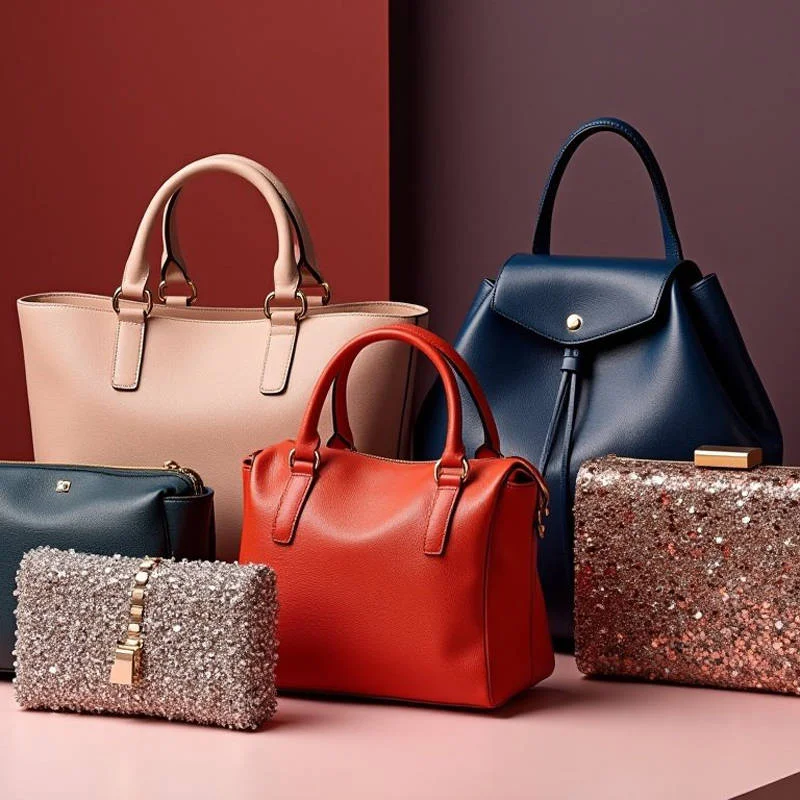
Choosing the right handbag manufacturer is crucial for building a successful brand. It ensures your products meet the standards of your target market. Whether your focus is on custom handbag production, luxury designs, or sustainable options.
The process goes beyond choosing materials like leather. It’s about finding a partner who shares your vision and values.
What to Consider When Looking For A Vegan Leather Handbag Manufacturer?
Choosing the right bag manufacturer is key to creating a successful product line. To make the best decision, you need to evaluate several factors.here’s what you should keep in mind:
Production capacity and scale
- Select the matching MOQ based on brand scale: Small brands or start-ups may need to choose manufacturers with low MOQ (such as 50-200 pieces) to reduce inventory risks. Mature brands can accept a higher MOQ (such as 500 to 1,000 pieces) to gain a cost advantage. Evaluate the efficiency of manufacturers from sample making to mass production, especially for seasonal products or urgent order demands
- Material quality: Vegan leather must clearly indicate its composition (such as Pinatex, cactus leather, mushroom leather), and avoid using materials containing plastic or chemical coatings. It is required that the manufacturer provide test reports on wear resistance, tear resistance, water resistance, etc., to ensure the service life of the handbag
Cost and pricing strategy
Clarify the proportion of costs such as materials, labor, transportation, and tariffs to avoid hidden expenses,the payment method (30% deposit +70% balance, letter of credit (LC)) should be selected based on the cash flow. Compare the quotations from manufacturers in different regions (such as China, India, Europe), but the quality differences should be taken into consideration
Design and customization capabilities
Confirm whether the manufacturer can provide 3D modeling and prototype making services to shorten the development cycle. Supports adjustments in details such as size, color, and hardware to meet differentiated demands

Which Are The Highly Regarded Vegan Leather Handbag Manufacturer And Brands Worldwide?
Worldwide, with the rise of sustainable fashion, some brands and manufacturers have been highly regarded for their innovative vegan leather handbags. These brands not only pursue environmental protection in materials, but also maintain high standards in design and craftsmanship. Here are some of the highly watched brands and manufacturers:
A highly regarded brand
Stella McCartney
- Status: As the world’s first luxury brand that has completely refused animal leather, fur, and feathers since its establishment, Stella McCartney is an absolute pioneer and leader in vegan fashion.
- Signature product: Its classic Falabella handbag is a benchmark for vegan handbags, born in 2009, challenging the traditional notion that luxury goods must use animal leather.
- Innovative materials: The brand actively collaborates with materials technology companies to explore cutting-edge vegan leather. For example:
- Mylo™ : In collaboration with Bolt Threads, the Frayme Mylo handbag made from mycelium (the root of the mushroom) was launched, being one of the first luxury goods to commercialize this material.
- MIRUM® : A plant-based leather alternative that is zero plastic and fully recyclable.
- VEGEA™ : “Wine leather” made from the remnants of Italian wineries (grape skins, stems, seeds).
- YATAY® : Made from a blend of agricultural waste and recycled fibers.
- Core concept: By integrating animal welfare, environmental protection with high-end design and exquisite craftsmanship, it proves that sustainability and luxury can coexist

Hermes
Vegan leather bags: Hermès’ iconic innovative product
Hermès’ collaboration with biotechnology company MycoWorks on mycelium leather bags (such as the “Mushroom Leather Victoria Travel Bag” launched in 2021) marks the debut of its vegan leather collection. This product uses lab-grown mycelium as its core material, with its structure genetically engineered to achieve strength, flexibility, and texture comparable to cowhide. The introduction of mycelium leather marks Hermès’ strategic shift from traditional animal leather to sustainable materials, serving as a key component of the brand’s ESG (Environmental, Social, and Governance) strategy.
Innovative Materials: The Fusion of Mycelium and Plant-Based Materials
- Mycelium Leather (Reishi™): MycoWorks’ Fine Mycelium™ technology uses gene editing to cultivate high-quality mycelium, which secretes a microporous structure forming a robust network similar to collagen, giving the leather high strength and durability. For example, the tensile strength, abrasion resistance, and colorfastness of mycelium leather have all passed Hermès’ rigorous testing, and in some metrics even surpass traditional leather.
- Plant-Based Leather: In addition to mycelium, Hermès is exploring plant-based materials such as apple waste (e.g., Beyond Leather’s Frumat material) and cactus fiber (Desserto). These materials are made from agricultural waste, with production processes that are water- and energy-efficient, and are fully biodegradable, further expanding the boundaries of sustainable materials.
Technological Breakthrough: From Laboratory to Luxury Goods
- Process Adaptability: Mycelium leather supports complex processes such as embossing and screen printing, enabling Hermès to continue its classic design language. For example, the HAC à Relier handbag in the 2025 Fall/Winter collection uses mycelium leather to achieve an industrial-style line-drawing print effect, demonstrating the deep integration of material and process.
- Performance Optimization: MycoWorks precisely controls the leather’s hardness, thickness, and drape by adjusting mycelium cultivation temperature, density, and gene expression. For instance, its “Embossed Black” fabric features pebble-like textures and ebony-like luster, meeting the dual demands of high-end fashion for both tactile quality and aesthetic appeal.
- Scalable Production: MycoWorks has established a semi-automated pilot factory and plans to expand to an annual production capacity of millions of square feet, ensuring the commercial viability of Hermès’ applications.
Market Feedback: Balancing Environmental Sustainability and Luxury Experience
- Consumer Acceptance: The price of mushroom leather bags is comparable to traditional leather bags (e.g., mushroom leather handbags are priced similarly to other leather bags from Chester Wallace), lowering the barrier to entry for eco-friendly products. Young consumers (Gen Z and Millennials) prefer sustainable fashion, driving demand growth. The vegan leather market is projected to reach $2.2 billion by 2026.
- Industry Influence: Hermès’ entry into the market has accelerated the fashion industry’s sustainable transformation. Brands such as Kering (Gucci’s parent company), Adidas, and Stella McCartney have partnered with plant-based leather companies to launch similar product lines. Hermès holds a leading position in the vegan leather sector due to its brand premium and craftsmanship advantages.
- Long-term value: Vegan leather bags align with global environmental policy trends, reducing Hermès’ operational risks associated with tightening environmental regulations. Additionally, its innovative image attracts consumers focused on ESG investments, enhancing brand loyalty.

Other brands that actively adopt vegan leather
- Gucci has launched a new material called Demetra, which is made from 77% plant-based ingredients such as wood pulp and viscose, and is applied to its product lines including sports shoes.
- Adidas: In collaboration with Bolt Threads, Stan Smith concept shoes made of Mylo™ were launched, bringing sustainable materials to the mass sports market.
- Fossil (Fossil Group) : Its brand line features handbags made of Desserto® leather crafted from cactus.
- H&M: As a fast fashion giant, it has also launched a series of products using innovative materials such as VEGEA™ (wine leather), promoting the popularization of sustainable concepts.
A highly regarded vegan leather handbag manufacturer (material innovator)
These technology companies are the key driving force behind the vegan handbag revolution, and the materials they develop are adopted by major brands.
Bolt Threads (USA)
- Core material: Mylo™, a vegan leather based on mycelium (the root of mushrooms).
- Influence: Formed the “Mylo™ Alliance” with brands such as Stella McCartney, Adidas, and Lululemon, and was one of the earliest companies to bring mycelium leather to the market. Although its production was once suspended due to financing issues, its technology was once the industry benchmark.
MycoWorks (USA)
- Core materials: Reishi™ and Sylvania™, both advanced materials based on mycelium, are renowned for their outstanding texture, durability and customizability.
- Influence: The exclusive collaboration with Hermes has brought it to fame, proving that its materials are sufficient to meet the strict requirements of top luxury brands for quality and craftsmanship.
Desserto® (Mexico)
- Core material: Vegan leather made from the leaves of the cactus (Nopal), which is abundant in Mexico.
- Features: Emphasizes the naturalness and biodegradability of materials (for some products), and has obtained multiple sustainable certifications. It has been adopted by brands such as Fossil, H&M and Karl Lagerfeld.
Ananas Anam (UK/Philippines)
- Core material: Pinatex ®, a nonwoven material made from pineapple leaf fibers.
- Feature: Utilizing agricultural waste (pineapple leaves) to create additional income for farmers. It has been used in shoes and accessories by many brands such as Nike and Hugo Boss.
Vegea (Italy)
- Core material: VEGEA™, a “wine leather” made from waste materials during the wine production process (grape skins, stems, and seeds).
- Application: It has been used by brands such as Stella McCartney and H&M in products like handbags and shoes.
Natural Fiber Welding (NFW) (USA)
Core material: MIRUM®, a revolutionary, zero-plastic, 100% plant-based, fully compostable leather alternative, made from natural rubber, vegetable oil, cellulose, etc.
Application: Stella McCartney is an important partner of it and uses it in high-end handbags, representing the forefront of the development of vegan leather towards truly recyclable and plastic-free.

Summary
In the globally highly regarded field of vegan handbags, a pattern of close collaboration between brands and technology companies has emerged. Stella McCartney is the leader of the brand, and the addition of Hermes has endowed vegan leather with a higher industry status. The true driving force of innovation comes from material technology companies such as Bolt Threads, MycoWorks, Desserto®, Ananas Anam, Vegea and Natural Fiber Welding. They utilize renewable or discarded resources such as mycelium, cacti, pineapple leaves, and grape dregs to create new materials with performance and texture that are increasingly approaching or even surpassing traditional leather in some aspects, jointly driving the fashion industry towards a more sustainable future