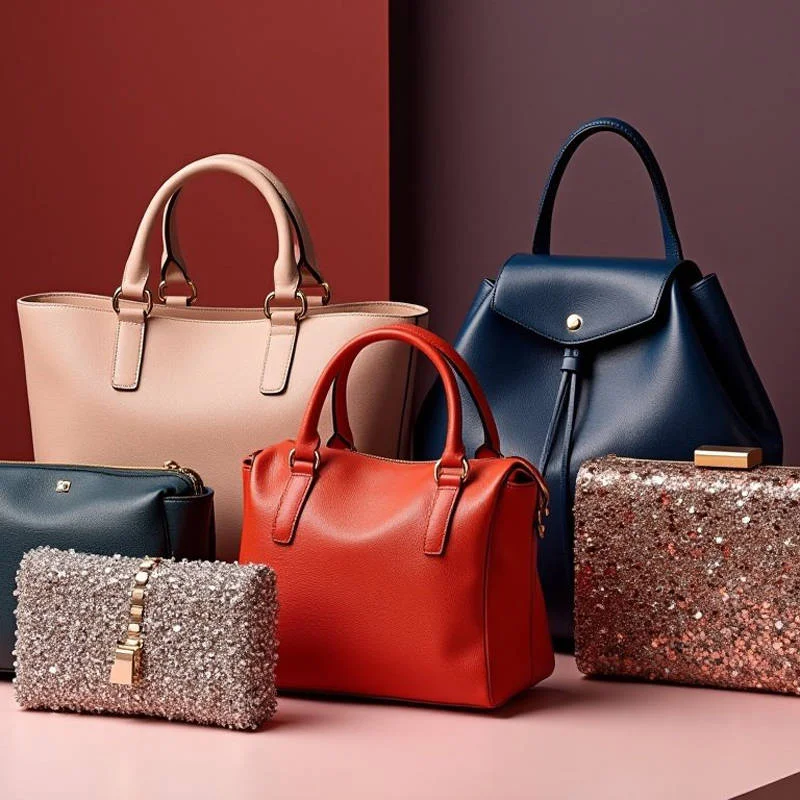
From bags to furniture, leather materials are used in various products, styles and aesthetic designs. Fashionable bags are widely popular among consumers, and many brands are constantly launching new types of bags. However, when customizing new bags, one problem that arises is MOQ. When placing orders at the factory, it is necessary to comply with the factory’s MOQ requirements, as the minimum order quantity is a standard practice in the manufacturing industry to ensure that each order is profitable for the bag factory.
This article will explore what MOQ means and why bag factories all set MOQ requirements. If you also want to customize bags of your own brand, learning more about the reasons can help you run your business and arrange your budget reasonably.
What is MOQ?
MOQ stands for “Minimum Order Quantity” in business and manufacturing.
What MOQ means? MOQ (Minimum Order Quantity) is the minimum quantity that a manufacturer requires in a single production order. MOQ represents the economically feasible benchmark quantity for production. It is the order quantity determined by the factory after balancing fixed costs (equipment, facilities, paid labor) and variable costs (materials, piece-rate labor).
If the minimum order quantity of a factory is 200 handbags, you must order at least 200 of them. If you want less, they might reject the order or charge a higher fee for each item.
MOQ is a key concept in supply chain management, procurement and production planning, especially in manufacturing, wholesale and retail trade.
Why is there a minimum order quantity?
- To cover the production costs
- Ensure profitability
- Improve production efficiency
- Meet the requirements of material suppliers
- Encouraging bulk purchases can lower the unit price
MOQ in Real Life
| Product Type | Typical MOQ |
| Custom tote bags | 100–1000 pcs |
| Plain T-shirts | 50–500 pcs |
| Printed mugs | 30–100 pcs |
Why is the minimum order quantity important in business?
- Cost control: Helps both buyers and sellers manage expenses and avoid unnecessary losses.
- Supply chain stability: Ensure reliable production plans and reduce the risk of disruptions.
- Competitive advantage: Suppliers with flexible minimum order quantity policies can attract more customers, while buyers who effectively manage minimum order quantities can reduce costs and enhance profitability.
Why handbag factories have MOQs?
The reason why leather bag factories set the minimum order quantity (MOQ) is to balance production costs, optimize supply chain efficiency, and ensure that orders are profitable.
I. Allocation of Production Costs
Mold and equipment costs
The production of handbags requires custom molds (such as metal fasteners and printing plates), and the cost of mold development is very high. If the order quantity is too small, the mold cost per piece will significantly increase the unit price, leading to losses for the supplier.
Bulk purchase of raw materials
Raw material suppliers usually charge higher unit prices or additional fees for small-batch orders.
Production efficiency and labor costs
Small-batch orders require frequent adjustments to the production line (such as changing colors and sizes), resulting in wasted working hours.
Ii. Optimization of Supply Chain Efficiency
Logistics cost allocation
International transportation (such as sea freight) is charged by container, and a single container can carry approximately 5,000 tote bags. If the order volume is far lower than this figure, the supplier will have to pay an additional “consolidation” fee or bear the cost of empty containers, thereby requiring the use of MOQ to ensure logistics efficiency.
Inventory risk control
Tote bag factories usually do not keep finished product inventories (especially for custom-made models), but produce according to orders. MOQ can help suppliers predict demand and avoid inventory overstock or shortage caused by order fluctuations. If the customer’s order volume frequently falls below the MOQ, the supplier may need to reserve a dedicated production line for small-batch production, increasing management costs.
Iii. Market Positioning and Profit Strategy: Screening high-quality customers
Bulk discounts and profit maximization
Suppliers set tiered pricing through MOQ to encourage customers to increase their order volume in order to obtain discounts.
Customer qualification screening
MOQ can help manufacturers screen long-term cooperative customers. Small-batch orders may come from trial orders or temporary demands. Manufacturers may reduce their willingness to serve such customers by offering a high MOQ and instead focus on high-quality customers (such as brand owners and wholesalers) who can provide stable large orders.
Iv. The Impact of Industry Characteristics and Customized Demands
The cost threshold of customized production
If the tote bag involves custom design (such as LOGO printing, special sizes), the supplier needs to invest additional in design, sampling, testing and other links, and the cost will increase significantly.
MOQ constraints for non-standard materials
If tote bags use special materials (such as eco-friendly recycled fabrics), suppliers may set higher order thresholds due to raw material MOQ restrictions.
The minimum order quantity is for a factory to ensure profitability while providing high-quality products.
What are the fixed costs of a tote bag factory?
The fixed costs of a handbag factory mainly include factory rent, equipment depreciation, wages of management personnel, insurance premiums, property taxes, and the fixed portion of some manufacturing and management expenses.
The fixed costs of a tote bag factory
Factory building rent
The fees paid by handbag factories for the use of production sites and Spaces, regardless of output, include production areas, office Spaces and warehouses. These are fixed costs on a monthly or annual basis. For instance, if a factory pays a monthly rent of 10,000 US dollars, this fee will remain unchanged no matter how many products are produced.
Equipment depreciation and regular maintenance costs
The value of the equipment in a bag factory will gradually decrease during use, and its depreciation expense is part of the fixed cost. Usually, the straight-line method or the accelerated depreciation method is adopted for calculation. Taking the straight-line method as an example, the annual depreciation expense is (original value of the equipment – estimated residual value) ÷ the useful life.
During the operation of the equipment, regular inspection and maintenance are also required, all of which will incur expenses.
Salaries of management personnel
Management personnel include factory managers, administrative staff, quality control personnel, designers and other fixed employees. Their salary and benefits are not directly linked to the production volume, so their wages belong to fixed costs. For instance, if the total monthly salary of the management is $50,000, this expense must be paid regardless of the production volume.
Insurance premium
The expenses paid to protect a company’s assets from unexpected losses are usually paid once a year and the amount is relatively fixed. Insurance premiums usually include those for property insurance, liability insurance and other commercial insurances.
At the same time, the factory also needs to purchase social insurance and other expenses for its employees, which need to be paid every month.
Property tax
The amount of taxes and fees levied by local governments on enterprises’ immovable property remains relatively stable.
Part of manufacturing expenses and administrative expenses
Manufacturing cost
It may include fixed parts such as factory maintenance and water and electricity charges. For instance, in the manufacturing costs of a handbag factory, there might be a fixed monthly factory maintenance fee of 10,000 US dollars.
Other administrative expenses
It may include fixed components such as indirect labor and factory supplies expenses. For instance, the management expenses of a handbag factory might include a fixed monthly indirect labor cost of 60,000 US dollars.
Summary: Fixed Costs in a Tote Bag Factory:
| Cost Category | Description |
| Factory Rent | Monthly payment for the building space (warehouse, production area, etc.) |
| Salaries | Fixed wages for administrative staff, managers, or full-time workers (not hourly or per-piece workers) |
| Machinery & Equipment | Cost of buying or maintaining sewing machines, printers, cutting tables, etc. These are capital investments spread over time |
| Utilities (Base Cost) | Basic costs of electricity, water, and gas that stay the same regardless of how many bags are made |
| Software & Licenses | Design tools, order management systems, or printing software subscriptions |
| Depreciation | The declining value of machinery and factory equipment over time |
| Insurance | Business, fire, or liability insurance for the factory |
| Taxes & Permits | Local business taxes, factory licenses, and compliance fees |
Why do fixed costs affect the minimum order quantity?
Factories must pay fixed costs before they can make a profit.
- Small orders (for example, 100 bags) spread the fixed cost over fewer units → the price per bag is higher.
- Large orders (for example, 2,000 bags) spread the fixed costs over more units → the price of each bag is lower.
What are the variable costs of a bag factory?
The variable cost of a bag factory is a cost that directly changes with the increase or decrease in production volume. That is to say, the more bags a bag factory produces, the higher the variable cost will be. Unlike fixed costs (rent, wages), variable costs are related to materials, labor and unit operations.
1. Raw material cost (with the highest proportion)
- Fabric/leather: such as canvas, nylon, PU leather, genuine leather, etc., priced by usage (such as per meter/per square foot).
- Accessories: zippers, metal clasps, magnetic clasps, webbing, inner lining fabric, edge banding strips, etc., purchased by piece or weight.
- Packaging materials: dust-proof bags, paper boxes, plastic bags, tags, labels, etc., increase linearly with the increase in order volume.
2. Direct labor costs
- Production workers’ wages: piece-rate wages or hourly wages for processes such as cutting, sewing, quality inspection, and packaging (directly related to working hours).
- Temporary worker fees: Wages for short-term workers hired during peak seasons, fluctuating with orders.
3. Energy and power costs
- Electricity: The electricity consumed by sewing machines, cutting machines, ironing equipment, etc. during operation is charged based on actual usage.
- Gas/steam: Some factories use steam ironing or drying equipment, and the cost increases with production.
4. Production-related consumables
- Sewing thread and needles: High-frequency consumables, and their usage is directly proportional to the number of bags.
- Lubricating oil and cleaning agents: Required for equipment maintenance and increase with usage frequency.
- Waste disposal cost: The cost of recycling scraps or disposing of waste (such as leather shavings).
5. Transportation and Logistics Costs (Production End)
- Raw material transportation: Freight charges from the supplier to the factory (such as by batch or weight).
- In-plant logistics: short-distance handling, warehousing and sorting, and other internal logistics costs (may be charged by the piece).
6. Variable manufacturing costs
- Equipment depreciation (allocated based on output) : If the equipment’s lifespan is 5 years, the annual depreciation expense is fixed but can be allocated to the unit package cost based on output.
- Temporary site rental: The cost of temporarily renting warehouses or workshops to cope with the expansion of production during peak seasons.
Summary: Variable Costs in a Tote Bag Factory:
| Cost Type | Description |
| Raw Materials | Fabric (e.g., canvas, cotton), thread, zippers, buttons, lining, handles, etc. Each bag uses a certain amount. |
| Printing or Embellishments | Ink, dyes, embroidery thread, heat transfer film, screen printing materials (e.g. screens, ink), etc. |
| Packaging | Polybags, tags, labels, boxes, tape, stickers, etc. |
| Labor (Piece-rate) | Wages for workers paid per bag sewn or assembled (common in many factories). |
| Utilities (Variable portion) | Electricity and water used during sewing, cutting, printing — increases with production volume. |
| Quality Control (per item) | Time and cost for inspecting each bag produced, especially in bulk. |
| Shipping to Warehouse | Internal transportation or logistics costs per batch or per item moved. |
| Waste or Defect Management | Material loss due to errors, misprints, or defects increases slightly with more units. |
The core feature of a bag factory is that “the higher the output, the higher the cost.The lower the output, the lower the cost.”
Variable Cost Breakdown (Per Bag)
| Item | Cost (USD) |
| Canvas fabric | $1.20 |
| Thread & trims | $0.30 |
| Printing (1-color logo) | $0.50 |
| Packaging (tag + polybag) | $0.15 |
| Piece-rate labor | $0.70 |
| Total Variable Cost/Bag | $2.85 |
Multiply that by how many bags you’re making to get the total variable cost.
How do fixed costs and variable costs affect MOQ?
The fixed and variable costs of the bag factory jointly determine the setting of the minimum order quantity (MOQ). The effects of fixed and variable costs on MOQ:
- Variable costs directly affect the lower limit of MOQ through the “unit cost bottom line” (such as the requirements for bulk purchasing of raw materials).
- Fixed costs determine the upper limit of MOQ through “scale-sharing pressure” (such as equipment utilization rate, mold recycling demand).
The synergy between variable costs and fixed costs: MOQ’s “double bottom line”
When setting the MOQ for a bag factory, the following conditions must be met simultaneously:
- Variable cost coverage: Unit cost ≥ variable cost (to avoid loss);
- Fixed cost allocation: Order size ≥ fixed cost ÷ profit per piece (ensuring overall profitability).
| Cost Type | Impact on MOQ |
| Fixed Costs | Smaller orders = higher unit cost → MOQ helps ensure profitability |
| Variable Costs | Bulk purchasing lowers cost → Higher MOQ helps reduce expenses |
Therefore, the core of the MOQ set by bag factories is to find a balance point between fixed costs and variable costs, ensuring both production efficiency and economic feasibility.
In other words, bag factories need to scientifically calculate these two types of costs to ultimately determine a reasonable MOQ level that can both ensure their own profits and be accepted by the market.
Notice
- Fixed costs = remain unchanged (such as rent, salaries of management personnel)
- Variable costs = increase or decrease with the production of each order
This is why the unit price of large orders is often lower – fixed costs are shared, and materials may be purchased in bulk at a lower price.
The MOQ game between customers and factories: Balancing costs and product demands
- From the perspective of the purchaser: They hope that the MOQ is as low as possible to reduce inventory risks and capital occupation.
- From the factory’s perspective: Screen high-quality customers through MOQ (long-term cooperation, high repurchase rate).
Solution of the MOQ game between customers and factories
- The purchaser: MOQ is a crucial factor in procurement negotiations, directly influencing procurement costs and inventory management. The purchaser can strive to reduce the MOQ through methods such as group buying, advance payment, and commitment to long-term cooperation.
- Factory: Optimize production processes (such as flexible manufacturing) and share equipment resources to flexibly adjust MOQ while ensuring profits.
How to calculate MOQ(Minimum Order Quantity)?
The selling price of a single item should cover variable costs and allocate fixed costs
If the selling price per piece is $25 and the variable cost is $15, then the profit per piece =25-15= $10.
The quantity to be sold =10,000 (fixed cost) ÷10 (profit per piece) = 1,000.
If the order volume is less than 1,000, the fixed cost allocation is too high, and a 20% profit cannot be achieved.
If the order quantity exceeds 1,000 and the unit profit increases, the bag factory may accept a lower unit price or offer a discount.
MOQ Formula
MOQ = Total Fixed Costs / (Selling Price per Unit – Variable Cost per Unit)
Example Calculation:
Fixed costs: $5,000
Selling price: $6/bag
Variable cost: $2.50 per bag
MOQ = $5,000 / ($6 – $2.50) = 1,429 bags (rounded up).
Conclusion
The main reason why bag factories set MOQ is to ensure the economic benefits of production. Because each batch of production has a fixed start-up cost, by requiring a minimum order quantity, the factory can spread these fixed costs over a sufficient number of products, thereby reducing the unit cost of each product and achieving economies of scale.
If you are looking for a leather bag manufacturer with a low MOQ, please feel free to contact us.