Alligator leather is a representative of top-quality leather. The leather on its belly is particularly precious and is highly favored by luxury brands. Alligator leather is exceptionally tough in texture and has excellent wear resistance. Therefore, it is often used to make top luxury goods, including high-end handbags, expensive wallets, fine belts and custom leather shoes, etc.
Why use alligator leather to make luxury goods? Because alligator leather products can not only showcase an extraordinary luxurious texture, but also reflect the owner’s noble status and excellent taste.
This article will explore what alligator leather is and what its advantages are. How was it made? If you want to learn more about alligator leather and create your own high-end quality bags, then the content of this article is very suitable for you.
What is alligator?
The alligator is a large semi-aquatic reptile belonging to the crocodile family, mainly living in freshwater habitats such as swamps, marshes and rivers.
The main characteristics of alligators:
Broad U-shaped nose (unlike the V-shaped nose of crocodiles), dark color, armored, scaly skin, powerful lower jaw, hidden teeth (only the upper teeth can be seen when the mouth is closed), preference for freshwater environment.
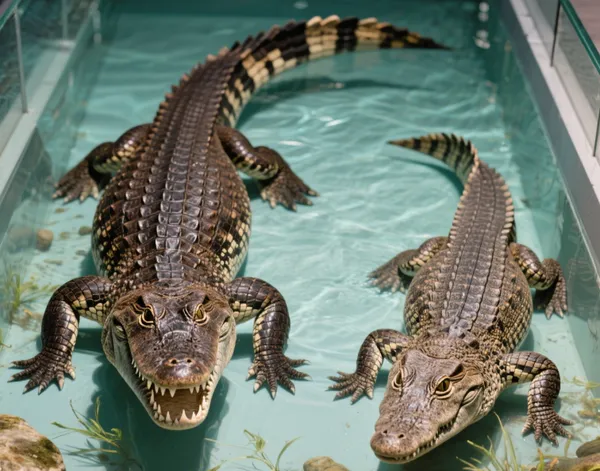
There are two existing species of alligators:
American alligator
The American Alligator (alligator mississippiensis) is the largest species of the alligator family and is native to the southern United States and northern South America. Male American alligators can reach a body length of 14 feet (4.2 meters), while females are smaller in size, with a maximum body length of 10 feet (3 meters).
Chinese alligator
The Chinese Alligator (Alligator sinensis) is an extremely endangered species. It was once widespread throughout the vast area of the Yangtze River Basin in China, but nowadays they can only be found in a few provinces in eastern China.
They are among the smallest crocodiles, usually with a body length of about 4 to 6 feet (1.2 to 2.4 meters). They have broad and upturned snouts, broad jaws, and a bone plate at the top of the skull, which is not present in American alligators.
Alligators feed on fish, birds and mammals. They have durable and patterned skin, especially abdominal scales, and are of great value in luxury leather goods. Unlike crocodiles, alligators are less aggressive towards humans, but they should still be treated with caution.
What is alligator leather?
Alligator leather is a rare treasure among top-quality leather materials. Due to its unique texture and scarcity, it is hailed as the “platinum of the leather industry”. This precious material is mainly taken from the abdomen of alligators. The leather in this area is particularly fine and soft, and it also has excellent toughness and wear resistance. The naturally formed scale patterns on the surface of the alligator’s abdomen are staggered and orderly, and every inch of texture presents a unique three-dimensional beauty. This inherent noble quality makes it one of the most favored raw materials for luxury brands.
Compared with ordinary leather, alligator leather not only has a longer service life, but also its increasingly warm and lustrous appearance over time adds unique collection value. In the field of luxury goods manufacturing, alligator leather is often used to create top-notch handbags, luxurious accessories, and high-end custom shoes, etc. Each finished product embodies the perfect combination of exquisite craftsmanship and extraordinary taste.
The acquisition process of this rare leather is extremely strict. From material selection to tanning, it needs to go through dozens of complex procedures. Moreover, the breeding of alligators and the extraction of their skins are strictly controlled by international conventions, which makes its output extremely limited. For this reason, products made of alligator leather are often regarded as a symbol of identity and status.
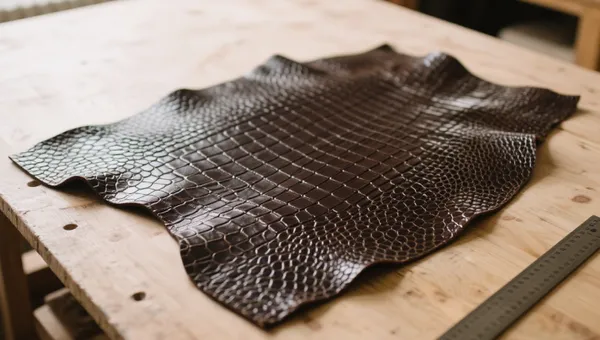
How is alligator leather made?
The production of alligator leather is a precise art that combines ancient wisdom with modern technology, and its manufacturing process is like a symphony of craftsmanship that transcends time and space. This highly specialized manufacturing system perfectly combines traditional handcrafting techniques with cutting-edge leather-making technologies, ultimately transforming the original alligator skin into the world’s top luxury materials. The manufacturing process of alligator leather:
I. Material Procurement: Scientific Breeding and Ethical Procurement
In professionally certified farms, alligators enjoy a breeding environment that meets animal welfare standards. These farms strictly implement the quota system stipulated in international conventions to ensure ecological sustainability.
When selecting materials, it is necessary to carefully choose alligators aged 4 to 6 years old. At this stage, the scales develop most perfectly and the skin reaches the ideal thickness and toughness. Each piece of raw skin must undergo strict screening to ensure there are no scars or blemishes, because even the slightest defect can affect the quality of the final product.
It is worth mentioning that wild hunting has been explicitly banned worldwide, and the modern alligator leather industry is entirely based on standardized breeding.
Ii. Leather-making techniques
The first step: Pickling
The original skin of alligators is first salted. This ancient method can effectively prevent spoilage. Then it enters the deep cleaning stage, where salt and impurities are removed through multiple water washes. Professional equipment will precisely remove subcutaneous fat and muscle tissue to prepare for subsequent processing.
The next step is decolorization. Craftsmen use oxidation-reduction techniques to remove the natural pigments in the leather. This crucial step directly determines the uniformity and color development effect of the subsequent dyeing. The processed leather will be dried in the sun and stored.
Step Two: Tanning process
Chrome tanning method: Chrome salt is used as a tanning agent to endow leather with excellent flexibility and durability, making it particularly suitable for creating fashionable items that need to be folded frequently.
Vegetable tanning method: Extracting natural bark tannins to create a more firm texture, it is the first choice for high-end custom products.
Composite tanning: Skillfully balancing the softness of chrome tanning and the bony texture of vegetable tanning, it creates a unique middle texture.
Oil tanning technique: Through special oil immersion, it creates an extremely soft touch, commonly found in close-fitting items such as watch straps.
Finishing stage
Experienced artisans will hand-stretch the leather and carefully adjust the direction of each scale to ensure the perfect symmetry of the pattern.
During the dyeing process, artisans will use top-quality aniline dyes to blend classic tones such as rich coffee color and elegant cognac color.
The final polishing process is like the finishing touch. Through techniques such as grinding and glazing, the artisans make the scales present a charming three-dimensional luster. Some special techniques can even create a distinct two-color effect.
Step Three: Strict quality control
Hierarchical system
Each finished leather piece must be strictly graded according to quality:
Premium Grade: Flawless scales in the abdominal area, exclusively for top handbags and wallets.
First-grade product: With fine natural scars, it is suitable for making shoulder straps and other accessories.
Grade 2: For scars that are more obvious, it can be used as a lining or on inconspicuous areas.
Precise cutting
Modern techniques combine laser cutting with traditional knife skills to ensure that the scale patterns of each piece of leather can be perfectly connected.
Step Four: Manufacture luxury goods
The birth of a classic alligator leather handbag often requires more than 20 hours of pure handcrafting. Every stitch and every thread embodies the efforts of the artisans, and every corner treatment reflects the pursuit of perfection. Due to the preciousness and durability of alligator leather, along with the meticulous handcrafting by artisans, what is ultimately presented is not only a luxury item but also a piece of art that can be passed down.
How to tell if alligator leather is real?
Alligator leather, as a top luxury material, requires professional and comprehensive methods for authenticity identification.
Scale texture characteristics
The most distinctive feature of genuine alligator leather lies in its naturally formed scale structure. Careful observation will reveal that:
The natural scales are arranged organically, and each scale has subtle differences in shape and size.
The scaly bone ridges naturally protrude but feel soft and flexible. When magnified, fine pore structures can be seen.
The overall texture is rich in three-dimensional effect but not stiff.
Counterfeits often exhibit:
• Completely symmetrical mechanical embossed patterns, lacking natural variations.
The surface is overly smooth and flat, with missing pore structures.
The overall impression is so “perfect” that it seems unreal, just like a plastic mold product.
Color characteristics
The color of genuine alligator leather will undergo elegant changes over time:
It may appear slightly dull at the beginning, but gradually regain a warm and lustrous appearance with use.
This change stems from the slow seepage of natural oils inside the leather.
After years of use, it presents a unique “patina” effect.
Fake alligator leather shows the opposite trend:
When new products are launched, they are often overly shiny and have unnatural reflections.
It will quickly lose its luster and become dull and lackluster after use.
Cracks or fading may occur on the surface.
Edge section
Important information can be obtained by observing the cross-section:
Features of genuine product:
The cross-section shows a clear fiber stratified structure.
The layers similar to tree rings are clearly visible.
The transitions between each layer are natural.
Characteristics of the counterfeit:
The edges of synthetic materials are smooth and flat.
Cowhide imitations show the cross-sectional characteristics of ordinary leather.
It lacks the layering that a alligator Pitt has.
Tactile experience
Hand feel is one of the most direct ways to identify:
The touch of genuine alligator leather:
Flexible yet not loose
The surface features natural texture undulations
There is a slight cool sensation upon initial contact
The touch of counterfeit alligator leather:
PVC material is usually too hard
Cheap PU is too soft
The plastic feel is obvious and the touch temperature is relatively high
Natural defect
True alligator leather must retain the traces of natural growth:
There may be fine pore marks.
Occasionally, natural scars or growth marks can be seen.
The color transitions are natural and soft.
The counterfeit alligator leather is:
The surface is incredibly perfect.
The texture is repetitive and monotonous.
The color is too uniform and consistent.
Bottom surface characteristics
Looking through the back often reveals key evidence:
Genuine alligator leather bottom surface:
Retain the original skin texture.
The fibrous tissue is clearly visible.
The touch is in harmony and unity with the front.
The bottom surface of the counterfeit alligator leather
Common fabric or plastic substrates.
It may present a uniform texture that has been artificially processed.
There is a sense of disconnection from the front texture.
Price comparison
Alligator leather products have a clear value benchmark:
Price range of genuine products
Small accessories (wallet/watch strap) start from $500
Handbags start at $5,000
Special customized models can reach tens of thousands of dollars
The price of fake alligator leather:
“Alligator leather” bags priced under 300 US dollars
So-called “special offers” with excessive discounts
Purchased goods of unknown origin
Physics test
In addition to the several methods just mentioned, we can try the following several simple and effective detection methods:
Bending test
Genuine product: Forms natural wrinkles and can rebound.
Counterfeit: Cracks or whitening may occur.
Water Drop Test
Genuine product: Absorbs moisture slowly.
Counterfeit: Forms water droplets that do not penetrate.
Burning test (for scraps only) :
Genuine product: Burns slowly and gives off a burnt smell of hair.
Counterfeit: Melts rapidly and releases a plastic smell.
To distinguish genuine from fake alligator leather, one can initially observe the texture and luster features, carefully inspect the details of the edges and the bottom surface, and if conditions permit, conduct a simple physical test. Basically, the authenticity of the alligator leather can be determined.
Of course, nowadays with the advancement of counterfeiting technology, some high-quality counterfeits may require professional instruments to be accurately identified. For high-value luxury items such as handbags, it is recommended to purchase them through the official channels of the brand or seek services from professional appraisal institutions.
FAQs of alligator leather:
Is alligator leather ethical?
There are many controversies regarding the moral issues of alligator skin. Its ethical attributes depend on multiple factors. Sometimes it is regarded as moral, and sometimes it may be immoral. The key lies in whether the leather comes from a compliant and certified farm, whether it adheres to animal welfare standards, and the individual’s values regarding the use of animal products. Alligator leather produced by certified farms are generally regarded as more morally reasonable as they adhere to the principles of sustainable development and humane treatment.
Is alligator leather durable?
Yes, alligator leather has outstanding durability. With proper maintenance, its service life usually exceeds that of ordinary cowhide. Professionally cared genuine alligator leather products can be used for more than 20 years, while the service life of cowhide products is usually between 10 and 20 years. This difference stems from the denser fibrous structure of alligator leather.
Is alligator leather waterproof?
No, although alligator leather has a certain degree of natural water resistance, it is not completely waterproof. If this precious leather material is exposed to moisture for a long time, both its surface luster and internal structure may be damaged. Although alligator leather is more moisture-resistant than ordinary leather, continuous exposure to moisture can still affect the smoothness and service life of the leather. Therefore, it is still necessary to pay attention to waterproof maintenance.
Is alligator leather expensive?
Yes, it’s very expensive! Alligator leather can be regarded as a luxury in the leather industry, and its price is usually 10 to 20 times that of ordinary cowhide. This high value stems from multiple factors: alligators have a long growth cycle and only high-quality skin from their abdomens is available; The breeding cost is high and it requires professional tanning techniques. These characteristics make it one of the world’s top leather materials.