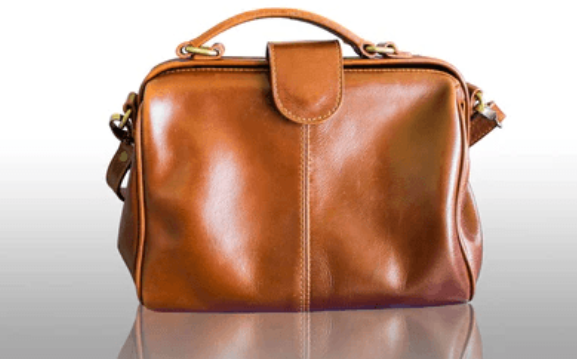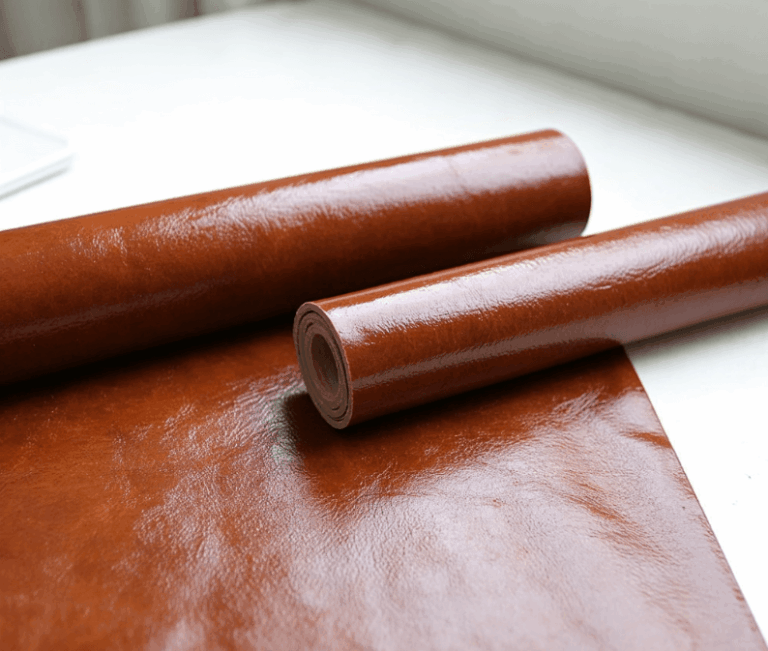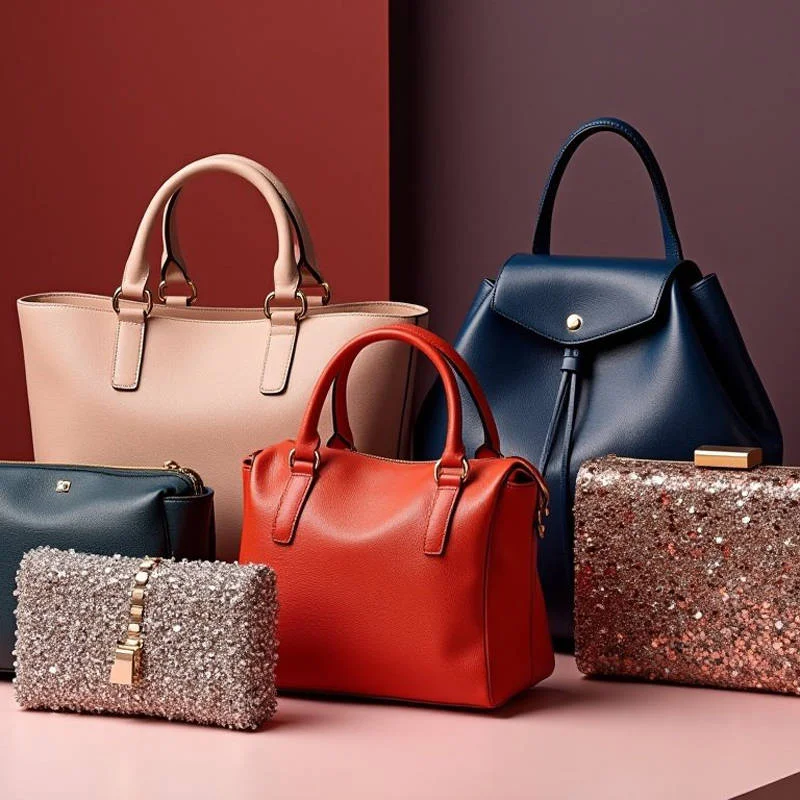
In recent years, many innovative leather products have emerged, and corn leather is one of them. Corn Leather is a vegan leather alternative made from corn. It has a smooth surface, rich colors, is easy to clean, and has good tear resistance and mild water resistance. It is suitable for daily use and has been applied to fashion accessories such as handbags, shoes and eco-friendly packaging.
This post will introduce the features of corn leather and whether it is suitable for making bags.
What is corn leather?
Corn leather, often referred to as “vegan leather made from corn”, is a bio-based material that uses corn (especially corn waste or industrial corn) as the main raw material to produce a polymer that can be transformed into a leather-like fabric. This is a plant-based, sustainable and ethical alternative to traditional animal leather.
It is important to understand that it is not made from solid corn fibers, while pineapple leather is made from leaves. On the contrary, the starch and sugar in corn are processed into a kind of bioplastic.
The definition and sources of corn leather
Corn leather is a leather alternative made from natural materials extracted from corn and its by-products. Its main sources include:
- Corn starch: It is converted into lactic acid through fermentation, and then polymerized and spun into polylactic acid fiber (PLA).
- Corn husk: The outer sheath of corn cobs, which is white in color, strong in toughness, thin and soft, is an ideal raw material for woven products.
- Corn fiber: It is a synthetic fiber made from starches such as corn and wheat, which are fermented to convert into lactic acid, then polymerized and spun.
The key properties of corn leather
- Durable: Wear-resistant, tear-resistant, and UV-resistant; It is comparable to mid-range animal leather.
- Breathability: Due to its natural fibers, it is more breathable than synthetic leather (PVC/PU).
- Water-resistant: Not completely waterproof, but provides good moisture-proof protection.
- Biodegradable: Unlike synthetic leather, it does not decompose naturally over time.
- Lightweight: Suitable for daily use.
Pros and Cons of Corn Leather
| Pros ✅ | Cons ❌ |
| Uses Renewable Resources: Reduces dependency on fossil fuels compared to purely synthetic leathers (PU/PVC). | Not Fully Biodegradable: While the corn component is bio-based, the final material is a plastic polymer (PLA) that requires industrial composting facilities to break down, and it won’t decompose in a landfill. |
| Lower Carbon Footprint: The production process generally emits fewer greenhouse gases than petroleum-based plastic leathers. | Durability Concerns: Similar to other vegan leathers, it can be prone to peeling and cracking over time, especially if the PLA/PU coating separates from its fabric base. |
| Vegan & Cruelty-Free: Contains no animal products. | Land Use & GMOs: Large-scale corn production can involve significant land use, pesticides, and often relies on genetically modified crops, raising questions about its true agricultural impact. |
| Soft and Versatile: Can be made to feel soft and supple, and is easily dyed, making it suitable for a range of colors and products. | Performance Limitations: It may lack the breathability and long-term durability of high-quality animal leather. |
| Waste Utilization: Some producers use industrial corn or corn waste, adding an element of upcycling. | Recycling Challenges: It can contaminate recycling streams if mixed with other plastics like PET. |
How It Compares to Other Materials
| Material | Base Source | Key Eco-Trait |
| Corn Leather | Corn Sugar → PLA Bio-plastic | Bio-based (renewable resource) |
| PU/PVC Leather | Petroleum/Crude Oil | Fossil-fuel-based |
| Animal Leather | Animal Hides | Resource-intensive (water, land, feed) |
| Fruit Leather (e.g., Piñatex) | Plant Fibers (pineapple leaves) | Uses agricultural waste |
For common use
Corn leather is mainly used in fashion and accessories, including:
- Footwear: Shoes, sports shoes and sandals.
- Fashion accessories: handbags, wallets, belts, booths.
- Interior decoration: Furniture and decorative items.
- Tech accessories: phone cases, laptop sleeves and watch straps.
- Car interior: Seat covers, dashboard accents.
The environmental value and market prospects of corn leather
Corn leather, as a sustainable material, has significant environmental advantages and broad market prospects:
- Environmental value: Compared with traditional leather, the carbon emissions in the production process of corn leather are lower. Producing one ton of polylactic acid generates 0.31 tons of carbon emissions, while producing one ton of plastic PP material generates 3 tons of emissions.
- Market potential: The size of the bio-based leather market is expected to grow from 107 million US dollars in 2023 to 216 million US dollars in 2028, with a compound annual growth rate of 15.0% during this period.
- Policy support: Starting from 2026, the EU stipulates that the recyclable ratio of new car interiors must be no less than 85%. Those that do not meet this standard will be directly banned from sale, promoting the application of plant-based leather.
- Consumer trends: As sustainable development becomes a universal value, eco-friendly products are gaining increasing recognition and popularity among consumers.
How to make corn leather?
Corn leather is a plant-based, sustainable alternative to traditional leather, mainly made from corn waste such as stalks, leaves and cobs, which would otherwise be discarded after harvest. The following are the detailed steps for making corn leather:
The first step: Harvest the corn waste
Process: After the corn kernels are harvested, the remaining parts of the corn plants are collected first. This includes straw, leaves and ear shafts, which are usually regarded as agricultural waste.
Objective: These waste materials are used as the main raw materials for corn leather production, promoting resource utilization efficiency and reducing waste.
Step 2: Extract the fibers
Processing procedure: Clean the harvested corn waste to remove any dirt or impurities. Then, the waste is processed to extract natural fibers. Then these fibers are dried to remove moisture and ground into fine powder.
Objective: The extracted fibers provide a structural basis for corn leather, enhancing its durability and flexibility.
Step 3: Create the basic material
Process: Mix corn fibers with bio-based polyurethane (PU) resin or other suitable adhesives. Then this mixture is processed into a soft, leather-like material. Some methods may involve fermenting cornstarch into a substance that mimics the appearance and texture of leather, and then treating and processing it to enhance its performance.
Usage: The base material forms the foundation of corn leather, endowing it with the desired texture, strength and flexibility.
Step 4: Wrap up the work
Process: Once the base material is ready, it will undergo various finishing processes to achieve the desired appearance and texture. This may include smoothing, coloring and adding protective coatings to enhance durability and water resistance.
Objective: The final finishing ensures that the corn leather meets the aesthetic and functional requirements of various applications, such as fashion accessories, footwear, and interior decoration.
Is corn leather durable?
Yes, corn leather is durable. Its texture and wear resistance are almost on par with traditional animal leather, and it can effectively withstand daily use and friction. How durable is corn leather? Generally speaking, it can be used for 3 to 10 years.
Although corn leather may be slightly inferior to top-quality animal leather in terms of absolute strength, its eco-friendly features, comfort and innovative potential make it an important choice in the fields of sustainable fashion and home furnishing. With technological advancements, the durability of corn leather is constantly improving, and it is expected to keep pace with traditional leather in more fields in the future.
Durability assessment of corn leather
The durability of hand-woven corn leather products
- Basic durability: Traditional corn leather woven products can last for 2-3 years without obvious damage under daily use conditions. With careful care, they can last up to 5 years. Corn leather itselves has the characteristics of long fibers, strong tensile strength, flexibility and whiteness, making it ideal raw materials for woven products.
- Enhanced treatment: Durability can be significantly improved through specific processes
- Heating and steaming treatment: Put the woven corn stalk husks into a steamer and steam them with boiling water for 3 to 4 minutes before taking them out.
- Acid soaking: Soak the processed corn stalk bark woven products in acid solution for 2 to 4 minutes. After completion, rinse them with deionized water until neutral.
- Modified liquid treatment: Immerse in the modified liquid once, maintain the temperature at 60 to 65℃, and stir continuously for 45 to 50 minutes before taking it out
After these treatments, the strength and wear resistance of corn leather woven products can be increased by 30% to 50%.
Durability of industrialized corn-based bio-leather
- Physical properties: The strength of corn-based bio-leather (such as polylactic acid fiber PLA) is 4.0 to 4.9cN/dtex, the elongation at break is 30%, the modulus is 31.5 to 47.2cN/dtex, the density is 1.27g/cm³, and the moisture absorption rate is 0.5% to 0.6%.
- Abrasion resistance test: Standard test methods such as the Martindale abrasion test, TABER abrasion test, and STROLL abrasion test are used for evaluation. The abrasion resistance of corn-based bio-leather can reach 80% to 90% of that of traditional leather.
- Practical application performance: In applications such as clothing and automotive interiors, corn-based bio-leather demonstrates excellent anti-wrinkle, water and stain resistance, and anti-static properties, meeting daily usage requirements.
The key factors affecting the durability of corn leather
1. Raw material quality
When choosing corn leather, it is advisable to select the first layer husks that are golden in color, wide and free of spots. These corn leather have longer fibers and greater toughness.
Degree of dryness: The moisture content of corn leather should be controlled below 10%. If it is too high, it is prone to mold, which will affect the quality of the final product.
Storage conditions: Fully dried corn leather can be stored for several years without deteriorating under oxygen-free, low-temperature and low-humidity conditions.
2. Manufacturing process
Weaving techniques: Different weaving methods (such as plain weaving, braiding, braiding, etc.) have a significant impact on the strength of the final product.
Fiber processing: Corn leather fibers need to go through preliminary procedures such as soaking, dyeing, sorting, and spinning into warp ropes.
Industrial processing: It includes processes such as pre-shaping, pretreatment, dyeing, reduction cleaning, drying, post-shaping, and finishing. Each step affects the durability of the final product.
3. Usage and Maintenance
Avoid dampness: Corn leather that is exposed to high humidity for a long time are prone to mold and decay.
Avoid strong light: Prolonged exposure to light can cause the corn leather to turn yellow, affecting both appearance and strength.
Regular cleaning: Gently wipe with a dry cloth and avoid using chemical cleaners.
The durability advantages and limitations of corn leather
1. Advantage
- Environmentally friendly and degradable: Corn leather can naturally degrade at the end of its service life and will not cause environmental pollution.
- Comfort: It has excellent breathability, moisture absorption and sweat-wicking properties, making it more comfortable to wear.
- Innovative applications: In fields such as automotive interiors and high-end clothing, corn-based bio-leather has demonstrated performance that approaches or even partially surpasses that of traditional leather.
- Resource conservation: Utilizing agricultural by-products (corn leather) to turn waste into treasure and reduce resource waste.
2. Limitations
- Slightly lower strength: Compared with high-quality animal leather, its tensile strength and wear resistance are slightly lower.
- Water resistance limitation: Corn leather woven products that have not been specially treated are not resistant to long-term immersion.
- High process requirements: Precise process control is needed to ensure stable product quality.
- Market awareness: Consumers have insufficient awareness of the durability of corn leather, which affects market acceptance.
Methods to enhance the durability of corn leather
- Select high-quality raw materials: Use intact, dry and mold-free corn leather to ensure the quality of the basic materials.
- Optimize the processing technology: Use methods such as sulfur fumigation to make the corn leather whiter, softer and more resistant to insect damage.
- Appropriate addition of reinforcing materials: A small amount of hemp rope or cotton thread can be mixed during the weaving process to enhance the overall strength.
- Post-waterproofing treatment: Apply natural waterproofing agents to the finished product to enhance its water resistance.
- Reasonable usage scenarios: Apply corn leather products to non-high-intensity usage scenarios such as interior decoration and daily necessities to leverage their advantages.
Durability compared with other materials
| Material | Durability | Notes |
| Animal leather | ⭐⭐⭐⭐⭐ | Extremely durable with care |
| High-quality PU leather | ⭐⭐⭐⭐ | Very durable but petrochemical-based |
| Corn leather | ⭐⭐⭐ | Good balance of sustainability + strength |
| Cactus leather | ⭐⭐⭐ | Similar durability to corn leather |
| Pineapple (Piñatex) | ⭐⭐ | Stiffer; cracks sooner |
| Mushroom leather (mycelium) | ⭐⭐–⭐⭐⭐ | Depends heavily on the brand |
Is corn leather breathable?
Yes, corn leather is breathable, although its breathability lies between that of high-quality animal leather and synthetic leathers such as PU or PVC.
The breathability performance of corn leather
Outstanding air circulation capacity
Corn fiber has a porous structure inside, which can form effective air channels and promote air circulation on the feet or body surface.
The fiber structure of corn leather is dense but not closed. Through observation with a scanning electron microscope (SEM), it was found that this unique structure can maintain strength without hindering air circulation.
It has outstanding moisture absorption and sweat-wicking performance
Corn fiber has excellent hygroscopicity and can quickly absorb and evaporate sweat, keeping the skin dry.
Corn leather insoles are composed of more than four layers of corn leather. The gaps between these layers can effectively absorb moisture and promote evaporation, preventing the feet from getting damp.
Temperature regulation function
Corn leather products have the characteristic of being warm in winter and cool in summer, because their fiber structure can automatically adjust the air circulation volume according to the ambient temperature.
In the high-temperature environment of summer, corn leather can accelerate the evaporation of sweat and lower the perceived temperature. It can maintain a certain insulation effect in winter.
The specific manifestation of the advantage of air permeability
Health benefits
Excellent breathability effectively prevents the occurrence of skin problems such as foot odor, athlete’s foot and chilblains.
The natural antibacterial properties of corn fiber combined with its good breathability can inhibit bacterial growth and maintain foot hygiene.
Improved comfort
Corn fiber fabric is light, soft and smooth. It does not cause a stuffy feeling when in contact with the skin, providing a more comfortable wearing experience.
Corn leather woven products retain their natural fluffy structure during processing, which can form tiny air sacs and enhance the breathability.
Practical application verification
Corn shoe insoles demonstrate significantly better breathability than ordinary insoles in practical use, making them particularly suitable for long-term wearing.
Modern corne-based fabric underwear products emphasize the characteristics of “natural coolness” and “breathability and moisture absorption”, and have been tested to effectively reduce the perceived temperature.
The key factors affecting air permeability
Fiber processing technology
After undergoing special treatments such as sulfur fumigation, the fibers of corn leather become softer while maintaining or enhancing its breathability.
Corn-based fabrics produced industrially, through blending technology, enhance material strength while maintaining breathability.
Weaving method
Corn leather woven products are made with special techniques such as diamond-shaped sewing, which compacts the seams while the areas without seams bulge due to the fluffiness of the corn leather, creating natural air channels.
Modern corn-based fabrics employ air-variable composite technology, combining different fibers in a specific way to optimize breathability.
Product structure design
The multi-layer structure design of the corn leather insoles (with more than four layers of corn leather padding) effectively enhances the overall breathability.
Corn-based fabric products achieve better breathability at the fiber level through yarn-level cool sensation technology.
Breathability comparison
| Material | Breathability Level | Key Features |
| Corn Leather | Good | Better than synthetics; moderate airflow |
| Animal Leather | Excellent | Natural pores allow maximum breathability |
| PU/Synthetic Leather | Poor | Limited airflow; feels clammy |
| PVC Leather | Very Poor | Virtually no breathability |
Real-World Performance
The breathability of corn leather makes it suitable for:
- Shoes: Keep your feet cool and reduce sweat accumulation
- Bags: Allows the contents to “breathe” and prevents odors
- Strap: Provides comfort during long-term wearing
- Interior decoration: Improve air circulation in furniture and car interiors
Restriction
Although breathable, corn leather is not suitable for:
- Thick clothes: A large amount of sweat needs to dissipate quickly
- Extreme weather: Cannot handle high humidity and animal leather
Is corn leather waterproof?
Corn leather is water-resistant, but not fully waterproof. The water resistance of corn leather is attributed to its bio-based polyurethane (PU) coating applied to the surface. This coating creates a barrier that can repel the moisture of light and prevent immediate water absorption.
Why is it waterproof?
The surface of corn leather is usually made of polylactic acid (PLA), a bioplastic extracted from corn starch. Just like traditional synthetic leather (such as PU), this creates a pore-free sealing layer that can repel slight moisture, such as leaks, splashes or brief exposure to rain.
Most corn leathers are laminated onto the back of the fabric. If well bonded, the composite material can resist water penetration under normal conditions.
Restriction
❌ Corn leather is not truly waterproof: after prolonged exposure (for example, heavy rain or flooding), water will eventually seep into the seams, edges or tiny gaps between the polylactic acid layer and the substrate.
❌ Backing fragility: If the base fabric is absorbent (such as cotton), moisture may enter from the inside if the outer layer is damaged.
❌ Corn leather cannot self-repair: Unlike some treated animal leathers, scratches or wear in the PLA coating can create entry points for water.
Practical application
✅ bags, wallets, or shoes suitable for daily use in normal weather.
❌ Corn leather is not suitable for outdoor equipment, Marine environments, or prolonged damp conditions without additional waterproof treatment.
Care tips
To maintain water resistance, avoid abrasive cleaning and consider occasionally using eco-friendly fabric protectants (although these may affect biodegradability).
Compared to other materials
| Material | Waterproof? | Notes |
| PVC leather | ⭐⭐⭐⭐⭐ | Fully waterproof but not breathable |
| PU/corn leather | ⭐⭐⭐⭐ | Water-resistant, not waterproof |
| Cactus leather | ⭐⭐⭐ | Similar resistance but can absorb more moisture |
| Animal leather | ⭐⭐ (natural) / ⭐⭐⭐⭐ (treated) | Needs conditioning to resist water |
The essential waterproof property of corn leather
Characteristics of basic materials
- Corn leather raw materials have strong hygroscopicity: Untreated corn leather woven products have natural hygroscopicity, absorbing moisture rather than repelling it. This is an inherent characteristic of it as a natural fiber.
- Porous structure limitation: Although the porous structure inside corn fiber is conducive to air permeability, it also makes it easy for water to penetrate. In its natural state, it does not have waterproof ability.
- The characteristics of PLA fibers: Industrially produced polylactic acid (PLA) corn-based fibers have a moisture absorption rate of only 0.5% to 0.6%, which is lower than that of natural fibers such as cotton, but still do not have natural water resistance.
The source of waterproof performance
Waterproof treatment is key: The waterproof performance of corn leather completely depends on the post-treatment process rather than the material’s own properties. As the retrieved information indicates, the “Process Flow of waterproofing Treatment for corn leather” clearly states that the waterproofing effect needs to be achieved through specific steps.
The mechanism of action of waterproofing agents: Waterproofing agents prevent water penetration by forming a hydrophobic layer on the surface of corn leather or filling pores, which is the core to achieving waterproofing effects.
The main methods for waterproof treatment of corn leather
Soaking treatment process
Waterproofing agent selection: Waterproofing agents containing silane, wax and other components can be used, or a homemade mixture of paraffin and organic solvents can be made.
Operation process: Completely immerse the corn leather in the waterproofing agent. The soaking time should be adjusted according to the thickness of the material, usually ranging from several hours to one day.
Drying treatment: After soaking, it needs to be naturally air-dried or dried in a dryer. The drying temperature should be controlled between 40 and 60℃ to ensure that the waterproofing agent is fully cured.
Spray waterproofing technology
Application of oil-based waterproofing agent: The oil-based waterproofing agent can be dissolved in butyl ester or ethyl acetate at a ratio of 1:10, diluted and then sprayed on the surface. No high-temperature treatment is required. A waterproof film can be formed by natural air drying.
Advantages of water-based waterproofing agents: Modern water-based waterproofing agents such as Texnology®FCB016 can be diluted with deionized water in proportion, contain no VOCs, have no irritating odor, and are more suitable for environmental protection requirements.
Spraying technique: Spray evenly at a distance of about 20 centimeters from the surface to ensure full coverage. After natural drying, a good waterproof effect can be achieved.
Advanced waterproofing technology
Impregnation and air-drying process: Texnology®WF20 fluorine-free leather water repellent can be cross-linked to form a film at room temperature, endowing the material with excellent water impact resistance, water permeability resistance and high hydrostatic pressure resistance.
Impregnation and drying process: By adopting the “impregnation – drying” post-treatment process and combining it with fluorine-containing waterproofing agents, the water resistance, oil resistance and anti-fouling performance can be further enhanced.
Low-temperature three-proof finishing: Customized low-temperature three-proof finishing solution (Texnology®FCB060) effectively achieves excellent protection against water and water stains, avoiding problems such as leather surface cracking and yellowing caused by conventional high-temperature processing.
Practical application of the waterproof performance of corn leather
Application of outdoor products
Waterproof backpack: The corn leather backpack that has undergone professional waterproof treatment can handle daily rainy days, but it is not recommended to soak it for a long time.
Footwear products: Corn leather shoe insoles can effectively prevent rainwater from seeping in through waterproof treatment, but it is necessary to avoid prolonged water immersion.
Automotive interior: Corn-based bio-leather demonstrates excellent water and stain resistance in automotive interior applications, meeting daily usage requirements.
Application of home products
Waterproof cushion: After being treated for water resistance, the corn leather woven cushion can prevent accidentally spilled liquids from penetrating and is easy to clean.
Placemats and heat insulation pads: The waterproof treatment enables the corn leather placemats to effectively resist the penetration of food liquids, thereby extending their service life.
Wall decoration: The corn leather wall decoration that has undergone waterproof treatment can resist daily damp environments and is suitable for areas such as kitchens and bathrooms.
Application in the field of clothing
Waterproof jacket: By combining corn-based bio-fiber and waterproof membrane technology, it can be made into outdoor clothing that is both waterproof and breathable.
Smart textiles: The combination of corn-based fabric and nanofiber membrane can achieve a waterproof and breathable balance where “rain cannot pass through and sweat can escape”.
Eco-friendly fashion: Corn-based clothing with fluorine-free waterproof treatment not only meets the waterproof requirements but also conforms to the concept of environmental protection, becoming a new choice for sustainable fashion.
Limitations of waterproof performance and maintenance suggestions
Performance limitations
- Non-permanent waterproofing: The waterproofing treatment will gradually weaken over time, especially after frequent use and cleaning.
- Temperature sensitivity: Extreme high or low temperatures may affect the stability of the waterproof layer and reduce the waterproofing effect.
- Mechanical wear impact: Frequent friction or folding may cause damage to the waterproof layer, affecting the overall waterproof performance.
Maintenance and care suggestions
- Avoid water washing: Corn leather products are best not washed with water, especially those that have not undergone professional waterproof treatment.
- Cleaning method: Surface stains can be gently wiped with a damp cloth. Avoid using chemical cleaners.
- Dry storage: After use, it should be thoroughly dried before storage to avoid the failure of the waterproof layer due to a damp environment.
- Regular maintenance: For high-value corn leather products, water repellent can be re-sprayed regularly to maintain water resistance.
Is corn leather good for making bags?
Yes, corn leather is a great material for making bags, especially if you are looking for an eco-friendly, vegan alternative to traditional leather. Because it combines strength, flexibility and sustainability, it is becoming increasingly popular. However, when deciding whether it is suitable for your project, there are several factors to consider.
Why is corn leather suitable for making bags?
Durability
Corn leather has moderate durability and is suitable for making most types of bags, such as handbags, tote bags or backpacks. It can withstand regular wear and tear, but it won’t be as tough as high-end animal leather or the finest synthetic leather. However, for most bags, if properly maintained, they can last for several years.
Flexibility and softness
Unlike some hard vegan leathers such as Pinatex or cork leather, corn leather is relatively soft and flexible. This makes it very comfortable to use and of good texture. Flexibility allows for better shaping and folding during the construction of a bag.
Environmental protection
Because corn leather is made from corn waste (by-products such as rice husks or starch), they are more sustainable than petroleum-based synthetic leather (PVC, PU). It is also biodegradable (though not 100%), so compared with plastic leather, it has a smaller impact on the environment at the end of its service life.
Water resistance
Corn leather is water-resistance, making them ideal bags that will be exposed to rain or light moisture. Although it is not completely waterproof, it is very suitable for daily use, such as walking from the car to the office or taking a walk in the light rain.
Appearance
Corn leather has a smooth, leather-like surface and can be embossed or have textures similar to animal leather. It can also be dyed in various colors, so you can create a fashionable and personalized look for your bag.
Things to consider when making bags with corn leather
Durability
Although corn leather is durable, it is not as strong as genuine animal leather or some high-quality PU leather. If you are making a bag that wears out frequently (such as a travel bag or backpack that is often thrown around), you may need to reinforce it, or choose thicker layers or better sewing techniques.
Creases and wear
Like most vegan leathers, corn leather is more prone to creases and wear marks than animal leather, especially when subjected to pressure or bending. Over time, you may notice some wear and tear in high-pressure areas, such as where the strap connects to the bag body or the edge.
Nursing
Corn leather do not require as much maintenance as animal leather, but it should still be wiped clean regularly and kept away from overheating or moisture. Using vegan leather conditioner can help maintain the appearance and elasticity of leather.
The sustainability of polymers
Although corn leather is more environmentally friendly than pure synthetic leather, it still contain polymers (usually bio-based PU), so it is not 100% natural. If you are looking for a fully biodegradable option, you may consider alternatives such as mushroom leather or Pinatex, which use less synthetic ingredients.
Corn Leather vs. Other Materials for Bags
| Material | Pros | Cons |
| Corn leather | Flexible, eco-friendly, moderate durability | Moderate lifespan, creasing over time |
| Animal leather | Extremely durable, ages well | Animal-based, higher environmental cost |
| PU leather | Vegan, low maintenance | Can be less breathable, less durable than real leather |
| Piñatex | Lightweight, eco-friendly, unique texture | Can be stiffer, less durable |
| Cork leather | Sustainable, lightweight, unique texture | Can be stiff, may wear quickly in high-use bags |
| Mushroom leather | Sustainable, naturally flexible | Can be more expensive, less widely available |
Real-World Bag Applications
Corn leather bags are being successfully produced by brands worldwide:
| Bag Type | Why Corn Leather Works |
| Tote Bags | Durable enough for daily essentials; resists wear from shoulder straps |
| Laptop Bags | Provides sufficient protection while remaining lightweight |
| Crossbody Bags | Flexible material molds to body movement |
| Clutches/Purses | Maintains elegant shape while being gentle on hands |
| Backpacks | Structurally sound for heavier loads |
Conclusion
Corn leather has high processing flexibility and can be combined with various materials to create more diversified products. Corn leather represents a significant advancement in sustainable fashion, offering a balanced alternative that combines the practical benefits of traditional leather with eco-conscious values. In the future, with the continuous improvement of environmental awareness, corn leather is expected to become the new favorite in the fashion industry and lead the new trend of green consumption.
If you want to create your own corn leather bags, please feel free to contact us.