Tory Burch is not a traditional top luxury brand; rather, it is a representative brand in the category of accessible luxury, also known as “affordable luxury brands”.
It lies between mainstream fashion and high-end luxury, offering prices that are more accessible than those of top brands while maintaining a higher price, quality, and brand image than mass-market brands. However, it has not yet reached the level of top luxury brands such as Hermès, Chanel, and Louis Vuitton.
Compared with brands like Coach and Michael Kors, Tory Burch excels slightly in design sophistication and brand tone. However, all three brands are essentially in the same market tier – targeting consumers who seek brand recognition and practical quality but are unwilling to pay the premium for top luxury products.
This post will explore whether the brand Tory Burch is a characteristic of luxury goods.
What Is Tory Burch?
Tory Burch is an American luxury lifestyle brand founded in 2004. It is renowned for its designs that blend classic American style with a global perspective, aiming to empower women worldwide through its products and actions.
Brand Positioning: The Pioneer of “Light Luxury”
Tory Burch has precisely positioned itself in the “light luxury” market. This means that its products maintain high-quality fabrics and designs while being priced more accessible than traditional high-end luxury items, successfully attracting the favor of many young consumers.
Brand Highlights
Signature Elements: The brand’s most recognizable logo is the double T symbol, which draws its design inspiration from the geometric patterns of Moroccan architecture and the graphic aesthetics of interior designer David Hicks. The classic product, Reva ballet flats, is the brand’s signature piece.
Product Lines: The brand offers a diverse range of products, including ready-to-wear clothing, handbags, shoes, accessories, beauty products, and home goods. Besides the iconic Reva flat shoes, its Minnie flat shoes and Miller sandals are also beloved classic styles.
Brand Scale: Tory Burch started as a boutique in Manhattan and has now grown into a global enterprise, with over 400 independent boutiques and over 3,000 exclusive counters in department stores. It is reported that its annual revenue has reached 2 billion US dollars.
The Behind-the-Scenes Story
Founder: Before founding the brand, Tory Burch had worked for magazines like Harper’s Bazaar and for brands such as Ralph Lauren, Vera Wang, and Loewe, accumulating rich industry experience.
Founding Story: In 2004, Tory Burch founded the brand named after herself in her apartment in New York. Initially, the design process even began at the kitchen table.
Social Impact: In 2009, Tory Burch established the Tory Burch Foundation, aiming to enhance women’s economic capabilities by supporting female entrepreneurs. The brand also provides training in intangible cultural heritage skills and entrepreneurial support to ethnic minority women in China through projects like “Dreaming Forward”.
Development History
Global Expansion: Since opening its first flagship store in New York in 2004, it has now established over 300 stores worldwide, including flagship stores in cities such as London, Paris, and Tokyo, and has covered a wider customer base through e-commerce platforms in seven languages.
Collaboration and Innovation: In 2013, it collaborated with Estée Lauder to launch its first perfume; since 2019, it has jointly developed a beauty product line with Shiseido; in 2021, it established an educational partnership with Parsons School of Design to promote the cultivation of fashion talents.
Core Design and Signature Elements
Tory Burch’s design inspiration often stems from art, travel, and the retro aesthetics of the 1960s and 1970s. She is skilled at using bold colors, pattern prints, and unique details. The brand’s most recognizable visual symbol is its “double T” logo (inspired by the arch design of Moroccan architecture or Roman mosaics), which is widely used on bags, shoes, and accessories, symbolizing a sense of power and symmetrical aesthetics.
Main Product Lines
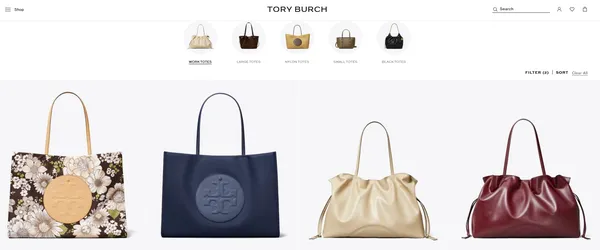
The brand’s product range is very extensive, covering areas such as ready-to-wear clothing, handbags, shoes, accessories, jewelry, home goods, and beauty products. Among them, handbags and shoes are the most popular categories. Classic bag styles include Ella Tote (tote bag), the Fleming series, the Eleanor series, and the soft-lined Hobo backpacks. In terms of shoes, Reva ballet flats, the Minnie series, and the Miller sandals with the iconic double T logo are all signature items of the brand.
Iconic Products
Item
Significance
Reva ballet flat
Launched 2006; named after Tory Burch’s mother; features the double-T logo; became a status symbol in the 2000s
Fleming bag
Quilted leather with chain strap; one of the brand’s best-selling handbag lines
Miller sandal
Leather thong sandal with cutout logo; a warm-weather staple
Hundreds of stores across the Americas, Europe, Asia, and the Middle East
Tory Burch Foundation
Supports women entrepreneurs through microfinance and mentorship
Brand Culture and Empowering Women
Empowering women is the design philosophy and corporate culture foundation of Tory Burch. In 2009, the founder established the Tory Burch Foundation in the United States, aiming to provide financial, community, and digital resource support to female entrepreneurs. In China, the brand also actively cooperated with the China Women’s Development Foundation, launching projects such as “Dreaming Forward”, and through training and entrepreneurial funding support, it helped empower Chinese women and promote the inheritance of intangible cultural heritage skills.
How Is Tory Burch as a Brand?
Tory Burch is a well-defined and rapidly-growing luxury brand targeting the middle market in the United States. It has gained widespread recognition in the market, but the consumer feedback is mixed, showing a characteristic of “those who love it always love it, yet there are also controversies”.
Brand Positioning: A Pioneering Player in the Light Luxury Market
Tory Burch precisely targets the “light luxury” market. Its product pricing is more accessible compared to traditional high-end luxury goods, and its target audience consists of young consumers who value quality and design.
Market Position: It is one of the representative brands in the global light luxury sector. It was once included in the “Global Luxury Power Ranking” and was awarded the “Annual Breakthrough Brand” in the JD Fashion “Annual Excellence Awards” in 2025.
Growth Momentum: The online sales volume of its official website reached 264.8 million US dollars in 2025, with a year-on-year growth of 20-50%. It is expected that the growth rate in 2026 will exceed 50%. Currently, the brand’s valuation is approximately 10.571 billion US dollars.
Global Layout: The brand has over 3,000 sales outlets worldwide in 50 countries, including 170 independent boutiques.
Product and Quality: “Durable” with a Stellar Reputation
The product design of Tory Burch is classic and practical, especially for the bags. Its durability has earned a good reputation among consumers.
Leather and Craftsmanship: Most of the bags are made of high-quality cowhide or sheepskin, with a soft and well-shaped feel. Some users have reported that the corners of the bags show no obvious wear after two or three years of use, and they are sufficient for daily commuting. The hardware (such as the iconic double T logo) is also considered to be of excellent workmanship.
Popular Collections: In terms of bags, Eleanor, Fleming, Lee Radziwill, Ella, and the newly launched Romy collection are all highly popular items. In terms of shoes, the classic Reva ballet flats and Miller sandals are also very loved.
Main Disadvantages: Some bag styles (especially those with chains) are relatively heavy in weight, which is a common complaint from users.
Consumer Feedback: A Mixed Bag of Genuine Opinions
The diverse opinions from consumers reflect both the influence of the brand and the challenges it faces in terms of quality control and service.
Positive Reviews
Quality and durability: Users generally appreciate the quality and design of the product, considering the leather soft and lustrous, and the hardware components exquisite.
High value for money: Compared to top luxury brands, Tory Burch offers more affordable prices and is regarded as “a great choice among light luxury brands”. Especially during the discount season, the cost-effectiveness is very high.
Service experience: Some store staff are enthusiastic and attentive in their service, and the brand also provides professional customer service and personalized shopping assistance.
Negative Evaluation
Quality control and durability doubts: Some consumers have reported a decline in product quality, such as severe wear and fading of hardware components within a short period, easy wear of the sole or peeling of the shoe surface.
Price and value dispute: Some consumers believe that the pricing is too high and the actual value does not match the price.
Poor service experience: Some consumers have complained about receiving unfriendly service from the staff or encountering difficulties in seeking after-sales support.
Data Profile: A Real Tory Burch
To present the brand image more intuitively, here are some key data points:
Net Promoter Score (NPS): Scored 22 points. Among them, 53% are promoters and 31% are detractors. It ranks third among similar competitors.
Consumer Ratings: Product Quality 4/5, Pricing 3.8/5, Customer Service 3.9/5.
Core Brand Assessment: A New Luxury Paradigm
Dimension
Evaluation
Positioning
New Luxury — bridges European heritage quality with American ease. Priced above mass-market but below haute couture, it occupies a unique “affordable elegance” space
Business Model
DTC Dominance — 85% of sales via owned channels (stores + e-commerce), enabling full control over brand experience and pricing integrity
Design Ethos
Timeless Reinterpretation — rejects fast fashion cycles. Focuses on “wear-for-years” pieces rooted in personal memory, vintage inspiration, and artisanal detail
Consumer Loyalty
High Retention — customers view Reva flats, Romy bags, and T Monogram as investment pieces. Chinese consumers rate service quality and product durability highly
Market Performance
Estimated $1.5B annual revenue; globally present in 250+ boutiques and 3,000+ retailers. 2024 named one of Time’s 100 Most Influential People
Social Impact: Beyond Profit, Building Legacy
Initiative
Scope
Impact
Tory Burch Foundation
Global
Supports women entrepreneurs; 70% of Fellows exceed $1M annual revenue — 10× national average
“Dreaming Forward” (China)
Hainan Li & Guangxi Zhuang communities
Trained 1,000+ women in traditional embroidery, brocade, and batik by 2025. Products sold globally under Tory Burch label
Revenue Reinvestment
Direct
Proceeds from limited-edition handchains and woven bags fund further training and microloans
Cultural Preservation
Intangible Cultural Heritage
First global luxury brand to institutionalize ethnic minority craft revival as a commercial pillar
2026 Product Highlights: The New Icons
Product
Design Innovation
Cultural Resonance
Romy Bucket Bag
Distressed leather + chain-link strap
Embodies “effortless cool” — a 2026 Spring/Summer breakout hit
Bunny Knot Collection
Hand-tied knots on clutches, heels, and belts
Transforms symbolic gesture into wearable poetry
T Monogram Jacquard
Recycled polyester blend with metallic thread
Sustainable luxury redefined — 40%+ eco-materials in 2025 Resort
Jessa Knit Loafers
Handwoven navy/cream wool with gold accents
Blends artisanal craft with minimalist American sportswear
Luxury brands are composed of excellent craftsmanship, deliberate scarcity, strong cultural resonance, high prices, and unique brand experiences. These elements collectively create a symbol of an aspirational lifestyle. It is not merely about expensive goods; it lies in the stories, traditions and emotions evoked by the brand.
Heritage & Craftsmanship
Pillar
Description
History & Legacy
Most luxury brands have decades or centuries of history, with a strong origin story (e.g., Hermès since 1837, Louis Vuitton since 1854).
Artisanal Excellence
Emphasis on handcraftsmanship, traditional techniques (e.g., saddle stitching, hand-painting), and master artisans.
Materials
Use of the finest raw materials—top-grade leathers, precious metals, exotic skins, rare fabrics.
Attention to Detail
Every stitch, seam, and finish is held to the highest possible standard.
Scarcity & Exclusivity
Pillar
Description
Limited Production
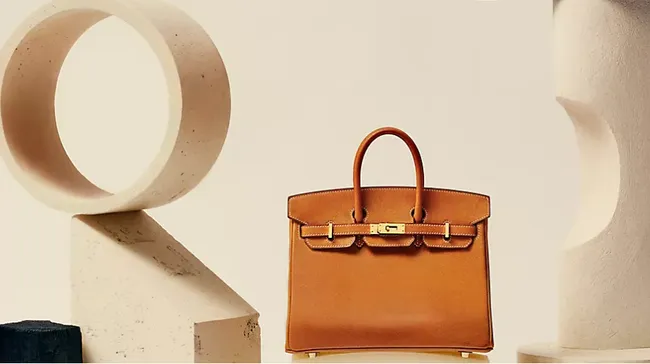
Luxury brands deliberately keep production low to maintain rarity (e.g., Hermès Birkin annual production is estimated at ~70,000 units).
Controlled Distribution
Products are sold only through flagship stores, select high-end department stores, or brand-owned websites—never mass-discounted.
Waiting Lists & Invitations
Many iconic items (like the Birkin) require purchase history or an invitation to buy.
No Discounting
Luxury brands almost never go on sale; discounting is seen as brand dilution.
Premium Pricing & Value Retention
Pillar
Description
High Price Point
Pricing is set far above material and production costs to reflect brand value, not just utility.
Price Increases
Luxury brands raise prices annually (often above inflation) to reinforce their exclusivity.
Resale Value
Many luxury items retain or even appreciate in value—Hermès Birkin averages +150% over retail on secondary markets.
Investment Appeal
Rare pieces are viewed as alternative assets (e.g., watches, handbags, jewellery).
Brand Identity & Cultural Resonance
Pillar
Description
Distinctive Aesthetic
A consistent, recognisable design language (e.g., Chanel’s quilting, LV’s Monogram, Hermès’ orange boxes).
Iconic Products
Every luxury brand has at least one product that transcends fashion and becomes a cultural symbol (e.g., Chanel 2.55, Rolex Daytona).
Storytelling
Brands sell dreams, not just products—they evoke a lifestyle, status, and belonging.
Media & Pop Culture
Frequent appearances in films, on red carpets, and on celebrities reinforce desirability.
Customer Experience & Service
Pillar
Description
Personalised Service
Private shopping, made-to-measure, and bespoke options are available for top clients.
Flagship Store Experience
Stores are designed as brand temples—architecturally stunning, immersive, and luxurious.
After Sales Care
Services like repair, restoration, and cleaning (e.g., Hermès “spa” service) extend product life.
Client Loyalty
Building long-term relationships with VICs (Very Important Clients) through exclusive events and previews.
Social & Environmental Responsibility
Pillar
Description
Sustainability
Many luxury brands are now adopting sustainable materials (e.g., mushroom leather, recycled fibres) and ethical sourcing.
Craft Preservation
Luxury houses invest in training new artisans and preserving traditional techniques.
Philanthropy
Many brands have foundations or partnerships supporting social causes (e.g., Chanel Culture Fund, Hermès Foundation).
Examples Across the Spectrum
True Luxury
Accessible Luxury
Premium
Mass Market
Hermès, Chanel, Rolls-Royce
Tory Burch, Coach, Michael Kors
Apple, Patagonia, Dyson
Zara, H&M, Toyota
Is Tory Burch a Luxury Brand?
Yes, Tory Burch is generally regarded as a brand that is friendly to the masses (also known as an affordable luxury brand), rather than a top luxury brand. A more accurate description would be that it is a brand with a unique positioning, currently in the process of transitioning from “entry luxury” to “luxury”.
This is precisely where it excels:
Accessible luxury: Tory Burch, Coach, Longchamp, and some collections by Marc Jacobs.
High luxury: Louis Vuitton, Chanel, Hermès, Dior.
The Honest Positioning
Tier
Examples
Price Logic
Heritage / Ultra Luxury
Hermès, Chanel, Dior, Celine
$3k–$30k+; craft + scarcity + asset narrative
Contemporary Designer
Tory Burch, Coach (top line), Michael Kors (old peak)
$300–$1.5k; designer branding, accessible price
Premium High-Street
Kate Spade, Coach (core), Polo Ralph Lauren
$150–$600
Industry Classification: Where It Stands
Classification
Authority
Key Evidence
Upper-Mid Luxury / Contemporary Luxury
McKinsey (2023 Global Fashion Report)
Positioned alongside Coach and Michael Kors, but with higher design integrity and retail positioning than mass-market labels
Affordable Luxury
Bain & Company (2022 China Luxury Report)
Handbag average price 300–800 USD — above fast fashion, below Gucci/Prada entry points
Luxury Lifestyle Brand
Tory Burch Corporate Archives, Time Magazine
Officially self-defined as “luxury lifestyle”; 2024 named one of Time’s 100 Most Influential People
Luxury Retail Presence
Euromonitor, Global Store Mapping
Flagship boutiques on Fifth Avenue (NYC), Champs-Élysées (Paris), Ginza (Tokyo) — same corridors as Hermès, Louis Vuitton
Tory Burch and Coach are both representative brands in the mid-to-high-end luxury sector. However, there is no definite answer as to which one is better. It largely depends on your personal preferences and needs. Generally speaking, Tory Burch excels in design and preservation value, while Coach has an edge in brand recognition and cost-effectiveness.
Founded in 2004 in New York, positioned as “American luxury”.
Founded in 1941 in New York, originated as a small leather workshop; pioneered the “accessible luxury” concept.
Positioning Evolution
Targeted the “accessible luxury” segment from the start; has been moving towards a more premium positioning in recent years.
Upgraded its positioning from “Accessible Luxury” to “Expressive Luxury” in 2022.
Current Positioning
“American luxury”.
“Expressive Luxury”.
Core Product Lines & Signature Designs
Dimension
Tory Burch
Coach
Signature Element
Double-T logo.
C-metal turn-lock.
Representative Collections
Eleanor, Fleming, Lee Radziwill, Ella, Romy, etc.
Tabby (launched in 2019, inspired by 1970s archive designs), Brooklyn (launched in 2024, named one of the “hottest bags globally” in Q4 2024), Empire Carryall, Lana.
Design Language
Elegant, sophisticated – blends American casual with uptown refinement.
Youthful, rebellious, trendy – bolder in recent years, incorporating graffiti, oversized silhouettes, and playful charms.
Younger consumers, especially independent women who value design.
Actively embracing Gen Z, while remaining inclusive of multiple age groups.
Pricing Strategy
More approachable pricing, ranging from ¥2,000 to ¥15,000.
Core product lines remain in the ¥2,000-6,000 range, matching Gen Z‘s “reward-driven” spending behaviour.
Market Strategy
Emphasises globalisation with local adaptation – adjusts product strategies to local market needs (e.g., Chinese stores have dropped the wallet category).
Successfully attracted Gen Z through a combination of style reinvention, social media buzz, and younger sub-brands – became the 5th most sought-after brand globally in Q4 2024.
Sustainability & Social Responsibility
Dimension
Tory Burch
Coach
Social Responsibility
Founded the Tory Burch Foundation in 2009 to support women entrepreneurs. In China, partners with the China Women‘s Development Foundation on the “Dream Forward” project.
Launched Coachtopia, a circular fashion sub-brand that re-uses surplus materials. Collaborates with universities on sustainability-related programmes.
Sustainability Commitments
Committed to using innovative, low-impact materials and production methods; reducing unnecessary packaging; most components are reusable or recyclable.
Promotes the “Wear it. Love it. Pass it on.” philosophy; emphasises extending product lifespan to reduce environmental impact; highlighted the use of post-consumer materials at New York Fashion Week.
There is no absolute standard answer as to which of Tory Burch and Michael Kors is better. Although both are positioned as mid-to-high-end brands, their development directions are completely different: Tory Burch is generally regarded as having a slight edge in design and quality, while Michael Kors focuses more on mainstream fashion and scale effects. The choice between the two depends more on your personal preferences and needs.
Brand & Positioning
Dimension
Tory Burch
Michael Kors
Founding Year
2004
1981
Brand History
Relatively young; founded by Tory Burch herself, who previously worked at Ralph Lauren and Vera Wang.
More established; one of the pioneers in the accessible luxury segment; founder Michael Kors served as creative director at Celine.
Founder Background
Tory Burch studied art history at the University of Pennsylvania and started her career in fashion PR and marketing.
Michael Kors studied fashion design at FIT and gained early recognition as a designer before launching his own label.
Parent Company
Independent, privately held.
Part of Capri Holdings Limited (formerly Michael Kors Holdings).
Brand Positioning
American luxury lifestyle brand, positioned between accessible luxury and high-end fashion. Reported a 16.4% revenue growth in 2024.
Accessible luxury; repositioning from “affordable luxury” to “accessible elegance” by reducing discounting and elevating quality.
2025/2026 Strategy
Strengthening premium positioning; expanding retail footprint with a focus on design-driven collections.
Focusing on price reset, fewer promotions, and experiential retail (e.g., “Jet Set Lounge” pop-ups).
Brand Tagline/Philosophy
Blends American casualness with uptown refinement.
Classic styles at 80% condition retain ~60 70% of original price; actual buyback often below 50%.
Hamilton series resale often in the range of tens to hundreds of dollars; residual value rarely exceeds 30%.
Sustainability & Social Responsibility
Dimension
Tory Burch
Michael Kors
Sustainability Initiatives
Launched mushroom based leather (mycelium) products in 2025; transitioning shipping bags to 100% recycled materials by Fall 2025; new sustainable packaging.
Offers clothing made from recycled materials; however, transparency on wool sourcing has been rated poorly by animal welfare groups.
Carbon Neutral Commitment
Not explicitly carbon-neutral, but focused on reducing material impact.
No public carbon-neutral target as of now.
Supply Chain Transparency
Moderate disclosure; partners with certified suppliers.
Limited transparency; has been criticised for opacity in raw material sourcing.
Social Impact
Founded Tory Burch Foundation in 2009 to support women entrepreneurs. In China, launched the “Dream Forward” project, training over 3,600 women in intangible cultural heritage skills.
Since 2013, has partnered with UN World Food Programme; in 2025 pledged $2.7 million to support school meals in Sri Lanka.
Total Charitable Contributions
Foundation has provided millions in grants and loans to women-owned businesses.
Ongoing multi-year commitment to WFP; total contributions not publicly aggregated.
Consumer Perception
Dimension
Tory Burch
Michael Kors
Positive Feedback
High praise for leather quality, refined design, and aesthetic consistency.
Appreciated for durability, value for money, and wide availability.
Negative Feedback
Occasional complaints about hardware wear (gold plating fading) and creasing on certain bags.
Reports of peeling leather, excessive discounting, and inconsistent customer service.
NPS Score
22 (3rd among peer competitors).
23 (2nd among peer competitors).
Social Media Followers (approx.)
Instagram: ~11M, Weibo: ~2M.
Instagram: ~15M, Weibo: ~6M.
Return/Complaint Rate
Moderately low; most issues relate to outlet-specific quality variations.
Slightly higher complaint rates due to quality inconsistencies on discounted items.
Customer Loyalty
Strong repeat purchase among design-conscious consumers.
High brand awareness but lower emotional attachment; loyalty driven by accessibility.
Where TB Beats MK (Pretty Clearly)
Dimension
Tory Burch
Michael Kors
Design DNA
Preppy-bohemian + Euro atelier whiff (Tory trained at LVMH/Valentino)
“Jet-set” glam-logo spam — same MK logo template across 100 SKUs
Leather (full-price)
Calf/goatskin/quilt (Fleming, Kira) — real “designer” hand
Often coated split + heavy embosseven at full-price; feels more “pleather-adjacent”
Resale
Depreciates, but Fleming/Tabby-adjacent hold steadier in resale feeds
MK circle-logo — overused, feels dated on anything but the classics
Head-to-Head Comparison
Category
Tory Burch
Michael Kors
Verdict
Price
$200–$800 bags
$150–$600 bags
MK slightly cheaper
Quality
Good; decent materials
Variable; outlet lines notably weaker
Slight edge to Tory Burch
Logo dependency
Present but restrained
Often heavy and dominant
Tory Burch wins for subtlety
Outlet dilution
Significant
Extreme
Both suffer; MK worse
Resale value
Weak
Very weak
Tie
Status perception
Preppy, polished
Mainstream, mass-luxury
Subjective
Selection Guide: Which Brand Should You Choose?
Choose Tory Burch if you:
Pursue the poetry in design, dislike the logo bombardment, and prefer “details only known to oneself”
Value the social significance behind the brand, and are willing to pay a premium for “empowering women” and “cultural revival”
Prefers full leather texture, is indifferent to canvas, and seeks items that “become more charming with use”
Your lifestyle scenario leans towards museums, high-end meetings, and private dinners, and focuses on long-term value
Identify with “True luxury is the meticulous effort that goes unnoticed”
Choose Michael Kors If you:
Seek high quality and practicality for daily use, hoping that a bag won’t become outdated within three years
Like the classic carriage logo and the American minimalist style, enjoying the sense of “easy yet stylish” confidence
Be passionate about technology collaborations (such as smart travel cases), celebrity endorsements (Gao Yuanyuan, Tan Jianxi)
Live in second- or third-tier cities, valuing the convenience of stores and service experience
Identify with “True Self New Luxury” – not for showcasing one’s status, but for expressing oneself
Conclusion
Is Tory Burch a luxury brand? The most accurate response would be: Yes, but it is a mid-luxury brand rather than a top luxury brand.
The brand positioning of Tory Burch was clearly defined in 2026 as “an American luxury lifestyle brand”, and it is moving towards the high-end by reducing the proportion of outlet stores and improving the quality of its products. However, in the eyes of consumers and the market, it still belongs to the mid-luxury category. It is an “entry-level” choice for entering the world of luxury brands, rather than a traditional luxury brand at the top of the pyramid.
If you want to create your own luxury brand, please feel free to consult us. We have over 20 years of experience in the manufacturing of mid-to-high-end bags, and let’s work together to create miracles for your bags.