
Physical Vapor Deposition (abbreviated as PVD) is a high-tech coating technology that takes place in a vacuum environment. Through physical methods, solid or liquid coating materials are vaporized and deposited onto the surface of the substrate in the form of atoms, molecules or ions, thereby forming a dense film.
The coatings formed by PVD have high hardness, wear resistance, corrosion resistance, high temperature resistance, and excellent decorative effects. Currently, PVD technology has been widely applied in the production of hardware for luxury bags, such as locks and chains of brands like Hermès and Chanel, which are coated with PVD gold, palladium, gun black, etc., maintaining their durability and corrosion resistance for an extremely long time and remaining as new.
This post will explore the process principle and characteristics of Physical Vapor Deposition.
What Is Physical Vapor Deposition?
Physical Vapor Deposition (PVD) is an advanced coating process based on vacuum, used to deposit thin layers of metals, alloys or ceramics on solid substrates. Unlike chemical methods that rely on liquid chemical reactions (such as electroplating), PVD utilizes purely physical mechanisms – evaporation, sputtering or arc discharge – to transfer materials from a solid source to the target surface in a high vacuum environment.
The result is a dense, aesthetically pleasing, highly adherent and usually very hard and corrosion-resistant coating, which can significantly improve the appearance, durability and corrosion resistance of products.
PVD technology is often used in industries such as luxury fashion bags and accessories, watches, jewelry, electronic devices, automotive manufacturing, aerospace and medical equipment.
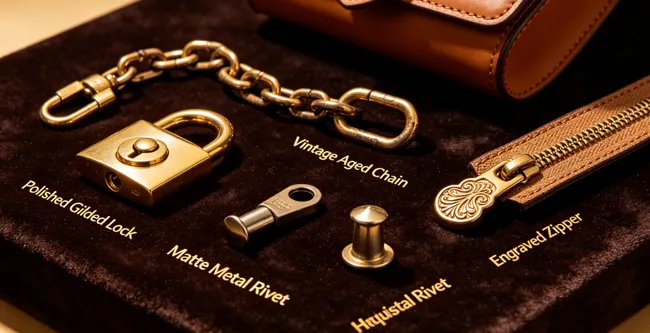
In the high-end bag industry, physical vapor deposition (PVD) coatings are commonly applied to hardware components such as locks, chains, buckles, zipper pulls, rivets and signboards.
The Core Principle of PVD (Physical Vapor Deposition) Process
The PVD process consists of three basic steps:
Evaporation – The coating material (referred to as “target” or “source”) changes from solid or liquid state to gaseous state. This process is achieved through the following methods:
- Thermal evaporation (resistance heating or electron beam heating)
- Sputtering (high-energy ion bombardment)
- Arc evaporation (large current arc discharge)
Transport – The evaporated atoms, molecules or ions move in a low-pressure vacuum chamber (usually in the pressure range of 10⁻³ to 10⁻⁶ millibars). Due to the long average free path, they almost move in a straight line without colliding.
Condensation (deposition) – The vapor particles impact the substrate surface, where they condense, form nuclei and gradually grow into a thin and uniform film. Usually, the substrate is rotated or fixed to improve the coverage effect.
Main PVD Techniques
| Technique | How It Works | Typical Deposition Rate | Film Characteristics |
| Thermal Evaporation | A metal (e.g., Al, Cr) is heated in a crucible until it evaporates. The vapor condenses on the cooler substrate. | High (0.1–10 µm/min) | Low energy – film adhesion is moderate; step coverage is poor (line-of-sight). |
| Electron-Beam (E-beam) Evaporation | A high-energy electron beam melts/evaporates the source material. | Very high (up to 100 µm/min) | Good for high-melting-point materials (W, Ta, Mo); still line-of-sight. |
| Sputtering | Argon ions are accelerated toward a target. The impact knocks off target atoms, which then deposit on the substrate. | Medium (0.01–1 µm/min) | Dense, smooth, good adhesion, better step coverage. |
| Magnetron Sputtering | A magnetic field confines electrons near the target, increasing plasma density and deposition rate at lower pressure. | Medium to high | Very dense, excellent uniformity, minimal substrate heating. |
| Cathodic Arc Deposition (Multi Arc) | A high-current arc vaporizes the target material directly. The plasma contains highly ionized species. | Very high (up to 10 µm/min) | Extremely high adhesion, great for complex shapes, but can produce micro-droplets. |
Why Is PVD Superior for Many Applications?
| Property | PVD Coating | Electroplating |
| Hardness | HV 1500–3000 (e.g., TiN, CrN) | HV 200–800 (Ni, Cr) |
| Adhesion | Molecular level bonding (diffusion or ion mixing) | Mechanical interlocking |
| Thickness | 0.5–5 µm (very precise) | 5–30 µm (thicker, less precise) |
| Wear resistance | Excellent – 5–10× better than electroplating | Moderate |
| Corrosion resistance | Dense, pinhole free; chemically inert coatings (e.g., TiN, CrN) | Dependent on multi layer structure; micro pores often present |
| Colour range | Wide – gold, rose gold, black, blue, gunmetal, etc., without using toxic metals | Wide, but may require separate dyes or topcoats |
| Environmental impact | Vacuum process – no wastewater, no toxic effluents | Produces large amounts of heavy-metal wastewater (Cr⁶⁺, Ni, Cu) |
| Substrate heating | Low (sputtering) to moderate (arc) – suitable for heat-sensitive materials | Ambient – but requires conductive substrate |
Common PVD Coating Materials
| Material | Color | Hardness (HV) | Use Case |
| TiN (Titanium Nitride) | Bright Gold | 1,800–2,400 | Watch cases, bag chains, jewelry |
| TiCN (Titanium Carbonitride) | Dark Gold / Rose Gold | 2,000–2,500 | Premium hardware |
| CrN (Chromium Nitride) | Silver / Gunmetal | 1,500–2,000 | Silver-tone hardware |
| ZrN (Zirconium Nitride) | Light Gold | 1,800–2,200 | Decorative coatings |
| DLC (Diamond-Like Carbon) | Black | 2,000–4,000 | Black hardware (Chanel, Balenciaga) |
| TiAlN | Dark Gray / Purple | 2,500–3,000 | Ultra-hard functional coatings |
Applications of Hardware in Bags (and in Broader Fields)
Luxury bag hardware – Physical Vapor Deposition (PVD) technology is the standard process for high-end handbags. Hermès uses this multi-arc ion plating technique for its “So Black” hardware and for most modern gold, palladium, and permanent brass surface treatments. Chanel, Louis Vuitton, and other top brands also use PVD to make locks, chains, zipper pulls, and brand logos. This coating resists scratches from keys, sweat, and perfume, keeping the hardware shiny and new for many years.
Other Common Uses:
- Watches and jewelry – Rolex, Omega, and Cartier use physical vapor deposition technology to create golden cases and straps (for example, called “PVD Gold”).
- Automotive sector – Decorative interior parts, wheel coatings, engine components (diamond coatings, titanium aluminum nitride coatings).
- Tools and molds – Drill bits, end mills, injection molds (titanium nitride, aluminum nitride, chromium nitride), to extend tool lifespan.
- Aerospace and medical fields – For durable and wear-resistant coatings on turbine blades, surgical instruments, and implants.
Advantages in Terms of Environment and Health
Physical vapor deposition technology is often referred to as “green technology“. This is because the entire process takes place in a sealed vacuum chamber, which brings the following benefits:
- No liquid waste (no acid, cyanide or heavy metal emissions)
- No exhaust gas emissions (metal vapors will condense in the chamber)
- No need for harmful post-treatment (such as hexavalent chromium passivation)
This makes PVD compliant with strict environmental regulations (such as REACH and RoHS), and it is also gradually favored by luxury brands that are committed to sustainable development.
Restrictions and Precautions
- Visual range limitation – Most physical vapor deposition techniques (except for advanced ion coating technologies with substrate bias/rotation functions) have limited capabilities in covering deep grooves or the interiors of tubes.
- Equipment cost – Vacuum chambers, pumps, power supplies, and target materials are expensive → Compared to electroplating production lines, their capital investment is higher.
- Substrate size – Limited by the chamber size; not suitable for very large components (such as automotive body panels).
- Color matching – Minor changes in process parameters will alter the color; precise control is required.
Key Takeaways
| Point | Explanation |
| What it is | Vacuum coating that vaporizes solid material and re-deposits it atom-by-atom |
| How it works | Evaporation, Sputtering, or Ion Plating — all in vacuum |
| Why it’s superior | ~10x harder than electroplating, eco-friendly, bonds at molecular level |
| Why luxury brands use it | Scratch resistance + unlimited colors + clean process = perfect for high-end hardware |
| The future | PVD is rapidly replacing electroplating as the industry standard for luxury accessories |
How Does Physical Vapor Deposition Work?
The term “physical vapor deposition” describes a physical process rather than a chemical reaction.
The basic principle of physical vapor deposition (PVD) is relatively simple: In a vacuum chamber, a solid material is transformed into gaseous form, and these vaporized particles deposit on the surface of the product, thereby forming a thin coating.
Step-by-Step PVD Process
1. Base Preparation
Before the deposition process, the base undergoes strict cleaning and treatment to remove contaminants (such as oil, oxides, dust) and enhance the adhesion of the coating. Common pre-treatment methods include:
- Ultrasonic cleaning: Using high-frequency sound waves to remove surface impurities.
- Plasma etching: Using high-energy plasma to bombard the base, removing surface oxides and forming micro-roughness, thereby increasing the surface area for better adhesion.
- Mechanical polishing: Making the base surface smooth to ensure uniform coating thickness on complex geometries.
2. Installing the Vacuum Chamber
After the cleaning process is completed, these components will be installed onto the fixed device and placed inside a sealed vacuum chamber.
Subsequently, the chamber will be evacuated using a vacuum pump to create a low-pressure environment. The pressure in this vacuum state is typically much lower than normal atmospheric pressure.
There are various uses for vacuum:
- Preventing unnecessary chemical reactions
- Eliminating pollution from the air
- Allowing agitated particles to move freely
- Improving the consistency of the coating
3. Evaporation of Coating Materials
Converting the substrate (such as metal, alloy, or ceramic) into vapor typically employs one of the following three main methods:
- Thermal evaporation: Resistance heating or electron beam bombardment causes the material to melt and evaporate. For example, electron beam evaporation uses a high-energy electron beam to melt metals like titanium or aluminum, thereby generating a high-purity vapor stream.
- Sputtering: Argon ions strike the target material, causing atoms to escape through momentum transfer. Magnetron sputtering uses a magnetic field to capture electrons near the target material, thereby increasing ionization efficiency and deposition rate.
- Arc discharge: A high-current arc strikes the surface of the target material, generating a local plasma and causing the material to evaporate. Due to its high ionization efficiency, this method is particularly suitable for depositing hard coatings such as titanium nitride (TiN).
Common coating materials include:
- Titanium
- Chromium
- Zirconium Aluminum
- Stainless steel
- Titanium nitride
- Carbon compound
4. Particle Transmission
Steam particles move from the source to the substrate in the vacuum chamber (typically at a pressure lower than 10⁻³ pascals). The low pressure reduces collisions with air molecules, ensuring a straight trajectory and uniform deposition. In some techniques, a carrier gas (such as argon) is introduced to control the plasma density and particle energy.
5. Deposition and Film Growth
Gaseous particles condense on the substrate surface, forming a layer of film. The deposition mechanism varies depending on the technology:
- Evaporation: Neutral atoms directly condense on the substrate, forming a layer of film through atomic stacking. This method is cost-effective, but compared to ion-based technologies, it may have poorer adhesion.
- Sputtering: Atoms sputtered out have higher kinetic energy (1 – 10 electron volts) than those evaporated, thus forming a denser film and better adhesion. Reactive sputtering introduces gases such as nitrogen or oxygen to form compound films (such as titanium nitride, aluminum oxide).
- Ion plating: Using an electric field or plasma source to ionize some vapor into high-energy ions. These ions are accelerated towards the substrate and through ion bombardment, the density and adhesion of the film are enhanced. Pre-deposition ion cleaning can remove residual contaminants, further improving the adhesion.
6. Post-Deposition Treatment
After the coating is completed, the substrate may undergo some post-processing procedures to optimize the performance of the coating:
- Annealing: Heating the coated substrate in a controlled environment can relieve internal stress, increase crystallinity, and enhance corrosion resistance.
- Passivation: Applying a thin oxide layer (for example, using oxygen plasma treatment) to protect the coating from environmental damage.
- Cooling: Rapid cooling can prevent thermal stress and maintain the required film structure, especially for substrates like plastics that are sensitive to temperature.
Why Are Vacuum and High Energy Crucial?
A vacuum environment enables evaporated particles to fly without colliding with air molecules, thus ensuring pure and efficient deposition.
High energy input (thermal energy, plasma, ions) can provide sufficient kinetic energy to the particles, allowing them to form dense and closely bonded coatings rather than powdery layered structures.
The Three Core Steps of Physical Vapor Deposition (PVD)
1. Evaporation (Converting Solid into Vapor)
The coating material, known as “target” or “source”, is placed in a vacuum chamber. By applying energy, the atoms on the surface are transformed into vapor without melting the entire object. Common methods:
- Thermal evaporation – heating the target object (through resistance heating or electron beam heating) until it evaporates.
- Sputtering effect – high-energy ions (such as argon ions) are accelerated and act on the target material, physically colliding and knocking off atoms – like a version of billiards with atoms.
- Arc evaporation – a high current and low voltage method, the arc directly evaporates the target material, forming a dense plasma filled with ions.
2. Transmission (in a Vacuum)
The evaporated atoms (or ions) travel in a straight line through the low-pressure vacuum chamber. Due to the extremely low pressure (e.g. 10⁻³ to 10⁻⁶ millibars), these atoms rarely collide with gas molecules. They move from the target material to the substrate in a ballistic manner.
3. Condensation/Dissolution (Forming Coating)
When the vapor atoms reach the cooled substrate (the object to be coated), they release energy, condense and adhere to the surface. Over time, they accumulate layer by layer, forming a thin and dense, highly adhesive film.
In ion plating (a type of physical vapor deposition technology), gaseous substances are ionized (charged) and then a negative bias is applied to the substrate. This causes the ions to move towards the surface and embed themselves in the substrate, achieving molecular-level adhesion – this adhesion is much stronger than simple condensation.
A Simple Analogy
Imagine heating water and causing the steam to condense on a cold lid – this is the process of evaporation and condensation. Now imagine performing the same operation with metal in a vacuum and having charged particles fly towards the lid – this is the process of physical vapor deposition (PVD).
Summary of the Core Principle: 3 Steps
| Step | Process | Detail |
| 1. Vaporization | A solid target material (e.g., titanium, gold, zirconium, chromium) is converted into gaseous atoms, molecules, or ions | Achieved through heat evaporation, ion bombardment (sputtering), or arc discharge |
| 2. Transport | The vaporized particles travel through a high-vacuum chamber (typically 10⁻³ to 10⁻⁶ Pa) | The vacuum environment prevents contamination from air, moisture, or dust — ensuring a pure, clean coating |
| 3. Deposition | Particles land on the substrate, lose energy, and condense into a solid thin film | Because particles arrive with high kinetic energy, they embed into the surface rather than just sitting on top — creating a metallurgical bond |
Key Factors That Make PVD Work
| Factor | Role |
| Vacuum | Removes air molecules so vapor atoms travel without scattering; also prevents oxidation. |
| Energy source | Provides enough energy to vaporize the target (heat, ion bombardment, or arc). |
| Substrate temperature | Can be low (for plastics) or high (for metals) – PVD works at relatively low temperatures compared to other methods. |
| Bias voltage (ion plating) | Accelerates ions to improve adhesion and coating density. |
| Reactive gas | If nitrogen, oxygen, or methane is introduced, the metal vapor reacts to form hard compounds like TiN (gold), CrN (silver grey), or DLC (diamond like carbon). |
Common PVD Configurations & How They Work
| Method | How It Vaporizes Material | How It Deposits | Best For |
| Thermal Evaporation | Heat (resistive or e beam) | Atoms travel in line of sight; simple condensation | Thin decorative films on flat parts |
| Sputtering | Argon ions knock atoms off target | Sputtered atoms deposit with moderate energy | Dense, smooth coatings on large areas |
| Magnetron Sputtering | Magnetic field enhances sputtering | Faster deposition, less substrate heating | High quality uniform films (e.g., iPhone bodies) |
| Cathodic Arc (Multi Arc) | Electric arc vaporizes target directly | Highly ionized plasma; ions embed into substrate | Very hard, well adhered coatings on complex shapes (bag hardware) |
Material Range and Film Properties
The physical vapor deposition technique can handle a variety of materials:
- Metals/Alloys: Gold, aluminum, titanium alloys.
- Ceramics/Oxides: Aluminum oxide (Al₂O₃), zirconium oxide (prepared by reactive sputtering).
- Polymers/Composite Materials: Polytetrafluoroethylene, multilayer stack structures (for example, titanium/titanium nitride barrier).
Film Properties Include:
- Mechanical Properties: Hardness, wear resistance (crucial for cutting tools).
- Electrical Properties: Conductivity (copper interconnections in semiconductors).
- Optical Properties: Anti-reflective coatings (sunglasses, displays).
- Chemical Properties: Corrosion protection (aerospace components).
How Does Physical Vapor Deposition Work with Heat?
In the physical vapor deposition (PVD) technology, heat mainly functions in the thermal evaporation method, but not all PVD processes rely on heat.
The Physics: Why Heat Makes Atoms Fly
| Concept | Detail |
| Clausius-Clapeyron Equation | Describes the temperature-pressure relationship: as temperature rises, vapor pressure increases exponentially — more atoms escape |
| Saturation Vapor Pressure | At a given temperature, the material emits vapor at a specific rate. Heat the target until this pressure is high enough for useful deposition |
| Atom Energy on Escape | Evaporated atoms leave with only 0.1–0.3 eV of kinetic energy — they “float” gently onto the surface (unlike ion plating’s 1,000+ eV) |
How Heat Works in PVD (Thermal Evaporation)
In the PVD (thermal evaporation) process, heat is the primary energy source that causes the coating material to evaporate.
Stepwise Heating Method:
Heating source – Place the coating material (such as gold, aluminum, chromium) in a crucible or on a filament in a vacuum chamber.
Evaporation – Heat the material to its vaporization temperature (much higher than its melting point). For example:
- Aluminum: Approximately 1000 degrees Celsius
- Gold: Approximately 1400 degrees Celsius
- Chromium: Approximately 1600 degrees Celsius
Transmission – Evaporated atoms move in a straight line in a vacuum (no collisions occur).
Condensation phenomenon – Atoms collide with a cooler substrate (for example, locking components) and condense, thereby forming a thin film.
Two Common Heating Methods:
- Resistance heating – Current passes through a metal filament (such as tungsten wire) for conduction, and this filament is used to fix or support the coating material. This method is simple, but it is only suitable for materials with a lower melting point.
- Electron beam (e-beam) heating – A focused beam of high-energy electrons is directed onto the coating material, causing its local temperature to rise to an extremely high level. This method enables high-melting-point materials (such as tungsten, tantalum) to evaporate without melting the entire crucible.
The Three Heat Sources — How They Work
Resistive (Joule) Heating — The Classic Method
| Parameter | Detail |
| How it works | High current passes through a tungsten (W) or molybdenum (Mo) wire/boat. Joule heating (I²R) raises temperature to 1,200–1,700°C |
| What it can evaporate | Low-melting metals: Al, Au, Ag, Cu, Cr, Ni (melting point < 1,500°C) |
| Can’t handle | Tungsten, tantalum, ceramics — too high a melting point |
| Pros | Simple, cheap, widely available |
| Cons | Wire can alloy with evaporant, limited max temp, shorter source life |
Used for: Decorative gold/silver coatings on bag hardware, plastic metallization, mirror manufacturing
Electron Beam (e-Beam) Heating — The Powerhouse
| Parameter | Detail |
| How it works | An electron gun fires a focused beam of high-energy electrons (10–20 kV, 250 mA) at the target. Kinetic energy converts to instantaneous heat at the impact point |
| Temperature achieved | 3,000–6,000°C — can evaporate anything including tungsten, ceramics, oxides |
| Key advantage | Only the target surface melts — the water-cooled crucible stays solid, so zero contamination from the container |
| Deposition rate | 0.1–100 nm/min (very controllable) |
| Material efficiency | Much higher than resistive heating |
| Cons | Expensive equipment, beam directionality can cause thickness non-uniformity |
Used for: High-end bag hardware (TiN gold coatings), optical coatings, semiconductor metals, calcium titanate solar cells
Laser Beam Heating — The Precision Tool
| Parameter | Detail |
| How it works | A CO₂ or YAG laser fires a concentrated beam at the target surface |
| Temperature | Localized instantaneous evaporation — no crucible needed |
| Key advantage | Zero crucible contamination, can target specific spots |
| Cons | Complex, expensive, limited to small areas |
Used for: Research, ultra-pure thin films, specialty coatings
The Full Heat-Based PVD Process — Step by Step
| Step | Action | Why Heat Matters |
| 1. Load & Pump Down | Parts placed in vacuum chamber, pumped to 10⁻³ – 10⁻⁶ Pa | Vacuum = no air resistance, atoms travel straight to substrate |
| 2. Clean | Ultrasonic + ion sputter cleaning | Heat won’t work on a dirty surface — atoms won’t bond |
| 3. Pre-heat Substrate | Substrate heated to 200–500°C | Improves adhesion — atoms land on a warm surface and diffuse better |
| 4. Pre-melt (Shutter Closed) | Heat source turns on with shutter blocking substrate | Burns off impurities and outgasses the source material — critical for purity |
| 5. EVAPORATE (Shutter Opens) | Heat source hits target → atoms boil off at 0.1–0.3 eV | This is THE moment — solid becomes vapor |
| 6. Transport | Atoms fly line-of-sight through vacuum to substrate | No collisions, no scattering — straight path |
| 7. Condense & Grow | Atoms land → adsorb → diffuse → nucleate → grow into film | Surface diffusion + recombination = solid film |
| 8. Cool Down | Chamber cools to room temperature | Prevents thermal shock to the coating |
What Gets Deposited by Heat-PVD?
| Material | Melting Point | Heat Source Needed | Typical Use on Bags |
| Aluminum (Al) | 660°C | Resistive ✅ | Silver-tone hardware, mirror finish |
| Gold (Au) | 1,064°C | Resistive ✅ | Gold-tone hardware (Chanel, Dior) |
| Silver (Ag) | 962°C | Resistive ✅ | Silver hardware (Hermès) |
| Copper (Cu) | 1,085°C | Resistive ✅ | Rose gold tone |
| Chromium (Cr) | 1,907°C | E-beam ✅ | Adhesion layer, gunmetal |
| Titanium (Ti) | 1,668°C | E-beam ✅ | TiN gold coating (LV chains) |
| Tungsten (W) | 3,422°C | E-beam only ✅ | Specialty hard coatings |
| ZrO₂, Al₂O₃ | 2,700°C+ | E-beam only ✅ | Transparent protective overcoat |
Limitations of Heat-Based PVD
| Issue | Why It Matters |
| Directional coating | Atoms travel in straight lines; complex shapes may have shadowed areas with uneven coverage |
| Limited to high-vapor-pressure materials | Some refractory metals vaporize poorly with simple resistive heating |
| Moderate adhesion | Without ion bombardment, the coating sits on the surface rather than penetrating it |
| Substrate temperature sensitivity | Heat from the source can warp or damage delicate substrates |
But Many PVD Methods Use Little or No Heat
Heat is not always the main driving factor. In sputtering and cathodic arc deposition, the coating material is vaporized through momentum transfer (ion bombardment) or the electric arc rather than heat energy. These methods operate at relatively low temperatures (sometimes below 100 degrees Celsius), which is why they can coat heat-sensitive materials (such as plastics) without causing damage.
| PVD Method | Role of Heat | Typical Substrate Temperature |
| Thermal evaporation | Primary – melts/vaporizes the source | Can be high (200–600 °C) |
| Electron-beam evaporation | Primary – intense local heating | Moderate to high |
| Sputtering | Minimal – target is heated by ion bombardment, but substrate stays cool | Low to moderate (often <150 °C) |
| Cathodic arc | Low – arc vaporizes by current, not temperature | Low to moderate |
Heat-PVD vs. Other PVD Methods — The Heat Comparison
| Resistive Heat | E-Beam Heat | Sputtering (Ion) | Arc Ion Plating | |
| Energy Source | I²R Joule heat | Electron kinetic → heat | Ion bombardment | Electric arc → plasma heat |
| Atom Energy | 0.1–0.3 eV | 0.1–0.3 eV | 10–100 eV | 1,000–10,000 eV |
| Max Temp | ~1,700°C | ~6,000°C | Substrate stays cool | Localized 5,000–20,000°C |
| Adhesion | Weak (surface only) | Weak (surface only) | Good | Excellent (metallurgical) |
| Hardness of Film | Soft | Soft | Medium | Very Hard (1000–2500 HV) |
| Cost | $ | $$$ | $$$ | $$$$ |
| Used For | Decorative gold/silver | High-melting materials | Hard coatings | Luxury hardware (LV, Rolex) |
Why Does Heat Matter in PVD?
High temperatures can cause the substrate to become soft or deformed – this is not good news for plastics, polymers or certain electronic components.
Heat can enhance adhesion – higher substrate temperatures help with atomic diffusion and form stronger bonds (but there is a risk of causing damage).
The thermal evaporation process is simple and fast – it is very suitable for decorative coatings on metal parts (such as gold-plated hardware), and these coatings can withstand high temperatures.
Why Luxury Bags Use Heat-PVD (Evaporation)
| Brand | Heat Method | What They Deposit | Thickness |
| Chanel / Dior / Prada | Resistive heating | 23.5K Gold, Silver | 0.1–0.5 μm |
| Louis Vuitton (chains) | E-beam + Ion assist | TiN (looks like gold) | 0.5–2.5 μm |
| Rolex (bezels) | E-beam | TiN, DLC black | 1–3 μm |
| Hermès (gold) | Thick resistive (3μm) | 23.5K Gold | ~3 μm ⭐ |
Hermès is the king of heat-PVD: They use resistive heating to deposit a full 3 μm of 23.5K gold — that’s 6–30x thicker than standard electroplating. This is why their gold hardware looks like solid gold and lasts 5+ years.
Bottom Line: How Heat Makes PVD Work
| Question | Answer |
| What does heat do? | Gives target atoms enough kinetic energy to overcome interatomic binding forces and escape the surface as vapor |
| How hot does it get? | Resistive: ~1,700°C / E-beam: ~6,000°C |
| What happens to the atoms? | They fly through vacuum at 0.1–0.3 eV, land on substrate, cool down, and nucleate into a solid film |
| Why vacuum? | No air = no oxidation, no scattering, atoms travel straight to target |
| Why is it softer than ion plating? | Atoms arrive with only 0.1–0.3 eV — they sit on top rather than embedding in |
| Why do luxury brands still use it? | It’s cheaper, simpler, and produces the most beautiful mirror-finish — perfect for decorative gold/silver hardware |
Heat-based PVD = This is the most primitive and elegant method for coating luxury hardware products. It is not the hardest, but it is the most beautiful. If properly operated (for example, using a 3-micron thick gold coating like that used by Hermès), the effect is almost indistinguishable from the genuine article.
Is Physical Vapor Deposition Vacuum-Based?
Yes, physical vapor deposition (PVD) is a process based on vacuum. It is always carried out in a sealed vacuum container under a low-pressure environment (typically ranging from 10⁻³ to 10⁻⁶ millibars).
Why Vacuum Is Essential for PVD?
Prevent pollution – In an environment without air, there will be no oxygen or moisture to react with the evaporating metal, thus avoiding the generation of unnecessary oxides or nitrides during the deposition process.
- Has a long average free path – In a vacuum, evaporated atoms will move in a straight line and will not collide with gas molecules, thus being able to efficiently reach the substrate.
- Supports low-temperature operation – Reducing pressure will lower the boiling point of the material, so the coating can be applied at a lower temperature (this is particularly important for substrates like plastics that are sensitive to temperature).
- Can produce pure, thick coatings – Since there are no impurities in the air, the coating is cleaner and has a tighter bond.
Summary of Why Vacuum Is Non-Negotiable
| Scenario | What Happens to Vaporized Atoms |
| In air (atmospheric pressure) | Atoms collide with air molecules (N₂, O₂, H₂O) billions of times per second → they scatter in random directions, lose energy, oxidize, and never reach the substrate in a coherent beam |
| In vacuum (10⁻³ – 10⁻⁶ Pa) | Atoms travel meters without a single collision → they go straight from source to substrate → pure, uncontaminated, high-energy deposition |
This can be understood as follows: In the air, gaseous atoms are like trying to throw a ball through a crowd – the ball bounces around. But in a vacuum environment, it’s like throwing the ball in an empty stadium – the ball always hits the target directly each time.
Common PVD Techniques That Require Vacuum
- Thermal evaporation
- Electron beam evaporation
- Sputtering (including magnetron sputtering)
- Cathodic arc deposition (multi-arc ion plating)
All of these processes are carried out in a vacuum environment. Without a vacuum environment, this process would not be physical vapor deposition but some other type of process (for example, atmospheric plasma spraying or electroplating).
The Vacuum Levels PVD Requires
| PVD Method | Vacuum Level | Pressure | Comparison |
| Vacuum Evaporation | High Vacuum | 10⁻³ – 10⁻⁴ Pa | ~1/10,000,000th of atmospheric pressure |
| Sputtering | High Vacuum | 10⁻³ – 10⁻² Pa | ~1/1,000,000th of atmospheric pressure |
| Ion Plating (Arc) | Medium-High Vacuum | 10⁻² – 10⁻¹ Pa | ~1/100,000th of atmospheric pressure (slightly higher due to plasma gas) |
| CVD (for comparison) | Low Vacuum to Atmospheric | 1 – 10⁵ Pa | Can work WITHOUT vacuum ❌ |
| Electroplating (for comparison) | No vacuum | 1 atm (101,325 Pa) | Liquid bath at normal pressure ❌ |
Key distinction: PVD requires 10⁻³ to 10⁻⁶ Pa. CVD and electroplating do not. This is what fundamentally separates PVD from every other coating technology.
What Vacuum Actually Does — 5 Critical Functions
| # | Function | Why It Matters |
| 1. Prevents Oxidation | No O₂ or H₂O molecules → vaporized atoms don’t oxidize before reaching the substrate | Gold stays gold. Titanium stays titanium. No tarnish, no discoloration |
| 2. Enables Line-of-Sight Transport | Atoms travel in straight lines without scattering → precise, directional deposition | You can coat specific surfaces while shielding others |
| 3. Keeps Coating Pure | No air contamination → the film is 100% the target material with zero impurities | No nitrogen, no carbon, no water trapped in the coating |
| 4. ⚡ Preserves Atom Energy | No collisions = atoms retain their kinetic energy when they land | Higher energy on impact = denser, harder, better-bonded coating |
| 5. Enables Plasma Formation | Low pressure allows gas discharge (plasma) to form — this is essential for sputtering and ion plating | No plasma = no sputtering = no ion plating = no PVD |
What Happens If You Try PVD Without Vacuum?
| Attempt | Result |
| Evaporation in air | Atoms oxidize instantly → you get a powdery oxide, not a coating ❌ |
| Sputtering in air | No plasma can form at 1 atm → ions collide with air molecules before reaching target → zero deposition ❌ |
| Ion plating in air | Electric arcs can’t sustain in air at low voltage → plasma dies instantly → no coating ❌ |
| Any PVD in air | You don’t get PVD — you get nothing or a useless oxidized mess ❌ |
Bottom line: Vacuum isn’t optional for PVD. It’s the engine that makes the entire process work. No vacuum = no PVD. Period.
PVD vs. Other Coating Methods — The Vacuum Comparison
| Method | Vacuum Required? | Pressure | Medium |
| PVD (all types) | ✅ YES — mandatory | 10⁻³ – 10⁻⁶ Pa | Gas/vapor in vacuum |
| CVD | ❌ No (can work at 1 atm) | 1 – 10⁵ Pa | Reactive gas |
| Electroplating | ❌ No | 101,325 Pa (1 atm) | Liquid chemical bath |
| Thermal Spraying | ❌ No | 1 atm | Molten particles in air |
| Anodizing | ❌ No | 1 atm | Liquid electrolyte |
| Painting/Powder Coating | ❌ No | 1 atm | Air |
PVD is the ONLY major coating technology that REQUIRES vacuum as a fundamental operating condition.
What the Vacuum Chamber Looks Like
| Component | Purpose |
| Rotary vane pump | Rough vacuum: 1 atm → 10⁻¹ Pa |
| Turbo molecular pump | High vacuum: 10⁻¹ → 10⁻⁶ Pa |
| Cryo pump | Ultra-high vacuum: traps residual gas molecules |
| Chamber walls | Stainless steel — must be ultra-clean (no outgassing) |
| Substrate holder | Can rotate, tilt, heat, bias — all controlled from outside |
Why This Matters for Luxury Bag Hardware
| Brand | Vacuum Level | Why It Matters |
| Hermès | 10⁻⁴ Pa (high vacuum) | Ensures 3μm gold layer is 100% pure 23.5K Au — no oxygen, no contamination |
| Louis Vuitton | 10⁻³ Pa (high vacuum) | TiN coating is pure titanium nitride — no oxide mix, perfect gold color |
| Rolex | 10⁻⁵ Pa (ultra-high vacuum) | Bezel coating is flawless — zero pinholes, zero defects |
| Cheap plating (no vacuum) | 1 atm (air) | Electroplating in liquid bath → oxygen contamination, impurities, weaker coating |
Types of physical vapor deposition
Physical vapor deposition (PVD) is a category that encompasses numerous coating technologies. Although they all follow the same core principle – vaporizing solid materials in a vacuum environment and depositing them onto a substrate – these technologies differ significantly in the way they convert materials into a gaseous state.
Primary PVD Techniques
| Type | Vaporization Method | Key Characteristics | Common Applications |
| 1. Thermal Evaporation | Resistive heating or electron beam (e-beam) melts/evaporates the source material. | Simple, high deposition rate; line-of-sight; moderate adhesion; limited to lower-melting-point metals. | Decorative coatings (aluminum on plastics), thin metal films for electronics, reflective coatings. |
| 2. Sputtering | Energetic ions (e.g., Ar⁺) bombard a target, knocking atoms off (momentum transfer). | Dense, smooth films; good adhesion; can coat complex shapes (with rotation); slower than evaporation. | Semiconductor wafers, hard drives, architectural glass, wear-resistant tool coatings. |
| 3. Magnetron Sputtering | Magnetic field confines electrons near the target, increasing plasma density and deposition rate. | Higher rate than conventional sputtering, lower substrate heating, excellent uniformity. | Large-area coatings (glass, displays), decorative trim, automotive parts, high-volume industrial. |
| 4. Cathodic Arc Deposition (Multi Arc Ion Plating) | High-current, low-voltage arc vaporizes the target directly, producing highly ionized plasma. | Very high adhesion, excellent coverage on 3D complex shapes, high hardness; can produce micro-droplets. | Luxury bag hardware (Hermès, Chanel), cutting tools, wear-resistant coatings (TiN, CrN). |
| 5. Ion Plating (broad category) | Combines evaporation (thermal or arc) with concurrent ion bombardment (bias voltage). | Very dense coatings, superior adhesion, ability to control film microstructure. | High-performance tool coatings, decorative & functional films on metals and plastics. |
| 6. Pulsed Laser Deposition (PLD) | High-power laser ablates the target material, creating a plasma plume. | Stoichiometric transfer of complex materials (e.g., ceramics, oxides); small area coverage. | Research, high-temperature superconductors, ferroelectric films, thin-film batteries. |
Other Variants & Related Methods
- Reactive PVD – During the deposition process, active gases (such as nitrogen, oxygen, and acetylene) are introduced to form composite coatings such as titanium nitrides (golden), chromium nitrides (silver-gray), aluminum oxide or diamond-like carbon (diamond-shaped carbon). It is suitable for manufacturing hard, brightly colored or lubricious coatings.
- Electron-Beam (E-beam) Evaporation – It belongs to a type of thermal evaporation; using an electron beam to melt/vaporize high-melting-point materials (such as tungsten, tantalum, molybdenum, silicon dioxide, etc.). It is very suitable for optical coatings.
- Ion Beam Sputtering (IBS) – Through the impact of a focused ion beam on the substrate, the sputtering process is achieved; this process can generate very precise and extremely smooth films, but it is slow and costly. It is often used in the manufacturing of high-end optical components and laser reflectors.
- High-Power Impulse Magnetron Sputtering (HiPIMS) – With extremely high power pulses, it can generate a dense plasma with a very high degree of ionization. It can produce extremely dense, smooth and highly adhesive coatings, with outstanding performance.
The Three Main Types of PVD
Vacuum Evaporation
| Aspect | Detail |
| Mechanism | The coating material is heated in a vacuum until it evaporates (via resistive heating or electron beam) |
| Particle Energy | Very low (~0.1–0.2 eV) — atoms “float” onto the surface like dust settling |
| Adhesion | Weak — purely mechanical bonding |
| Best For | Simple decorative coatings (gold, silver, aluminum) on jewelry, watches, bags |
| Limitation | Line-of-sight only — cannot coat inner surfaces, holes, or complex geometries |
Sputtering (Magnetron Sputtering) ⭐ Most Common
| Aspect | Detail |
| Mechanism | High-energy ions (usually Ar⁺) are accelerated toward a solid target, knocking atoms off the surface one by one |
| Particle Energy | Moderate (~10–100 eV) |
| Adhesion | Good — better than evaporation due to higher impact energy |
| Best For | Hard coatings (TiN, CrN, TiCN), decorative coatings on bags, watches, tools |
| Advantage | Can coat larger areas more uniformly than evaporation; scalable for industrial production |
| Limitation | Still somewhat line-of-sight; complex geometries may have uneven coverage |
Ion Plating (Arc Ion Plating / Plasma Ion Plating) ⭐⭐ The Strongest
| Aspect | Detail |
| Mechanism | Coating material is vaporized AND ionized in a plasma. The substrate is negatively biased, attracting positive metal ions at high energy (1,000–10,000 eV) |
| Particle Energy | Extremely high — ions smash into the substrate surface |
| Adhesion | Excellent — creates a micro-alloy layer at the interface; the coating stretches with the substrate before failing |
| Best For | Ultra-hard coatings, complex 3D shapes, luxury hardware (LV chains, Hermès clasps) |
| Advantage | Coats all surfaces including backs, inner holes, grooves, threads — perfect conformality |
| Bonus | Built-in ion sputter cleaning removes surface contaminants before deposition |
Quick Comparison Table (Most Common for Hardware)
| PVD Type | Hardware Relevant Features | Cost | Speed |
| Thermal Evaporation | Low adhesion, line-of-sight – not ideal for 3D hardware | Low | Fast |
| Sputtering | Good adhesion, smooth surface, limited on complex shapes | Moderate | Slow-medium |
| Magnetron Sputtering | Uniform, large area, smooth | Moderate-high | Medium |
| Cathodic Arc (Multi-Arc) | Best adhesion, great on complex shapes, extremely hard | High | Fast |
| Ion Plating (Arc + Bias) | Excellent adhesion + dense structure | High | Fast-medium |
ALL PVD TYPES — The Ultimate Comparison
| Property | Resistive Evap. | E-Beam Evap. | Magnetron Sputter | Reactive Sputter | Arc Ion Plating | PLD |
| How vapor is made | Heat (boil) | Heat (e-beam) | Ion bombardment | Ion + reactive gas | Arc + plasma | Laser pulse |
| Atom energy | 0.1–0.3 eV | 0.1–0.3 eV | 10–100 eV | 10–100 eV | 1,000–10,000 eV | 10–100 eV |
| Adhesion | ⭐ | ⭐ | ⭐⭐⭐ | ⭐⭐⭐⭐ | ⭐⭐⭐⭐⭐ | ⭐⭐⭐⭐ |
| Hardness (HV) | 200–400 | 200–400 | 800–1,500 | 1,500–2,500 | 1,000–2,500 | 800–2,000 |
| Conformality | ❌ Line-of-sight | ❌ Line-of-sight | ⚠️ Mostly | ⚠️ Mostly | ✅ All surfaces | ⚠️ Mostly |
| Can make compounds? | ❌ No | ❌ No | ✅ Yes (TiN, CrN) | ✅✅ Yes (TiCN, CrCN) | ✅✅ Yes | ✅✅ Yes |
| Thickness | 0.05–2 μm | 0.1–3 μm | 0.1–5 μm | 0.1–5 μm | 0.5–5 μm | 0.01–1 μm |
| Cost | $ | $$$ | $$$ | $$$$ | $$$$$ | $$$$$ |
| Speed | Slow | Medium | Fast | Fast | Fast | Slow |
| Used by luxury? | ✅✅ (Chanel, Dior) | ✅✅✅ (LV, Rolex) | ✅✅✅✅ (LV, Gucci) | ✅✅✅✅ (LV chains) | ✅✅✅✅✅ (LV, Rolex) | ❌ Rarely |
Which PVD Type Does Each Luxury Bag Brand Use?
| Brand | PVD Type | Coating | Why |
| Hermès (gold) | Resistive Evaporation | 23.5K Gold, 3μm | Thickest, most mirror-like gold finish |
| Hermès(silver) | Resistive Evaporation | 1μm Ag + 2μm Pd | Anti-tarnish silver look |
| Louis Vuitton (chains) | Arc Ion Plating | TiN / TiCN | Gold color + 10x hardness |
| Louis Vuitton (clasps) | Magnetron Sputtering | CrN / DLC | Gunmetal / black |
| Rolex (bezels) | Arc Ion Plating (FCVA) | TiN / DLC | Flawless, ultra-hard |
| Gucci (chains) | Magnetron Sputtering | TiN / TiCN | Trendy rose gold |
| Chanel / Dior / Prada | Resistive Evaporation | Au / Ag | Cost-effective decorative |
| Tiffany (jewelry) | E-Beam + Ion Assist | Au / Pt | Pure, thick, beautiful |
What Is Physical Vapor Deposition Used For?
Physical vapor deposition (PVD) technology is used to apply extremely thin, hard and durable coatings on surfaces, to meet various functional and decorative requirements. Its main applications cover multiple high-tech and high-end industries.
Main Applications of PVD
Luxurious Bag Accessories
Gold, rose gold, matte grey, black and other high-end materials are used for processing at places such as locks, chains, zipper pulls and logo plates.
Brands like Hermès, Chanel and Louis Vuitton all use physical vapor deposition technology to enhance the scratch resistance and wear resistance of their products.
Clothing and Jewelry
Watch cases, watch bands and watch bezels (for example, Rolex’s “plated gold” and black electroplated coating).
Provide durable, skin-friendly and corrosion-resistant surface treatment effects.
Tools and Industrial Components
Drills, end milling cutters, injection molds – treated with TiN, AlTiN, CrN or DLC coatings, with extremely high hardness and lower friction.
Significantly extend the service life of tools (usually 3 to 10 times longer than uncoated tools).
Automobile and Aerospace
Decorative interior components (with a chrome-like effect but without hexavalent chromium).
Engine components, turbine blades and fuel system components – with wear and oxidation protection functions.
Electronics and Optics
Conductive layers for semiconductors, hard disk drives and flat panel displays.
Anti-reflective coatings, reflective coatings and transparent conductive coatings (for example, indium tin oxide coating on touch screens).
Construction and Consumer Goods
Faucets, door handles, lamps – durable and rust-proof metal surface treatment.
Eyeglass frames, phone bezels and kitchenware.
Medical Equipment
Implant materials and surgical instruments – biocompatibility, wear-resistant coatings (for example, titanium nitride, diamond-like carbon coatings).
Physical Vapor Deposition Used for LUXURY GOODS
| Application | What’s Coated | PVD Type | Coating Material | Result |
| Bag Hardware (LV, Gucci, Hermès) | Chains, clasps, buckles, zipper pulls | Arc Ion Plating / Magnetron Sputtering | TiN (gold), CrN (silver), DLC (black), TiCN (rose gold) | Scratch-resistant, never fades, 5–10+ year life |
| Watch Cases & Bezels (Rolex, Patek, AP) | Bezels, case backs, bracelet links | Arc Ion Plating (FCVA) | TiN, TiCN, DLC, ZrN | Flawless gold/black that never scratches |
| Jewelry (Tiffany, Cartier, Bulgari) | Rings, necklaces, bracelets | E-Beam Evaporation + Ion Assist | 23.5K Au, Pt, Pd, Rh | Thick, mirror-finish, hypoallergenic |
| Shoe Hardware (Louboutin, Manolo) | Buckles, studs, heel tips | Magnetron Sputtering | TiN (gold), CrN (silver), DLC (black) | Scratch-proof gold buckles that last forever |
| Sunglasses Frames (Ray-Ban, Oakley) | Frame metal | Magnetron Sputtering | TiN, ZrN, CrN | Gold/rose gold/gunmetal frames that don’t peel |
| Pen Hardware (Montblanc, Parker) | Clips, bands, nibs | E-Beam Evaporation | Au, Pt, Pd | 23.5K gold-plated pens that look solid gold |
| Perfume Bottle Caps (Dior, Chanel) | Bottle caps, atomizer nozzles | Resistive Evaporation | Au, Ag | Mirror-finish gold/silver caps |
PVD in Luxury Bag Hardware — Real-World Applications
| Brand | PVD Type | Application | Why |
| Louis Vuitton | Arc Ion Plating | Metal chains, clasps, lock hardware | Scratch-resistant gold & gunmetal that lasts 5–10+ years |
| Gucci | Magnetron Sputtering / Ion Plating | Chains, buckles, logo plates | Trendy colors (rose gold, black) with extreme durability |
| Hermès | Thick Electroplating (3μm) + exploring PVD | Gold & palladium hardware | Currently prefers electroplating but PVD is the industry future |
| Rolex | Arc Ion Plating | Bezels, cases, bracelet links | The gold standard (literally) for watch coatings |
| Dior / BVLGARI / YSL | Sputtering | Decorative gold/silver hardware | Cost-effective PVD for mid-luxury segment |
Why PVD Is Used Everywhere — The 5 Universal Reasons
| # | Reason | Explanation |
| 1. Hardness | 1,000–2,500 HV (~10x harder than electroplating) | Tools last longer, hardware doesn’t scratch, implants don’t wear |
| 2. Beauty | Mirror-finish, unlimited colors (gold, rose gold, black, rainbow) | Luxury goods look expensive, architecture looks stunning |
| 3. Purity | 100% pure coating — zero chemicals, zero waste | Medical implants are safe, solar cells are efficient, food-contact surfaces are clean |
| 4. Performance | Molecular bond → never peels, corrosion-proof, heat-resistant | Jet engines survive 1,200°C, hip implants last 20 years, LV chains last a decade |
| 5. Eco-Friendly | No toxic wastewater, no heavy metals, no chemicals | The greenest coating technology on the planet |
Is Physical Vapor Deposition Safe?
Yes, physical vapor deposition (PVD) is a highly safe technology with controllable risks. It is widely regarded as a “green” process, as it generates almost no toxic substance emissions, produces no harmful waste, and does not use harmful chemicals.
For consumers, products that have undergone PVD coating treatment (such as bags, watches, and jewelry) are absolutely safe for daily contact, wearing, and use.
Why PVD Is Considered Safe?
| Safety Factor | Detail |
| No toxic chemicals | Unlike electroplating (which uses cyanide, chromic acid, heavy metals), PVD uses zero liquid chemicals — it’s 100% physical |
| No wastewater | Electroplating produces tons of toxic wastewater. PVD produces zero liquid waste |
| No harmful gas emissions | The entire process happens in a sealed vacuum chamber — nothing escapes into the air |
| No hexavalent chromium | Traditional hard chrome plating uses Cr⁶⁺ (a known carcinogen). PVD uses TiN, CrN, DLC — all non-toxic |
| Low temperature | Deposition happens at 150–500°C (vs. electroplating baths at 50–60°C but with toxic chemicals) — no burns, no fumes |
| Vacuum-sealed | All particles are contained inside the chamber — zero exposure to coating materials during operation |
| Biocompatible coatings | PVD coatings like TiN, DLC, HA (hydroxyapatite) are used on hip implants, dental implants, surgical tools — if it’s safe enough for inside your body, it’s safe enough for a handbag |
The Essence of the Process and the Source of Risks
PVD is a physical process in which solid metallic substances are vaporized in a vacuum and then condensed onto the surface of the workpiece. Its safety is “designed”: The entire reaction takes place in a fully enclosed vacuum chamber, and high-risk factors such as high voltage electricity, extreme high temperatures, and high vacuum are all firmly “locked” inside the machine, isolated and controlled by strict interlock protection devices and engineering control measures.
The core potential hazards mainly come from the raw materials themselves and the equipment maintenance process, rather than the process itself.
Core Health Risks (Production End)
The risks posed by PVD to production personnel mainly fall into several categories:
- Material toxicity: The level of risk varies depending on the specific material. For instance, using biocompatible materials (such as titanium) poses almost no risk; however, if it involves harmful substances like cadmium or chromium, it will bring corresponding risks. When handling such materials, one must consult and follow the regulations outlined in the Material Safety Data Sheet (MSDS).
- Dust and nanoparticles: During equipment maintenance, extremely fine nanoparticle dust may adhere to the inner walls of the vacuum chamber. If inhaled accidentally, it may cause harm to the respiratory system.
- Physical and radiation safety: During PVD processes, there may be noise, strong light, and electromagnetic radiation, and some harmful metal materials are used. However, these risks can be effectively mitigated by isolating the equipment, installing shielding, and wearing protective equipment.
Minor Risks — For Workers Only (Not Consumers)
| Risk | Severity | Mitigation |
| Dust when opening chamber | Low — residual coating particles may escape when the chamber is opened. Inhaling = tiny amount of metal dust (like welding fumes) | Wear a dust mask/respirator when opening the chamber |
| Plasma light | Moderate — looking directly at the plasma arc/sputtering glow can damage eyes (like welding arc) | Wear safety glasses with UV/visible light filter |
| Metal vapor inhalation | Very low — but if vacuum seals fail, metal vapors (Ti, Cr, Al) could be inhaled. The body can’t easily excrete some heavy metals | Proper ventilation + sealed chamber + PPE |
| Vacuum pump exhaust | Low — pump oil vapors can be released | Exhaust directly outdoors (standard practice) |
| Electrical hazard | Moderate — high-voltage power supplies (up to 1,000V for arc plating) | Standard electrical safety protocols |
| Hot surfaces | Low — substrates can be 200–500°C | Gloves + cooling time |
Are PVD-Coated Products Safe?
For the end users, the PVD coating is safe and stable. The PVD coating on the finished product is a solid, biocompatible metal compound that will tightly bond with the substrate, forming a hard surface that is an “integrated” layer. It will not fall off, disintegrate, or release harmful substances during daily use.
The Environmental Impact of PVD
Compared to the traditional electroplating process which generates a large amount of toxic wastewater and waste residue, PVD is a clean “dry” process that produces almost no waste liquid during production. A study shows that replacing the traditional electroplating process with PVD can reduce the overall environmental impact by 76%, and bring multiple environmental benefits such as energy saving, water conservation (100%) and reduction in waste volume (97%).
Environmental Safety Comparison with Traditional Electroplating
| Factor | PVD | Traditional Electroplating |
| Wastewater | None (dry process) | Heavy metal effluent requiring costly treatment |
| Air emissions | Minimal; contained in vacuum | Acid mists and volatile organic compounds |
| Solid waste | Minimal; targets are recyclable | Toxic sludge from chemical baths |
| Chemical storage | Inert solid targets; reactive gases in standard cylinders | Large volumes of corrosive and toxic liquids |
| Disposal of coated products | Inert ceramic-metal coatings; no special hazard | Chrome-plated items can leach chromium in landfills |
Comparison with Traditional Electroplating and CVD
| Process Comparison | Main Risk | Advantage of PVD |
| PVD vs. traditional electroplating | Electroplating produces wastewater containing hexavalent chromium, nickel, and other heavy metals | PVD is a vacuum based physical process – no hazardous waste or wastewater |
| PVD vs. CVD (Chemical Vapor Deposition) | CVD relies on toxic, flammable precursor gases | PVD avoids handling hazardous chemicals and produces no harmful gas by products |
PVD vs. Other Coating Methods — Safety Comparison
| Hazard | Electroplating | CVD | PVD | Painting/Powder Coat |
| Toxic wastewater | ❌ YES (cyanide, Cr⁶⁺, heavy metals) | ⚠️ Some | ✅ NONE | ⚠️ Solvents |
| Toxic air emissions | ❌ YES (acid mist, H₂ gas) | ⚠️ Some | ✅ NONE | ❌ VOCs |
| Carcinogenic chemicals | ❌ Cr⁶⁺, cyanide | ⚠️ Some precursors | ✅ NONE | ⚠️ Some solvents |
| Skin contact risk | ❌ Acid burns, metal allergies | ⚠️ Chemical burns | ✅ None | ⚠️ Solvent irritation |
| Consumer product safety | ⚠️ Can leach nickel/chromium | ✅ Good | ✅✅ Excellent | ⚠️ Can chip/flake |
| Eco-rating | Poor | Moderate | Excellent | Moderate |
Conclusion
The coatings formed by PVD have outstanding advantages such as high hardness, strong wear resistance, corrosion resistance, rich colors, and strong decorative properties. At the same time, the process does not use toxic chemicals, generates less waste, and complies with environmental protection standards like RoHS, and is recognized as a green manufacturing technology. The film layer has strong adhesion and is not prone to peeling, which is much better than traditional electroplating and spraying processes.
With the deepening of the concept of sustainable development, PVD is gradually replacing traditional electroplating and becoming the mainstream technology direction in the field of surface treatment. In the future, with the development of new materials and nanotechnology, the application scope of PVD technology will continue to expand.
If you are running your own luxury bag brand, then using PVD technology for bag hardware can greatly enhance durability and the value of the brand.
FAQs of Physical Vapor Deposition
what Does Physical Vapor Deposition Mean?
Physical Vapor Deposition (PVD) is a vacuum-based, environmentally friendly coating technology that can produce extremely hard, wear-resistant and aesthetically pleasing films. By vaporizing a solid metal (such as gold, titanium, or chromium) and condensing it onto the substrate at the atomic level, PVD can form a molecular bond that outperforms traditional electroplating processes in terms of durability, corrosion resistance, and color stability. It is the preferred process for high-end jewelry, high-end watches, and high-performance industrial tools.
How Does Physical Vapor Deposition Work?
Physical vapor deposition (PVD) vaporizes the metal target material in a vacuum (through thermal evaporation, sputtering or arc discharge), and the gaseous particles are transported in a straight line to the surface of the workpiece, condensing to form a dense film. The introduction of reactive gases can generate hard coatings (such as TiN), which have high hardness, wear resistance, and corrosion resistance. Vacuum is crucial, used for preventing oxidation, increasing stroke, and reducing the vaporization temperature. It is widely used in wear-resistant decorative coatings and has good environmental performance.
Is Physical Vapor Deposition Toxic?
PVD (Physical Vapor Deposition) is itself non-toxic and is one of the safest surface treatment technologies currently available. When used under normal conditions and with proper procedures, PVD is non-toxic, safe, and environmentally friendly. It is an ideal alternative to traditional polluting electroplating. Commonly used materials in PVD, such as titanium, chromium, zirconium, and titanium nitride, have stable chemical properties in the solid film state and do not release harmful substances. They do not cause irritation to human skin and are low in allergenicity. They can even be used in food-contact appliances.
Is Physical Vapor Deposition Vacuum Based?
Yes, physical vapor deposition (PVD) is a completely vacuum-based process. All PVD techniques (thermal evaporation, sputtering, cathodic arc, etc.) are carried out in sealed vacuum chambers, with the working pressure typically ranging from 10⁻³ to 10⁻⁶ mbar (much lower than atmospheric pressure). PVD is also known as “vacuum coating”. Without vacuum, the vaporized atoms would collide frequently with air molecules, making it impossible to form a dense and highly adherent film, or even no deposition at all. Therefore, vacuum is not only the process condition but also the core essence of it – without vacuum, PVD cannot be achieved.