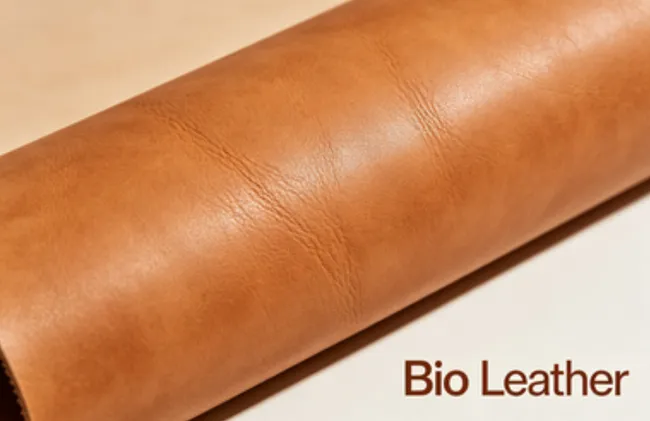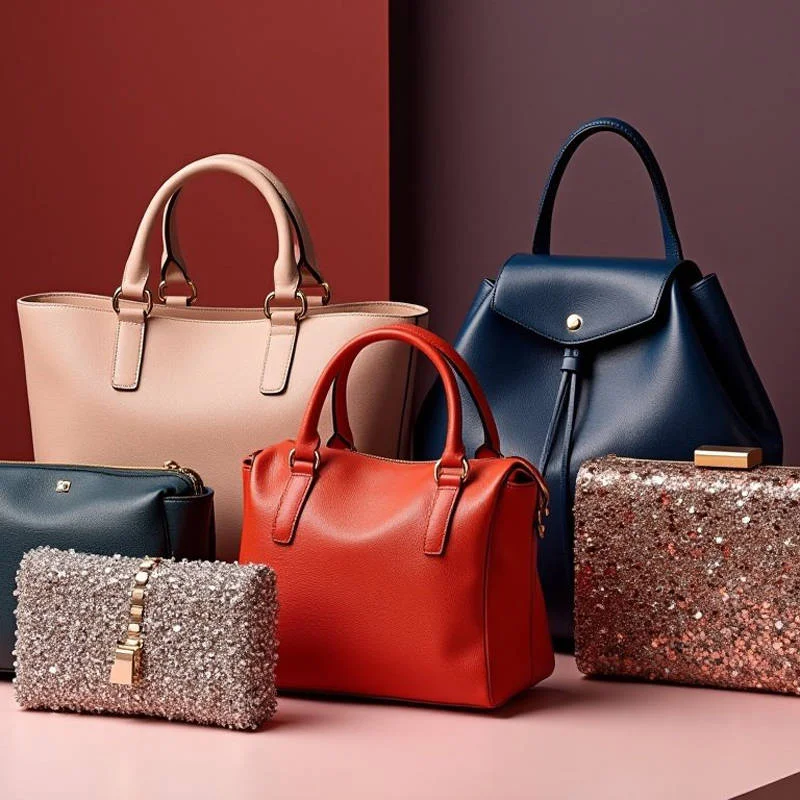
Vegetable Tanned Leather is a type of real leather that is made through a slow tanning process using natural plant tannins (such as tree bark, fruits, roots, and leaves) over several weeks to several months. It is the oldest and most traditional leather processing technique.
This leather-making method is environmentally friendly, free of heavy metals, and biodegradable; the leather fibers are tight and have high structural strength, becoming more textured with use; there is no chemical odor.
Although it is initially hard in texture, it gradually becomes more flexible with use and can develop a unique luster, presenting a natural charm. Vegetable-tanned leather, with its natural process, environmental attributes, and durability, has become the ideal choice for high-quality leather goods.
This post will explore the process and characteristics of vegetable-tanned leather and compare it with chrome-tanned leather.
What Is Leather Tanning?
Leather Tanning is a chemical process that transforms untreated animal skins (which would otherwise decay on their own) into stable, durable, and flexible leather.
Leather Tanning is a chemical and physical process used to treat animal skins (raw hides) to convert them into durable and elastic leather. This is the core step that determines the texture, performance, and value of the leather.
Leather Tanning is a chemical and physical process that processes animal skins (unprocessed hides) to transform them into durable and flexible leather, which can resist decay, deterioration, and spoilage. It is a crucial step in the leather manufacturing process and is typically carried out in facilities known as “tanning factories”.
How Does It Work?
The purpose of tanning is to cause a cross-linking reaction in the collagen fibers within the leather. This process stabilizes the protein structure, preventing it from decaying, shrinking or hardening.
The basic chemical principle: Tanning agents (referred to as tanning agents or tannins) can penetrate the animal skin layer and combine with collagen protein (the main structural protein in animal skin). They form cross-links between the collagen polypeptide chains, thereby:
- ✅ Stabilizing the protein structure
- ✅ Increasing the shrinkage temperature (an important quality indicator – the higher the value, the better)
- ✅ Making the leather resistant to heat, acid, alkali and enzymes
- ✅ Preventing the decomposition by bacteria and fungi
Why Tanning Is Necessary
| Property | Raw Hide (Untreated) | After Tanning (Leather) |
| Texture | Stiff, brittle when dry | Soft, flexible, pliable |
| Durability | Rots quickly (bacteria/fungi) | Resistant to decay & microbial attack |
| Heat stability | Low (shrinks/deforms) | High wet-heat stability |
| Usability | Unsuitable for products | Ready for shoes, bags, belts, etc. |
The Core Purpose of Tanning
| Before Tanning (Raw Hide) | After Tanning (Leather) |
| Putsrefies quickly | Resists decay |
| Hard and brittle when dried | Soft and flexible |
| Hair still attached | Hair removed (or kept for wool-on) |
| Cannot be used for long-term products | Can last for decades |
Main Types of Tanning
| Method | Tanning Agent | Share of Global Production | Key Characteristics |
| Chrome tanning | Trivalent chromium (Cr³⁺) | ~75% of all leather | Fast, consistent, soft, supple. Used for most footwear, garments, upholstery. Not Cr⁶⁺ (that’s a different, toxic compound not used in tanning). |
| Vegetable tanning | Plant-derived tannins (mimosa, chestnut, oak bark, quebracho) | ~10–15% | Oldest method (~5,000+ years, used by ancient Egyptians). Slow (weeks to months). Produces firm, stiff leather that ages beautifully and develops a patina. Used for saddlery, belts, high-end bags. |
| Aldehyde tanning | Glutaraldehyde, formaldehyde | Smaller share | Produces white, soft leather; common in automotive interiors. |
| Oil / Fat tanning | Fish oil, animal fats | Niche | Very soft, used for suede/chamois leather. |
| Mineral (alum/iron) tanning | Aluminum salts, iron salts | Historical / specialty | White, soft but low durability (alum-tanned leather lacks water/heat resistance). |
| Synthetic / eco-tanning | Synthetic resins, triazine derivatives (e.g., SACC), bio-based agents | Growing | Driven by environmental regulations — chrome-free options are a major R&D focus as of 2026. |
The Basic Process of Tanning
| Stage | Purpose |
| Curing | Preserve the raw hide with salt or cold storage |
| Soaking & cleaning | Rehydrate and remove dirt, blood, and preservatives |
| Liming | Remove hair and open the fiber structure using alkaline solutions |
| Deliming & bating | Neutralize pH and soften the hide with enzymes |
| Tanning | Apply tanning agents to stabilize collagen fibers |
| Neutralizing & dyeing | Adjust pH and add color |
| Fatliquoring | Add oils to lubricate fibers and maintain softness |
| Drying & finishing | Stretch, dry, and apply surface treatments |
A Bit of History of Tanning
| Era | Development |
| ~7000 BCE | Earliest evidence of tanning in Mehrgarh (modern Pakistan) — animal fats rubbed into hides |
| ~5000 BCE | Egyptians & Mesopotamians develop vegetable tanning using acacia bark |
| ~2500 BCE | Sumerians use tanned leather for chariot wheels |
| Middle Ages | Tanning becomes a major European industry; tanneries often relegated to town outskirts due to odor |
| 19th century | Chrome tanning is invented, revolutionizing the industry |
| 2020s | Strong push toward chrome-free / green tanning (bio-based tannins, SACC-tannin synergy, circular economy recycling) |
Key Terminology of Tanning
| Term | Meaning |
| Tanning agent / Tannin | The chemical that converts hide to leather |
| Shrinkage temperature (Ts) | The temperature at which leather begins to shrink — the primary quality benchmark for tanning |
| Chrome-free / metal-free | Leather tanned without chromium salts — increasingly demanded for eco-certification |
| Vegetable-tanned (veg-tan) | Leather made with plant tannins — prized for patina and craftsmanship |
| Full-grain / top-grain | Quality grades based on how much of the original hide surface is retained after tanning |
The “Invisible Threshold” of Luxury Goods
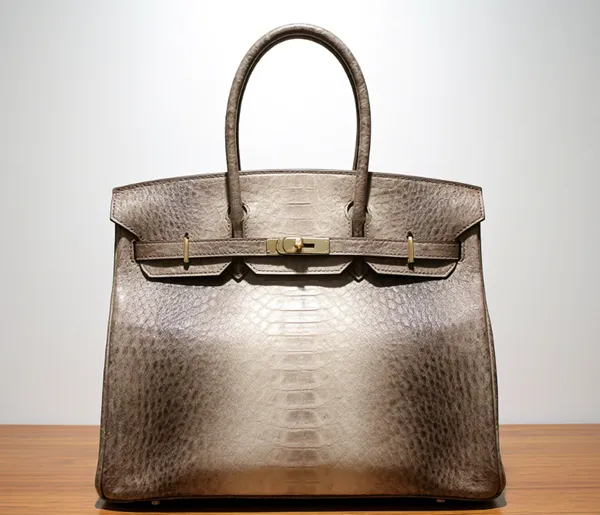
For high-end bags, the choice of tanning process directly relates to aesthetics and durability. Vegetable-tanned leather, due to its unique “cow nurturing” color-changing effect and natural texture, is often used in top-quality luggage; while chrome-tanned leather, thanks to its softness and dyeing advantages, has become the main production material for modern luxury goods. Additionally, special processes such as Aldehyde Tanning are used to create washed soft leather (such as some Bottega Veneta leather materials).
What Is Vegetable Tanned Leather?
Vegetable Tanned Leather is often referred to as “breathing leather”. It is a natural leather that is tanned using plant tannic acid (extracted from tree bark and shells). Not only is it the oldest tanning process, but it is also the key material for top-quality handmade leather goods and luxury bags (such as Hermès and traditional saddles).
Vegetable Tanned Leather
Vegetable Tanned Leather (often referred to as “veg-tan leather”) involves using plant-derived tanning agents (polyphenolic compounds extracted from tree bark, leaves, wood, fruits, and other plant sources) for the tanning process.
Vegetable-tanned leather is a traditional technique that converts raw hides into leather through the use of plant extracts. It differs from chemical tanning (such as chrome tanning), relying entirely on natural plant components for the tanning process.
This is the oldest tanning method in human history, with a history dating back over 5,000 years. It is still widely used to make high-end leather products today.
Vegetable tanned leather = Animal skin that has been slowly tanned with plant extracts, which can be made into leather with strong shape retention ability and beautiful luster that forms over time, unlike chrome-tanned leather which remains in a “fixed” state.
Production Process of Vegetable Tanned Leather
The raw skin is immersed in pits or barrels with gradually increasing concentrations of tannin extract from plants. This process is relatively slow, with the required time ranging from several weeks to several months, but it eventually results in a unique and durable leather.
Key Characteristics of Vegetable Tanned Leather
| Feature | Description |
| Natural appearance | Earthy, warm tones (browns, tans, beige); no synthetic blue/grey tint |
| Firm hand feel | Stiffer than chrome tanned leather; eventually softens with use |
| Develops patina | Darkens and gains a rich, lustrous surface over time (highly prized) |
| Biodegradable | Because it uses natural tannins, it is environmentally friendlier |
| Moldable | Can be carved, embossed, or wet shaped (used for armour, sheaths, tooling) |
| Water sensitivity | Absorbs water easily; water stains are permanent; not waterproof |
How It Works
| Step | What Happens |
| 1. Sourcing tannins | Tannin-rich plant materials are harvested, ground, and dissolved in water to create a tanning liquor |
| 2. Soaking | Raw hides are soaked in the tannin solution for weeks to months (vs. hours for chrome tanning) |
| 3. Cross-linking | Tannin molecules (polyphenols) bind to the collagen fibers in the hide, forming hydrogen bonds and hydrophobic interactions that stabilize the protein |
| 4. Retanning & fat-liquoring | Additional vegetable tannins and natural oils/fats may be added to adjust firmness, color, and suppleness |
| 5. Drying & finishing | The leather is dried, stretched, and finished (waxed, oiled, or buffed) |
Advantages and Disadvantages of Vegetable Tanned Leather
Advantages:
- Environmentally friendly – biodegradable; no toxic chromium waste
- Aesthetically pleasing natural aging effect – creates a unique personal luster
- Excellent molding process – clearly retains stamping patterns, engraving, and embossing
- Low allergenicity – safer for sensitive skin
- Historical authenticity – uses traditional techniques and has endured for centuries
Disadvantages:
- Expensive – slow processing and high labor costs
- Initially stiff – requires an adaptation period
- Poor waterproof performance – may stain or harden if soaked
- Limited color selection – only natural earth tones; difficult to achieve bright colors
- Long production cycle – not suitable for large-scale fast fashion production
Vegetable vs. Chrome tanning
| Property | Vegetable tanned | Chrome tanned |
| Tanning time | Weeks to months | 1 day |
| Colour | Earth tones; changes with age | Any colour (dyed through) |
| Softness | Firm, hard at first | Very soft, supple |
| Patina | Yes – improves with age | No – may fade or crack |
| Water resistance | Low (absorbs water) | Moderate (usually treated) |
| Eco-impact | Lower (natural tannins, but high water use) | Higher (chromium waste concerns) |
| Typical uses | Belts, soles, saddles, tooled leather, watch straps, high end bag linings | Bags, jackets, upholstery, most everyday leather goods |
Grades of Vegetable Tanned Leather
| Grade | Description | Use |
| Full-grain veg-tan | Entire grain surface intact, no sanding or buffing. Shows natural marks, scars, grain. | Highest quality — saddlery, heritage goods, bespoke leatherwork |
| Top-grain veg-tan | Surface slightly sanded/corrected to remove imperfections, then finished | Belts, watch straps, bags |
| Split veg-tan | Lower layers of the hide, less durable | Linings, lesser goods |
| Tooling leather | Specially prepared full-grain veg-tan that is firm enough to be carved, stamped, and tooled with patterns | Western saddles, holsters, decorated belts, sheaths |
What Can You Make With Vegetable Tanned Leather?
| Product | Why Veg-Tan? |
| Western saddles | Tooling, durability, patina |
| Belts | Stiffness holds shape, ages beautifully |
| Watch straps | Thin, firm, develops character |
| Holsters | Molds to the gun, very durable |
| Bookbinding | Traditional, archival quality |
| High-end bags (e.g., Hermès, Berluti) | Patina, prestige, craftsmanship |
| Armor / historical reenactment | Authentic to pre-19th century |
| Tool rolls | Stiff, protects tools, lasts decades |
Environmental & Health Profile
| Aspect | Rating | Notes |
| Toxicity | ✅ Very low | No heavy metals, no chromium |
| Biodegradability | ✅ Fully biodegradable | Returns to soil naturally |
| Water pollution | Moderate | Tannin-rich wastewater is organic but can deplete oxygen in waterways if untreated |
| Carbon footprint | ✅ Lower than chrome | No mining of chromium ore; plant-based |
| Worker safety | ✅ Safer | No exposure to Cr(III) or Cr(VI) |
| Certifications | LWG Gold, OEKO-TEX, B Corp | Many veg-tan tanneries are eco-certified |
Famous Vegetable Tanned Leather Producers
| Producer | Location | Known For |
| Conceria Walpier | Santa Croce sull’Arno, Italy | The “gold standard” of veg-tan. Supplies Hermès, Berluti, Louis Vuitton |
| Badalassi Carlo | Florence, Italy | High-quality veg-tan for fashion houses |
| Wickett & Craig | Waverly, NY, USA | Oldest tannery in America (est. 1867). Iconic for belt leather |
| Horween | Chicago, USA | Famous “Chromexcel” (chrome) but also makes “Shell Cordovan” — wait, that’s horsebutt. They do veg-tan too: “Natural” and “Roughout” |
| Tärnsjö Garveri | Sweden | Scandinavian veg-tan, used by many Nordic brands |
| J&E Horsehide | Japan | Premium veg-tan horsehide for high-end accessories |
| S.B. Foot Tanning Co. | Red Wing, MN, USA | Heritage veg-tan, known for “Sole Leather” |
Is Vegetable Tanned Leather Vegan?
No, leather made from vegetable tanning is not a purely vegan leather material.
Why Vegetable Tanned Leather Is Not Vegan
| Aspect | Explanation |
| Raw material | Vegetable-tanned leather is made from animal hides (usually cow, goat, sheep, etc.). |
| Vegan definition | Vegan products contain no animal materials – no skin, fur, wool, silk, or any part of an animal. |
| Source | Even though the tanning agents are plant-based (tree bark, leaves, fruits), the base material is still an animal hide. |
Where There Is Confusion
The term “vegetable” in the name refers to the tanning agent, not the material itself. This does not mean that the leather is made from vegetables or plants.
Some people mistakenly believe that “vegetable tanned leather” means leather made from plants, but this statement is incorrect.
What Is Vegan Leather Instead?
The genuine artificial leather is made from the following materials:
- Synthetic materials – polyurethane (PU), polyvinyl chloride (PVC) or recycled plastics.
- Plant-based alternatives – Piñatex (pineapple leaves), mushroom leather (mycelium), apple leather, cactus leather, etc.
Vegetable-tanned leather = animal leather + plant-based tanning agents
Vegan leather = non-animal material (typically PU, PVC, cactus, mushroom, apple, pineapple fiber, etc.)
What IS Vegan Leather?
| Type | Source | Vegan? |
| Vegetable tanned leather | Animal hide + plant tannins | ❌ No |
| Cork leather | Cork bark | ✅ Yes |
| Piñatex | Pineapple leaf fibers | ✅ Yes |
| Mushroom leather (Mylo) | Mycelium | ✅ Yes |
| Apple leather (Frumat) | Apple waste | ✅ Yes |
| Cactus leather (Desserto) | Nopal cactus | ✅ Yes |
| PU / PVC “leather” | Plastic / petroleum | ✅ Technically yes, but ❌ not eco-friendly |
| Chrome tanned leather | Animal hide + chromium | ❌ No |
Common Confusion
| Misconception | Reality |
| “It says vegetable, so it must be plant-based” | ❌ The tanning agent is plant-based, but the leather is still animal skin |
| “It’s more natural, so maybe it’s vegan?” | ❌ Natural ≠ Vegan. Wool, silk, honey — all “natural” but not vegan |
| “It’s eco-friendly, so it’s vegan too?” | ❌ Eco-friendly ≠ Vegan. You can have eco-friendly and animal-derived products |
Is Vegetable Tanned Leather Real Leather?
Yes, vegetable tanned leather is definitely real leather. It is not a synthetic material or a replica; it is 100% genuine leather.
In fact, it is one of the oldest and most traditional methods of making real leather. The term “vegetable tanning” refers to the tanning process used to preserve leather, not any synthetic or artificial materials.
Why Do People Raise This Question?
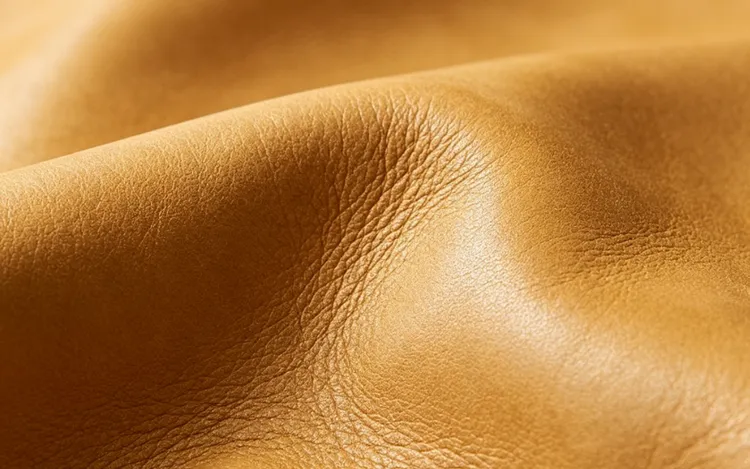
Because the leather made from vegetable tanning has a different appearance and feel from the soft and uniform chrome-tanned leather commonly found in most mass-market bags. It is harder in texture, gradually develops a deeper color, and may also have natural textures – but these are characteristics of truly high-quality leather, not those of imitations.
Why It Is Real Leather?
| Aspect | Explanation |
| Raw material | Starts with a real animal hide (cow, goat, sheep, etc.) |
| Tanning agent | Uses natural plant tannins (bark, leaves, fruit) instead of chromium salts |
| Result | A genuine leather product – just tanned by a different chemical process |
What Makes It “Real”?
| Feature | Vegetable Tanned | Chrome Tanned (most common) |
| Source | Animal hide (cow, bull, sheep, etc.) | Animal hide |
| Tanning agent | Natural plant tannins (oak bark, chestnut, mimosa, quebracho) | Chromium salts |
| Is it real leather? | YES -100% genuine | YES -100% genuine |
| Production share | ~10% of world leather | ~80-90% of world leather |
| Tanning time | 30-60 days | 1-2 days |
“Real leather” vs. Tanning Method
All leather made from vegetable tanning is real leather – it all comes from animal skins.
“Real leather” is a broad category that includes vegetable-tanned, chrome-tanned, and other various tanning methods.
Artificial leather (such as PVC, polyurethane, “plant-based leather”) is made of plastic and does not contain animal skin. In contrast, vegetable-tanned leather is completely made from animal materials.
Don’t Confuse It with “Vegan Leather”
This is a very common confusion!
Vegetable Tanned Leather = real animal leather that has been treated with vegetable.
Vegan Leather = imitation/synthetic leather (usually made from plastics like polyurethane or PVC) which is designed to resemble leather but does not use any animal products.
Why Vegetable Tanned Leather Is Considered Premium
| Advantage | Detail |
| Authenticity | Retains the hide’s original texture, markings, and full grain — “the most genuine of leathers” |
| Develops patina | Ages beautifully, turning from light brown → deep brown → rich reddish-brown over years |
| Highly workable | Excellent for tooling, carving, stamping, and dyeing |
| Eco-friendly | No chromium or heavy metals; fully biodegradable |
| Natural smell | That classic rich “leather” aroma (not chemical) |
Known Drawbacks of Vegetable Tanned Leather
- Initially quite hard – requires an adaptation period (ranging from several weeks to several months)
- Sensitive to water and oil – if not properly maintained, it may leave stains and deform
- High price – due to the slow process and the need for a large amount of manual operation
Vegetable Tanned Leather VS. Chrome Tanned Leather
Vegetable-Tanned leather and Chrome-Tanned leather are the two fundamental elements of the leather industry. The most essential difference between them lies in the tanning process: the former uses plant tannins (from tree bark and fruit shells), while the latter uses chemical chromium salts. This directly determines the significant disparities in terms of texture, environmental friendliness, durability, and user experience between them.
Differences in Core Tanning Principles
Vegetable-Tanned Leather
- Tanning agent source: Natural tannic acid extracted from tree bark, wood, and fruits
- Reaction mechanism: Tannic acid molecules form hydrogen bonds with the collagen proteins in the raw skin, which is a physical-chemical bond
- Processing cycle: Requires several weeks or even months of soaking and penetration, with a complex and time-consuming process
Chrome-Tanned Leather
- Tanning agent source: Artificially synthesized trivalent chromium salts (Cr³+)
- Reaction mechanism: Chromium ions form stable covalent bonds with collagen molecules, which is a chemical bond
- Processing cycle: Only 1-2 days are needed for industrial production, with extremely high efficiency
Appearance and Texture Differences
Vegetable-Tanned Leather
- Initial color: Mostly in natural brownish tones, with a single and simple color
- Usage changes: It will gradually darken over time, due to light exposure and usage habits, forming a unique “patina” effect, becoming more and more interesting with use
- Surface texture: Clear patterns, slightly stiff to the touch. After polishing, the side edges will show a natural luster, suitable for outer stitching techniques
- Malleability: Can be shaped and set after heating, suitable for leather sculptures, hard-sided bags and other works requiring a three-dimensional effect
Chrome-Tanned Leather
- Initial color: Can be dyed into various bright colors, with a rich variety of colors
- Usage changes: The color is relatively stable and does not change significantly due to usage
- Surface texture: Soft and elastic to the touch, smoother and more delicate on the surface. However, after polishing on the side edges, there is no luster. Usually, inner stitching or coloring is required for modification
- Malleability: Soft and prone to deformation, difficult to maintain a fixed shape. Suitable for making soft and close-fitting leather goods
Performance and Application Scenarios Differences
Vegetable-Tanned Leather
- Environmental friendliness: Completely natural ingredients, can be naturally decomposed, harmless to the human body, suitable for making products that come into direct contact with the skin
- Durability: Stable structure, resistant to wear and tear, tear-resistant, long service life, capable of bearing a large weight
- Air permeability: Retains the original pores of the leather, good air permeability, the made leather goods are more comfortable
- Application scenarios: Handmade leather goods, retro bags, leather carving handicrafts, belts, shoe soles of leather shoes, etc., products that require a firm texture and age-like marks
Chrome-Tanned Leather
- Environmental friendliness: Contains metal chromium components, may cause pollution during production, some people with sensitive skin need to use with caution
- Durability: Strong resistance to wet heat, good water resistance, but may become loose and deformed after long-term use
- Air permeability: Chemical treatment blocks some pores, air permeability is slightly inferior to vegetable tanned leather
- Application scenarios: Fashion handbags, leather shoes, leather jackets, car interiors, sofas, etc., industrialized products that require soft texture and rich colors
Vegetable Tanned Leather VS. Chrome Tanned Leather
| Feature | Vegetable-Tanned | Chrome-Tanned |
| Tanning agent | Natural plant tannins (bark, leaves, fruits – e.g., oak, mimosa, chestnut) | Chromium salts (mainly basic chromium sulfate) |
| Process time | Weeks to months (slow) | 1 day (fast) |
| Colour | Earthy tones (browns, tans, beige); changes with age | Any colour – can be dyed uniformly and brightly |
| Initial softness | Firm, stiff | Very soft, supple |
| Patina | Develops a rich, dark, lustrous patina over time | No significant patina – may fade or crack |
| Water resistance | Low – absorbs water easily, leaves permanent spots | Moderate – usually treated with water resistant finishes |
| Durability (structural) | Very high – becomes tougher with age | High – but softer, so may scratch or wear faster |
| Moldability / tooling | Excellent – can be carved, embossed, wet-shaped | Poor – does not hold tooling well |
| Biodegradability | High – breaks down naturally | Slow – chrome hinders decomposition |
| Environmental concern | High water & land use; energy-intensive tannin production | Risk of chromium waste (Cr(III) can oxidise to toxic Cr(VI) if mismanaged) |
| Cost | Generally more expensive (longer process) | Usually cheaper (mass-produced) |
| Common uses | Belts, soles, saddles, watch straps, tooled leather, high end bag linings, craft projects | Bags, jackets, upholstery, car interiors, most everyday leather goods |
Which One Should You Choose?
| You want… | Recommendation |
| A bag that develops character over time and tells a story | Vegetable tanned |
| A soft, lightweight, everyday bag with little maintenance | Chrome tanned |
| To carve or tool leather (for crafts, holsters, armour) | Vegetable tanned |
| A water-resistant jacket or bag that can handle light rain | Chrome tanned (treated) |
| An eco-friendlier option (no heavy metal risk) | Vegetable tanned (but watch water/energy use) |
| A budget-friendly leather item | Chrome tanned |
Best Uses
| Use Case | Winner | Why |
| Belts, wallets, bifolds | Veg Tan | Durable, develops character, ages beautifully |
| Holsters, saddlery, tooling | Veg Tan | Stiffness is an asset; takes shape permanently |
| High-end handmade bags | Veg Tan | Patina = value increases over time |
| Shoes (dress) | Veg Tan | Molds to foot, lasts decades |
| Fashion apparel, jackets | Chrome | Soft, lightweight, colorful, water-resistant |
| Car interiors, upholstery | Chrome | Heat-resistant, colorfast, easy to clean |
| Everyday casual shoes | Chrome | Cheap, soft from day one, water-friendly |
| Bright-colored handbags | Chrome | Full color spectrum available |
How to Test Which One You Have
| Test | Vegetable Result | Chrome Result |
| Wet & stamp | Mark stays crisp & sharp | Mark blurs/fades |
| Boiling water | Shrinks & curls up instantly | Barely reacts |
| Smell | Sweet, woody, natural | Chemical, “leather store” |
| # for 6 months | Gets darker & richer | Looks the same or peels |
Vegetable Tanned Leather VS. Chrome Tanned Environmental Impact
The following comparison of the environmental impacts of the two tanning processes can help us understand the sustainability of the two leather-making methods in the production of leather goods.
Environmental Differences During the Raw Material Acquisition Stage
Vegetable Tanned Leather
Raw material source: Tannic acid is extracted from the bark and fruits of plants such as fir wood, willow, and oak. It is a renewable natural resource.
Environmental impact:
- Reasonable logging can promote forest renewal. Some producers use intercut wood and forestry waste to extract tanning agents.
- The raw material planting process can absorb carbon dioxide and has a carbon sink function.
- If over logging occurs, it may lead to local forest degradation. The logging volume needs to be strictly controlled.
Chromium tanning leather
Raw material source: Dependent on non-renewable chromium ore resources, trivalent chromium salts for tanning are obtained through chemical processing.
Environmental impact:
- Chromium mining causes soil damage, water resource pollution, and loss of biological habitats.
- The chromium salt production process consumes a large amount of energy and generates industrial waste gas and waste residue.
- The global distribution of chromium ore resources is uneven, mainly concentrated in countries such as South Africa and Kazakhstan. The transportation process increases carbon emissions.
Comparison of Environmental Loads in the Production Process
Vegetable Tanned Leather
Water resource consumption: Approximately 100-150 tons of water are required per ton of raw skin, mainly for soaking and cleaning
Chemical pollution:
- Little to no heavy metal pollution is generated. The wastewater mainly contains organic matter and suspended solids
- The tanning agent can naturally degrade, making wastewater treatment relatively easier
Energy consumption: The processing cycle is long (1-2 months), requiring more energy to maintain the production environment
Waste: The generated plant residues can be used as organic fertilizers or biomass energy
Chrome-Tanned Leather
Water resource consumption: Approximately 80-120 tons of water are required per ton of raw skin, with slightly higher water resource efficiency than natural tanning leather
Chemical pollution:
- Chromium-containing wastewater is produced. If not properly treated, chromium elements will enter water bodies and soil
- Approximately 20-30% of chromium is not absorbed during the chrome tanning process and remains in the wastewater
- Hexavalent chromium is toxic and carcinogenic, and strict wastewater treatment processes must be controlled
Energy consumption: The processing cycle is short (1-2 days), with higher energy efficiency
Waste: The treatment of chromium sludge is difficult and requires professional disposal to avoid secondary pollution
Environmental Impact of Product Lifecycle
Vegetable Tanned Leather
Usage Stage:
- It can naturally age to form a unique patina, and does not require frequent refurbishment.
- It has strong durability, a long product lifecycle, and reduces the frequency of replacement.
Waste Stage:
- It can naturally degrade, with a degradation period of approximately 10-20 years.
- During the degradation process, no harmful substances are released, and it is friendly to the soil environment.
- It can be composted and converted into organic fertilizer.
Chrome Tanned Leather
Usage Stage:
- The surface coating may wear out, requiring regular maintenance and refurbishment.
- Some low-priced chrome tanned leathers have poor durability and a shorter product lifecycle.
Waste Stage:
- The natural degradation is slow, and complete degradation may take more than 50 years.
- The chromium elements in the leather may gradually release, polluting the soil and groundwater.
- The recycling process is difficult, and most are disposed of by landfill or incineration.
The Key Environmental Impacts of Each Process
| Impact Category | Vegetable Tanning | Chrome Tanning |
| Water Consumption & Eutrophication | The ‘pickling’ phase is a significant environmental hotspot, contributing heavily to water consumption and eutrophication (excess nutrients in water). | Similar to vegetable tanning, chrome tanning also has a substantial potential impact on water consumption. |
| Climate Change (Global Warming) | The tanning process itself has a high impact on global warming, largely due to the energy-intensive production of plant-based tanning agents like mimosa and quebracho extracts. | Generally has a reduced environmental impact in this category compared to vegetable tanning. |
| Toxicity & Pollution | Low risk of toxic heavy metal pollution but uses other chemicals. | The main concern is chromium pollution. Approximately 30-40% of the chromium used is not absorbed, ending up as waste in effluents and sludge. If not properly managed, Cr(III) can potentially oxidize to the highly toxic Cr(VI) in landfills. |
| Biodegradability & End-of-Life | Excellent biodegradability, but this also means it is less resistant to moisture and sweat compared to chrome-tanned leather. | Slower to biodegrade due to the chemical process. This can be an advantage for product longevity but a disadvantage for disposal. |
| Land Use & Resource Consumption | Requires significant land for cultivating trees and plants to produce tannins. | Relies on mined chromium ore, which is a non-renewable resource. |
| Energy Use & Circular Economy | Significantly benefits from circular economy models. Studies show that a circular approach to vegetable tanning can lead to major reductions in CO2 emissions and water usage. | High energy consumption in the chemical process, but efforts in recycling and recovering chromium can offset some impacts. |
Head-to-Head Environmental Comparison
| Factor | Vegetable Tanned | Chrome Tanned |
| Tanning agents | Natural plant tannins (oak bark, chestnut, mimosa, quebracho) | Chromium(III) salts + synthetic acids |
| Production time | 30-60 days | 1-2 days |
| Water usage | ~50–60 L/m² | ~140–200 L/m² |
| CO₂ emissions | ~8–12 kg CO₂e/kg | ~15–20 kg CO₂e/kg |
| Wastewater toxicity | Non-toxic, biodegradable | Highly toxic— contains Cr, Pb, As, formaldehyde |
| Sludge/solid waste | Organic, compostable | Contains hexavalent chromium (Cr VI) -carcinogenic |
| Biodegradability | 10–50 years | 500+ years (chromium prevents breakdown) |
| Soil/water pollution risk | Minimal | Severe — especially in unregulated regions |
| % of global leather | ~8–10% | ~80–92% |
The Big Problem with Chrome Tanning
| Issue | Detail |
| Toxic effluent | ~40% of unused chromium salts are discharged as final effluent. ~30% of effluents contain hexavalent chromium (Cr VI) – highly toxic to humans & ecosystems |
| 70% of chrome load | Comes from tanning operations alone (per Sustainable Water Resources Management) |
| Water contamination | Chromium, lead, arsenic, and formaldehyde poison rivers, kill wildlife, and make farmland unusable |
| Worker health | Chromium exposure linked to cancer, respiratory disease, and skin conditions |
| Geographic hotspots | Bangladesh, India, Pakistan — where regulations are weak, the damage is worst. As one source notes: “the toxicity issues have simply been moved somewhere else — out of sight, out of mind” |
Why Vegetable Tanning Wins (Mostly)
| Advantage | Detail |
| All-natural inputs | Tree bark, leaves, fruits — fully renewable |
| Biodegradable waste | Tanning pits can be reused for decades with minimal ecological footprint |
| Less water | Uses roughly ½ to ⅓ the water of chrome tanning |
| Lower carbon | ~30–40% less CO₂ per kg of leather |
| No heavy metals | No chromium, lead, or arsenic in the final product or waste stream |
| End-of-life | Breaks down in 10–50 years vs. 500+ for chrome |
In-depth Analysis: Why Does Chrome Tanning Leather Face Such a Big Environmental Controversy?
- Heavy Metal Shadow: In the traditional chrome tanning process, approximately 30% to 40% of the chromium salts cannot be absorbed by the leather and are discharged along with the wastewater. If not handled properly, trivalent chromium (Cr³⁺) may transform into hexavalent chromium (Cr⁶⁺), which is a definite carcinogen and poses a threat to the ecosystem and workers’ health.
- “Slow” is “Green”: While the tanning process of vegetable-tanned leather takes up to several weeks (chrome tanning only takes a few hours) and water consumption is still an issue, the plant tannins used are derived from renewable resources, and after disposal, they do not cause permanent pollution like plastic (Vegan Leather) or heavy metals.
Conclusion
Vegetable-tanned leather is a living and growing leather that embodies slow craftsmanship and sustainable concepts. It is suitable for consumers who seek classic textures and are willing to accompany the leather as it ages.
Vegetable-tanned leather usually has a hard feel and good support, making it an ideal material for high-end horse gear, belts, bags, wallets, handmade bags, and collectible leather goods.
If you are running your own high-end bag brand and have high requirements for the leather used in your brand design, then the leather produced by the vegetable tanning technology is also very suitable for manufacturing high-end luxury brand bags. If you are looking for a reliable bag manufacturer, please feel free to contact us.