During the process of transforming animal skins into leather, there is a tanning method that has now become the mainstay of modern leather industry. This method is called Chrome Tanned Leather. Chrome Tanned Leather is leather that is tanned using chromium salts, accounting for 80% to 90% of the global leather production.
Why is Chrome Tanned Leather the most widely used leather globally? Because Chrome Tanned Leather requires only one day for tanning, which is highly efficient and low in cost; the finished product is extremely soft and elastic, requiring no break-in period; it can be dyed to any bright and uniform color; and it is more heat and water resistant than vegetable-tanned leather.
Chrome tanned leather has been widely used in mass consumer products such as handbags, clothing, shoes, sofas, and car interiors.
This post will explore the characteristics, uses, safety of Chrome Tanned Leather, as well as methods to distinguish it from vegetable-tanned leather.
What Is Chrome Tanned Leather?
Chrome-tanned leather is a genuine animal leather, accounting for 80% to 90% of all leather production and is the main type of leather in the world today.
This leather is made by treating hides with trivalent chromium sulfate in a rapid chemical reaction. During this process, chromium ions penetrate the leather and combine with collagen fibers, forming stable covalent bonds that cross-link the fibers together, effectively blocking the natural decay process of the raw skin and making the leather soft and durable, rather than decomposing and failing.
Its Working Principle
During this process, the leather is immersed in the tanning solution, where trivalent chromium ions (Cr³⁺) penetrate the collagen fibers and form a stable cross-linking structure with them. This stabilizes the protein structure, thereby preventing the leather from decomposing. The entire process usually takes 24 to 48 hours (sometimes 1 to 3 days), while traditional plant tanning takes several weeks.
At the intermediate stage, the leather takes on a distinctive blue color, which is why it is called “wet blue” leather – it is a semi-finished product that can be stored and transported globally before the final treatment is completed.
Key Characteristics of Chrome-Tanned Leather
| Feature | Description |
| Tanning agent | Chromium salts (synthetic chemicals) |
| Tanning time | Fast – about 1 day |
| Colour | Any colour – vibrant, uniform, can be dyed in all shades |
| Hand feel | Very soft, smooth – ready to use, no break in period |
| Patina | Does not develop a significant patina; may fade or crack over time |
| Water resistance | Moderate (usually enhanced with a top coating) |
| Carve / shape ability | Poor – not suitable for hand tooling or wet shaping |
| Biodegradability | Slow – chromium hinders natural decomposition |
| Environmental risk | If chromium waste is mishandled, it can form hexavalent chromium (Cr(VI)), which is toxic and carcinogenic |
Why Does It Hold a Dominant Position in the Industry?
- Speed: Reduced from several weeks to several days → Significantly increased production volume and greatly enhanced production efficiency
- Cost: Much lower than the vegetable tanned method
- Variety: Easy to color (fibers have a positive charge, which can well combine with anionic dyes), presenting bright and uniform colors
- Performance: Water-resistant, heat-resistant, resistant to biodegradation
It is the preferred leather for making shoes (accounting for about 45% of the usage), handbags, clothing, car interiors, furniture decorative fabrics, and most mass-market leather products.
Drawbacks & Concerns
| Issue | Detail |
| No Patina | Unlike vegetable-tanned leather, chrome-tanned leather does not develop character over time — its color and look stay essentially the same |
| Environmental Impact | Traditional chrome tanning generates toxic wastewater. While Cr³⁺ is relatively safe (it’s an essential trace element), it can oxidize into hexavalent chromium (Cr⁶⁺) — a Class I carcinogen that causes allergic contact dermatitis in ~0.5% of the population |
| Regulation | The EU limits Cr⁶⁺ in leather products touching skin to ≤3 mg/kg; China’s Ministry of Ecology and Environment lists chromium as a key heavy metal for pollution control |
| Sustainability Trend | The industry is shifting toward low-chrome, high-absorption chrome tanning, and chrome-free alternatives (e.g., titanium, zirconium, aldehyde tanning) to reduce environmental harm |
Main Application Scenarios
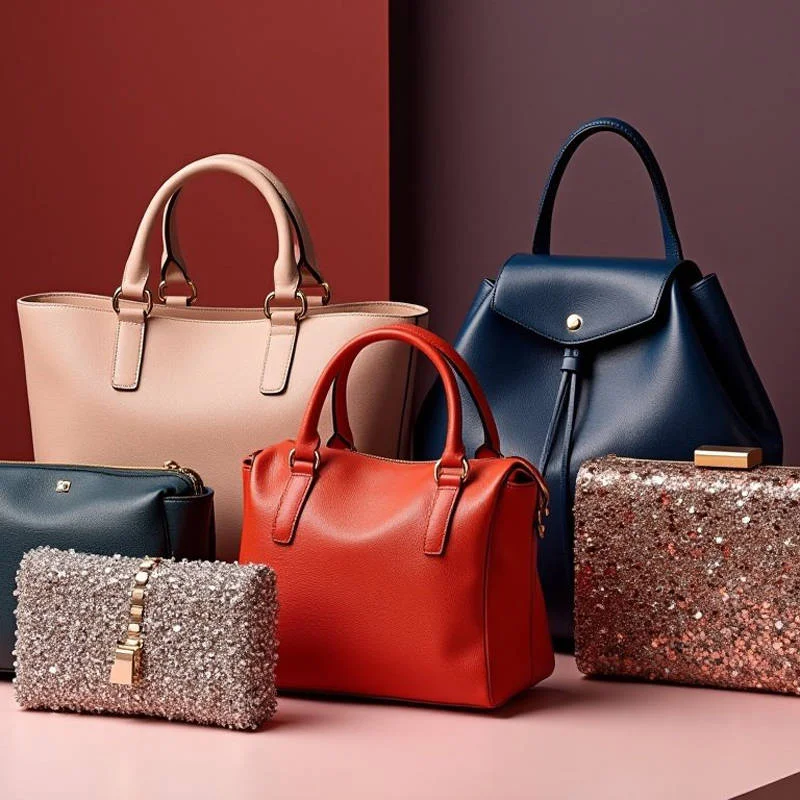
- Fashion bags: such as women’s handbags, backpacks, etc., which can meet the diverse color and soft texture requirements
- Footwear and apparel: leather shoes, leather jackets, gloves, etc., which are close-fitting products and meet the flexibility requirements for human activities
- Industrial products: car interiors, sofa furniture, etc., featuring both durability and ease of cleaning
When Was Chrome Tanning Invented?
When did chrome tanning method come into being? The invention of chrome tanning method was not achieved overnight; rather, it was a gradual process that evolved in the latter half of the 19th century.
Breakthrough Discovery
1858: German chemist Friedrich Knapp discovered the tanning properties of trivalent chromium salts. This fundamental theoretical breakthrough laid the scientific foundation for subsequent technological innovations in industry, and he himself is widely regarded as one of the main founders of chrome tanning technology.
Key Patents and Commercialization
- 1884: Augustus Schultz further refined the process and developed a more reliable “two-bath” chromium tanning method, which he patented. This was a key technological leap that led to the commercialization of chrome-tanned leather.
- 1893: Martin Dennis invented a more user-friendly and efficient “one-bath” chromium tanning method, which was regarded as a crucial milestone in the maturation and dominance of the chromium tanning technology.
Technological Evolution and Industry Application
- 1850 – 1870: During this period, scientists such as Warrington, Cavallin, DeKercado, and Swan also conducted related research and applied for patents, gradually accumulating technical knowledge.
- In the 1890s: Technology achieved commercial success first in the leather industry of Philadelphia, USA, and was rapidly promoted.
- At the beginning of the 20th century: The chrome tanning method replaced the thousand-year-old traditional vegetable tanning process and became the mainstream of modern leather industry, and has persisted to this day.
The Full Timeline
| Year | Milestone | Key Figure |
| 1858 | Discovery — Knapp demonstrates that chromium salts have tanning properties. However, the process was not yet practical for mass production. | Friedrich Knapp (Germany) |
| 1884 | Two-Bath Patent — German-American chemist August Schultz patents a practical “two-bath” chrome tanning process (bichromate first, then hypo reduction bath) while working in New York. | August Schultz |
| 1893 | One-Bath Breakthrough — American Martin Dennis develops the first commercial one-bath chrome tanning method using basic chromium chloride (branded Tanolin). This is the process that became the global industry standard and is still used today. | Martin Dennis |
| 1891–1920s | Scientific Theory — Swedish chemist Alfred Werner proposes coordination complex theory (1891), which is later applied to explain how chrome tanning works at the molecular level (~1920). | Alfred Werner (Nobel laureate) |
What Is Chrome Tanned Leather Used For?
Chrome-tanned leather has an extremely wide range of applications. The tanning process makes this type of leather soft, elastic, durable, rich in color, cost-effective, and with waterproof and heat-resistant properties. It is widely used in various daily and industrial products.
Footwear
| Product | Why Chrome? |
| Dress shoes & heels | Holds shape, takes polished finish, soft feel |
| Sneakers & trainers | Lightweight, flexible, can be dyed any color |
| Boots (fashion & work) | Water-resistant, durable, pliable |
| Sandals & flip-flops | Soft, doesn’t crack when bent repeatedly |
Fashion & Accessories
| Product | Why Chrome? |
| Handbags & purses | Soft drape, bright colors, lightweight |
| Wallets & cardholders | Thin, flexible, resistant to cracking |
| Belts | Bends without breaking, holds dye well |
| Gloves | Supple, fits the hand like a second skin |
| Hats & caps | Can be molded and shaped easily |
Apparel & Clothing
| Product | Why Chrome? |
| Leather jackets | Soft, lightweight, easy to sew |
| Leather pants & skirts | Stretchy, drapes well, modern look |
| Leather vests & blazers | Fashion-forward, comfortable |
Automotive Interiors (Huge Market)
| Product | Why Chrome? |
| Car seats | Soft, uniform color, resistant to wear |
| Steering wheels | Grippy, comfortable, takes embossing |
| Dashboards & door panels | Can be heat-stamped with logos |
| Gear shift knobs & headliners | Flexible, lightweight |
Furniture & Upholstery
| Product | Why Chrome? |
| Sofas & couches | Soft, uniform, easy to clean |
| Office chairs | Durable, breathable, comfortable |
| Recliners | Flexible, doesn’t crack with use |
| Headboards | Takes embossed patterns beautifully |
Industrial & Technical Uses
| Product | Why Chrome? |
| Conveyor belts | High tensile strength, abrasion-resistant |
| Drive belts & hoses | Flexible, heat-resistant |
| Saddlery (modern) | Lighter than veg-tan, more comfortable |
| Bookbinding | Thin, flexible, takes gold stamping |
| Musical instrument straps | Soft, doesn’t crack |
| Golf gloves | Thin, supple, grippy |
Market Share Breakdown
| Sector | Approx. Share |
| Footwear | ~60% |
| Fashion & Accessories | ~15% |
| Automotive | ~12% |
| Furniture & Upholstery | ~8% |
| Industrial / Other | ~5% |
Why Chrome Wins Everywhere
| Advantage | Benefit |
| Fast production | Days, not weeks — meets mass-market demand |
| Low cost | 3–5× cheaper than vegetable-tanned |
| Color versatility | Any color, uniform across every hide |
| Lightweight & soft | Comfortable for clothing and shoes |
| Processable | Can be embossed, heat-stamped, coated— veg-tan cannot |
| Water-resistant | Better for everyday use in rain |
Where Chrome Leather Is NOT Used
| Application | Why Not? |
| Heritage saddles | Too soft — needs the rigidity of veg-tan |
| Tool holsters & gun belts | Won’t develop the stiff patina needed |
| High-end heritage goods | No patina, no character, no “soul” |
| Traditional bookbinding | Veg-tan ages better over centuries |
Is Chrome Tanned Leather Safe?
Chrome-tanned leather is generally safe for daily use, but specific risks should be noted, especially for a few individuals who are allergic to chromium and the potential issue of hexavalent chromium.
In simple terms, qualified chrome-tanned leather products are safe for the majority of people, but special attention is required for a few individuals who are allergic to chromium.
Two Forms of Chromium and Risks
The safety risks of chrome-tanned leather are directly related to the two different chemical forms of chromium:
- Trivalent chromium [Cr(III)]: This is the stable form used in leather tanning and is harmless to humans. It is even considered a necessary trace element for the human body. Only under specific conditions, such as exposure to ultraviolet rays or contact with certain alkaline substances, can it be oxidized to the dangerous hexavalent chromium.
- Hexavalent chromium [Cr(VI)]: It is a strong oxidizing agent and is sensitizing. It is classified as a strong carcinogen by the World Health Organization.
The EU REACH regulation strictly limits the content of hexavalent chromium in leather products that come into contact with the skin to no more than 3mg/kg. Although some studies have found that some leather samples have excessive hexavalent chromium, modern standardized production processes are designed to prevent this from happening.
Summary of the Two Types of Chromium
| Type | What It Is | Safety |
| Trivalent Chromium (Cr³⁺) | The actual tanning agent used in ~90% of all leather | Considered safe. It’s an essential trace nutrient for humans. Your body already contains ~6 mg of it. |
| Hexavalent Chromium (Cr⁶⁺) | A toxic byproduct that Cr³⁺ can convert into under certain conditions | Carcinogenic, allergenic, banned in consumer goods above strict limits. |
Scientific Interpretation of Risks
The potential risks of chrome-tanned leather should be viewed based on science. Its actual situation may differ from our usual perception.
- For the general population: Under proper process control, chrome-tanned leather does not pose a significant threat to health. However, people with allergies need special attention. Approximately 1% of the general population is allergic to chromium, and chrome-tanned leather is an important source of allergens for this group. Contact with chrome-tanned leather by allergic individuals may trigger allergic contact dermatitis, with symptoms including rashes, itching, etc.
- Regarding carcinogenic risks: It is worth noting that the most clear-cut carcinogenic pathway of hexavalent chromium is through inhalation of its dust. Daily skin contact with leather products mainly poses an allergic risk rather than cancer. A study targeting consumers also suggests that high carcinogenicity is mainly related to higher concentrations of inhalation exposure in the air, rather than skin contact with leather products.
- Risk in specific usage scenarios: The risk increases in certain special situations. For example, cheap leather gloves are more likely to generate hexavalent chromium when frequently exposed to moisture and alkaline substances. Additionally, a 2025 study indicates that brightly colored leather products (such as red and green) may contain higher bioavailable chromium, and their potential carcinogenic risks require attention.
- Risks of inferior leather: Worn and low-quality leather products are more likely to release and trigger skin reactions, so choosing brands with guaranteed quality is crucial.
Safety Assurance: Regulations and Production
Fortunately, there is a well-established mechanism in place to protect consumers:
- International Standards: The EU REACH regulation strictly limits the hexavalent chromium content in leather products that come into direct contact with the skin (with an upper limit of 3mg/kg). National standards in countries like Germany are even more stringent, prohibiting the detection of hexavalent chromium.
- Production Control: Modern tanneries employ technologies such as high absorption chrome tanning and waste liquid recycling to control the generation of hexavalent chromium and pollutant emissions at the source.
- Development of Alternative Technologies: To fundamentally eliminate the controversy surrounding chromium, the leather industry is actively researching and applying chromium-free tanning technologies to promote sustainable development.
Consumer Safety Guide: How to Choose and Use
Although the vast majority of chrome-tanned leather products are safe, if you have an allergic constitution or wish to minimize risks as much as possible, you can refer to the following suggestions:
- Choose reputable brands: Well-known brands usually have stricter requirements for the supply chain and the quality of raw materials, which can effectively avoid the risks brought by inferior leather.
- Wash hands after using a new bag: After using a new bag, especially after handling the handbag, it is recommended to wash your hands promptly to avoid transferring the possible trace substances to other parts of your body.
- Be cautious of bright-colored products: When purchasing products with particularly bright colors, it is recommended to pay extra attention. You can prefer to choose trusted brands.
- Pay attention to early body signals: If you experience repeated, unexplained rashes or itching on your skin after using a new leather product, you should immediately stop using it and consult a dermatologist to check if it is a chromium allergy.
When You SHOULD Be Concerned
| Situation | Risk | Why |
| You have a chromium allergy (~0.5% of population) | High | Can cause contact dermatitis — redness, itching, blisters |
| Baby/infant skin contact | Moderate | More permeable skin; look for OEKO-TEX® Certified or chrome-free products |
| Leather burned or exposed to extreme heat | Moderate | Cr³⁺ can oxidize to Cr⁶⁺ at very high temperatures |
| Cheap, unregulated imports (no certification) | High | May exceed Cr⁶⁺ limits — common in fast-fashion leather from unmonitored factories |
| Very bright/vivid colored leather | Slightly elevated | A 2025 Zhejiang University study found brighter-dyed leathers release more bioavailable Cr⁶⁺ through skin contact |
How to Stay Safe (Practical Tips)
| Tip | Why |
| ✅ Buy OEKO-TEX® Standard 100 or REACH-compliant products | Guarantees Cr⁶⁺ ≤ 3 mg/kg |
| ✅ Avoid prolonged sun exposure on leather goods | UV accelerates Cr³⁺ → Cr⁶⁺ conversion |
| ✅ Don’t burn or overheat chrome-tanned leather | High heat creates toxic fumes |
| ✅ If you have eczema/metal allergies → choose vegetable-tanned or chrome-free leather | Zero chromium = zero risk |
| ✅ For baby products → insist on chrome-free or full-vegetable-tanned | Safest option |
| ❌ Avoid unbranded, ultra-cheap leather from unknown sources | Highest risk of Cr⁶⁺ exceeding limits |
Chrome-Tanned vs. Alternatives: Safety Comparison
| Chrome-Tanned | Vegetable-Tanned | Chrome-Free (Zr/Ti/Al) | |
| Cr⁶⁺ risk | Very low (if compliant) | ✅ None | ✅ None |
| Allergy risk | ~0.5% of people | Very rare | Very rare |
| Regulation | Strictly controlled | Minimal (naturally safe) | Emerging standards |
| Availability | ~90% of market | ~5–8% | ~2–3% (growing) |
| Durability | Excellent | Excellent | Good |
In summary, chrome-tanned leather is safe for the vast majority of people when produced and used in compliance with regulations. The main health risks are concentrated among approximately 1% of people with chromium allergies. When using it daily, more attention should be paid to allergic reactions caused by excessive hexavalent chromium. For consumers who prioritize environmental protection and health, choosing leather products produced in accordance with strict standards such as EU REACH, or opting for alternatives like vegetable-tanned leather, is a more reassuring choice.
Does Chrome Tanned Leather Patina?
No. Chrome-tanned leather usually does not develop the traditional patina. Leather that has undergone chrome tanning does not typically exhibit the traditional color changes that are seen in vegetable-tanned leather.
What “Patina”Means?
The “Patina” is a soft luster, a darkening phenomenon and a surface characteristic. This phenomenon gradually forms over time as the leather is used, and it is influenced by factors such as the natural aging of the leather, absorption of oils, exposure to sunlight, and environmental effects.
This is a hallmark of high-quality vegetable-tanned leather: over time, it becomes unique and highly personalized.
Why Does Chrome-Tanned Leather Not Patina?
Different tanning methods: The fibers of vegetable-tanned leather have an open structure, which can absorb human body oils and sunlight, gradually deepening in color and developing a smooth and lustrous surface. While the fibers of chrome-tanned leather are “locked” by chromium salts, maintaining a stable structure and being less likely to react with external substances.
Surface treatment: Most chrome-tanned leathers undergo spraying or embossing treatment, with a layer of resin or pigment coating on the surface, which prevents the penetration of oils. Therefore, they do not “develop patina” like vegetable-tanned leather.
Why Not Patina? It Comes Down to Chemistry
| Vegetable-Tanned | Chrome-Tanned | |
| Tanning agent | Natural tannins (plant polyphenols) | Chromium(III) salts |
| Bond with collagen | Weak hydrogen bonds → loose, reactive structure | Strong coordination bonds → locked, stable structure |
| Reacts with environment? | ✅ Yes — absorbs oils, UV, moisture, sweat | ❌ Almost no — the chromium “seals” the fibers |
| Changes over time? | ✅ Yes — color deepens, character builds | ❌ No — stays the same… then breaks down |
Long-Term Usage Changes
Although chrome-tanned leather does not develop a patina, it will age:
- Areas of frequent contact (such as the corners and handles) may fade, turn white, or the coating may peel off.
- Edges may show wear and fraying.
- Overall, it will not become more textured as with vegetable-tanned leather; instead, it may appear more aged.
Chrome-tanned leather does not develop a patina; it only shows wear and fading with usage. If you want something that gets better with use, choose vegetable-tanned leather; the advantage of chrome-tanned leather is its softness, rich colors, and no need for maintenance.
What Actually Happens to Chrome-Tanned Leather Over Time
| Stage | Timeline | What Happens |
| Fresh | 0–2 years | Soft, supple, vibrant color. Looks great. |
| Wear | 2–5 years | Surface coating (acrylic/polyurethane) begins to crack, peel, and flake. Color fades unevenly. |
| Degradation | 5–15 years | Leather dries out, stiffens, cracks, and crumbles. The chrome bond breaks down from within. No character — just decay. |
Visual Comparison: Vegetable-Tanned VS. Chrome-Tanned
| Age | Vegetable-Tanned | Chrome-Tanned |
| New | Light tan, stiff | Dark, soft, uniform |
| 2 years | Rich honey patina, slight darkening | Still looks new… or slightly faded |
| 5 years | Deep, glossy, unique character | Coating cracking, color uneven |
| 10 years | Gorgeous, one-of-a-kind | Dry, stiff, flaking, dead-looking |
| 20+ years | Heirloom quality | Often unusable |
Side-by-Side: The Patina Test
| Test | Vegetable-Tanned | Chrome-Tanned |
| Water drop test | Absorbs, darkens temporarily → dries with character | Beads up (coated) or absorbs unevenly → leaves stains |
| Sun exposure | Deepens color beautifully | Fades, dries out, cracks |
| Oil/conditioner | Absorbs, enriches patina | Sits on surface, attracts dirt |
| Burn test | Smells like hair/meat, leaves crushable ash | Smells chemical, leaves hard bead |
| 10-year mark | Gets BETTER | Gets WORSE |
Can Chrome Tanned Leather Be Harden?
Sure, but the effect is limited. The hardening method is also completely different from that of tanned leather.
Because chromium-tanned leather forms a stable fiber structure during the tanning process, it cannot achieve a permanent and significant hardening effect through simple water immersion or heating like tanned leather does.
Therefore, an effective and practical method is not to forcibly alter the inherent properties of the leather, but to “add a framework” to it.
Common Methods for Hardening Chrome-Tanned Leather
Waxing, Greasing or Resin Treatment
Using specific leather hardeners or waxes can temporarily make the leather harder.
Suitable for work gloves, tool covers or decorative components similar to armors, etc. Heat treatment
Mild heating or ironing can make chrome-tanned leather slightly harder, but excessively high temperatures will damage it (causing shrinkage and cracking).
Chemical Hardening
In industrial production, chrome-tanned leather can be treated with additional tanning agents, resins, or formaldehyde-based hardening agents.
This is the method used for making leather for drums, belts, or protective equipment hard while maintaining durability.
Why Is It More Difficult?
| Factor | Vegetable-Tanned | Chrome-Tanned |
| Natural stiffness | Already firm and rigid | Naturally soft and supple |
| Fiber structure | Open, porous → absorbs stiffening agents easily | Dense, “locked” by chromium → resists penetration |
| Response to treatment | ✅ Responds beautifully to oils, waxes, water | ❌ Repels most stiffening agents |
| Result durability | Permanent, builds over time | Temporary, often rubs off or cracks |
7 Methods to Harden Chrome-Tanned Leather
Chemical Stiffeners (Most Common)
| Chemical | How It Works | Effectiveness | Downside |
| Alum (potassium aluminum sulfate) | Shrinks collagen fibers | ⭐⭐⭐ Good | Can make leather brittle over time |
| Formaldehyde resins | Cross-links collagen artificially | ⭐⭐⭐⭐ Very effective | Toxic, being phased out in EU |
| Synthetic resins (acrylic/polyurethane) | Coats and bonds fibers | ⭐⭐⭐⭐⭐ Best result | Feels plastic, not natural leather |
| Oxazolidine | Creates additional cross-links | ⭐⭐⭐⭐ Excellent | Industrial use mostly |
Most common in commercial applications (shoe counters, handbag stiffeners, collar stays)
Boarding / Backing
| Method | How It Works | Best For |
| Glue to cardboard/board | Adds rigid backing layer | Shoe counters, collar stays, book covers |
| Thermoplastic bonding | Heat-fuses plastic sheet to leather | Structured handbags, briefcase panels |
| Fiberglass backing | Bonds composite layer | High-end structured bags |
This is the #1 method used in fashion/footwear industry — it’s not really “hardening the leather” but adding a rigid skeleton.
Wax Stiffening
| Wax Type | How It Works | Effectiveness |
| Beeswax | Penetrates slightly, stiffens when cooled | ⭐⭐ Moderate |
| Paraffin wax | Coats surface, adds rigidity | ⭐⭐⭐ Good |
| Microcrystalline wax | Deep penetration, firm finish | ⭐⭐⭐⭐ Very good |
Heat Setting / Thermoforming
| Method | How It Works | Effectiveness |
| Hot iron / heat press | Temporarily reshapes collagen | ⭐⭐⭐ Good (temporary) |
| Steam molding | Softens then sets in new shape | ⭐⭐⭐⭐ Good |
| Oven curing (120–150°C) | Drives out moisture, stiffens | ⭐⭐⭐⭐ Very good |
Dehydration / Drying
| Method | How It Works | Effectiveness |
| Air drying (no conditioning) | Removes natural moisture | ⭐⭐ Fair |
| Oven drying (low heat) | Drives out bound water | ⭐⭐⭐ Good |
| Silica gel burial | Absorbs moisture slowly | ⭐⭐⭐ Good |
Fatliquor Reduction
| Method | How It Works | Effectiveness |
| Less fatliquor during tanning | Less oil = stiffer leather | ⭐⭐⭐⭐⭐ Most effective at source |
| Solvent extraction | Removes existing oils post-tanning | ⭐⭐⭐ Good |
Burying / Stiffening Compounds
| Product | How It Works | Best For |
| Leather bury (gum arabic + alum) | Traditional stiffener | Collars, cuffs |
| Shellac solution | Hard coating when dry | Bookbinding, rigid panels |
| PVA glue + water | Soak, dry → rock hard | Craft projects, prototyping |
Chrome vs. Veg-Tan: Hardening Comparison
| Chrome-Tanned | Vegetable-Tanned | |
| Ease of hardening | ❌ Difficult | ✅ Easy |
| Permanence | ❌ Temporary (weeks–months) | ✅ Permanent (builds over years) |
| Natural result | ❌ Feels artificial | ✅ Feels natural |
| Best method | Resin coating / boarding | Water + gum tragacanth / wheel burnishing |
| Can it be “dressed stiff”? | ❌ No | ✅ Yes — the gold standard |
How to Tell If Leather Is Chrome or Vegetable tanned?
It is not difficult to determine whether a piece of leather has been chrome-tanned or vegetable-tanned. This can be done by combining visual, tactile, olfactory observations, as well as simple water tests and burning tests. There is no single method that is 100% accurate, but combining multiple indicators can lead to a reliable conclusion.
Common Identification Methods
| Feature | Vegetable-Tanned Leather | Chrome-Tanned Leather |
| Cut Edge/Flesh Side Color | Natural shades: Beige, light brown, pale yellow. | Bluish-gray, greenish-gray (the color of trivalent chromium). This is the most reliable indicator. |
| Surface Color | Mostly brown tones (light to dark brown), natural and subdued. | Vibrant colors, any hue (black, white, bright red, etc.), and very uniform. |
| Smell | Faint, pleasant aroma of plant tannins (like bark or wood). | Slight chemical odor or neutral “leather” smell, sometimes odorless. |
| Feel & Stiffness | Firm, solid, structured. Initially stiff, softens with use. | Very soft, elastic, pliable, like a thick, soft fabric. |
| Water Droplet Test | Highly absorbent: Water droplets soak in quickly, leaving a dark spot. | Water-resistant: Droplets bead up and sit on the surface for a long time (due to coatings). |
| Aging | Noticeable, even darkening (patina), developing a warm sheen. | Color-stable, doesn’t patina uniformly, but shows wear, scratches, etc. |
| Burn Test (Use Caution) | Smells like burning hair or feathers (protein), ash is gray-white and crumbly. | Pungent, chemical smell, ash may be greenish or black and hard. |
The Most Practical and Non-Invasive Identification Methods:
- Examine the surface (preferred): Observe the edges or the back (the flesh side) of the leather. If it is grayish-blue or bluish-gray, it is basically determined to be chrome-tanned leather; if it is light beige or light brown, it is vegetable-tanned leather.
- Feel the texture: Feel if it is naturally soft and elastic (chrome-tanned), or relatively hard and solid (vegetable-tanned).
- Smell the odor: Take a deep breath and smell if it has a natural plant fragrance (vegetable-tanned), or a more neutral “industrial” smell (chrome-tanned).
- Drop water test (optional): Drop a drop of water in a concealed area and observe the absorption speed.
Non-Destructive Method: Water Drop Test
Place a drop of water on the back (flesh side) of the leather or on the uncoated edge:
- Vegetable tanned leather: The water is absorbed almost immediately, leaving a dark water mark.
- Chrome-tanned leather: The water droplet remains on the surface or slowly penetrates (the heavier the coating, the less absorbent it is).
Note: Chrome-tanned leather that has undergone a heavy coating (such as painted leather, polished leather) may not absorb water at all. In such cases, other methods should be combined.
Advanced Techniques
- Observing the Edges: The cutting edges of chrome-tanned leather are rough and the fibers are loose; the edges of vegetable-tanned leather are tighter and smoother (as the fibers have been fixed by chromium salts).
- Bending Test: Bend the leather 180 degrees and then release it. The vegetable-tanned leather will leave obvious creases (even turning white), while the chrome-tanned leather will quickly return to its original shape (with good elasticity).
- Pinhole Test: Press the surface with a needle or nail. The vegetable-tanned leather leaves a clear and lasting indentation; the chrome-tanned leather has a shallow indentation and quickly returns to its original shape.
Common Misconception Reminders
“Leather tanned with chrome is always very hard” → Not necessarily. Soft tanned leather (such as waxed leather, Napa tanned leather) can also be very soft, but it still absorbs water when tested with water droplets.
“Chrome-tanned leather always has a bluish-gray color” → Not necessarily. The surface of dark chrome-tanned leather may be covered with dye and the bluish-gray color may not be visible.
“Burn test is the most accurate” → Yes, but it is destructive. It should only be used when you are okay with damaging the leather (such as waste material).
15 Methods to Identify: Chrome-Tanned vs Vegetable-Tanned Leather — The Ultimate Guide
| # | Method | How to Test | Vegetable-Tanned (Veg-Tan) | Chrome-Tanned (Chrome-Tan) | Accuracy | Destructive? | Difficulty |
| 1 | Burn Test | Take a small scrap, hold flame for 5–10 sec | Smells like burnt hair/meat; black powdery ash, crumbles between fingers | Smells like chemicals/plastic; hard dark bead/ball, cannot be crushed | ⭐⭐⭐⭐⭐ 99% | ✅ Yes | ⭐ Easy |
| 2 | Water Drop Test | Drop a few drops of water on the surface | ✅ Absorbs quickly (within seconds), visibly darkens; still dark after 5 min, dries slowly | ❌ Repels water, beads up on surface (especially if coated); dries with no visible change | ⭐⭐⭐⭐ 85% | ❌ No | ⭐ Easiest |
| 3 | Smell Test | Scratch surface with fingernail, then smell | Earthy, woody, bark-like — like a forest floor or old library; strong and natural | Chemical, metallic, slight “factory-like” — subtle but detectable, somewhat unpleasant | ⭐⭐⭐⭐ 80% | ❌ No | ⭐ Easiest |
| 4 | Touch/Feel Test | Run hand across the surface | Firm, slightly dry, “grippy”; feels warmer; new leather is stiff, resists bending | Soft, smooth, almost “silky”; feels cooler; new leather is supple, bends easily | ⭐⭐⭐ 70% | ❌ No | ⭐ Easiest |
| 5 | Color Test | Observe the natural color | Light tan, beige, honey, caramel — warm earth tones; slightly uneven, each hide is unique | Unfinished = grey-blue (“wet blue”); finished = any color; perfectly uniform, every piece identical | ⭐⭐⭐ 65% | ❌ No | ⭐ Easy |
| 6 | Edge/Cross-Section Test | Look at the cut edge of the leather | Consistent tan/beige all the way through; fiber structure open and visible; usually single uniform layer | Grey-blue core + colored surface layer; fibers dense and tight; often has a colored topcoat over grey-blue base | ⭐⭐⭐⭐⭐ 95% | ✅ Yes | ⭐ Easy |
| 7 | Bend/Crease Test | Forcefully bend the leather | ❌ Resists bending, cracks if forced; holds creases permanently (crease memory) | ✅ Bends easily, no cracking; springs back instantly, no crease memory | ⭐⭐⭐⭐ 80% | ❌ No | ⭐ Easy |
| 8 | Heat Test | Briefly touch hot iron (~150°C) | Slight shrinkage, hair smell, surface darkens slightly, feels drier | More shrinkage, chemical smell, surface coating may melt, feels plastic-like | ⭐⭐⭐⭐ 85% | ⚠️ Risky | ⭐⭐ Medium |
| 9 | Ferric Chloride Test (FeCl₃) ⭐NEW | Drop a few drops of 10% FeCl₃ solution on surface | ✅✅✅ Instantly turns dark blue/black (tannins react with Fe³⁺ ions) | ❌ No visible color change | ⭐⭐⭐⭐⭐ 99% | ❌ No (wipes off) | ⭐⭐ Medium |
| 10 | Iodine Test ⭐NEW | Apply a small amount of iodine/tincture of iodine | ✅✅ Turns dark blue/purple-black (tannin + iodine reaction) | ❌ No reaction or very faint change | ⭐⭐⭐⭐⭐ 98% | ❌ No (wipes off) | ⭐⭐ Medium |
| 11 | Thumb Press Test ⭐NEW | Press thumb firmly for 10 sec, then release | ✅ Leaves visible indentation, recovers slowly (seconds to minutes) | ❌ Almost no mark, springs back instantly (<1 sec) | ⭐⭐⭐⭐ 85% | ❌ No | ⭐ Easiest |
| 12 | File/Sandpaper Test ⭐NEW | Lightly file the edge with fine sandpaper | ✅✅ Produces fine powder, light brown in color | ❌ Produces curly shavings, grey-blue in color | ⭐⭐⭐⭐⭐ 97% | ✅ Yes (small area) | ⭐ Easy |
| 13 | Microscope/Magnifier Test ⭐NEW | Observe fiber structure at 10–30x magnification | ✅✅ Fibers are open, loose, pores visible | ❌ Fibers are dense, compact, almost no pores visible | ⭐⭐⭐⭐⭐ 99% | ❌ No | ⭐⭐⭐ Needs tool |
| 14 | Density/Weight Test ⭐NEW | Weigh equal-sized samples | ✅✅ Heavier, thicker (density ~0.9–1.0 g/cm³) | ❌ Lighter, thinner (density ~0.7–0.85 g/cm³) | ⭐⭐⭐⭐ 85% | ❌ No | ⭐⭐ Needs scale |
| 15 | pH Paper Test ⭐NEW | Rub moist pH paper on surface | pH 4.0–5.5 (slightly acidic) | pH 3.5–4.5 (more acidic) | ⭐⭐⭐ 75% | ❌ No | ⭐⭐ Needs paper |
Conclusion
Chrome-tanned leather dominates the modern leather market with its high efficiency, good cost-effectiveness, practicality and multi-functionality. It is suitable for frequent daily use. However, it falls short in terms of durability and natural beauty compared to vegetable-tanned leather. If you are seeking natural texture and age patina, vegetable-tanned leather is a better choice.
Although there are certain environmental concerns regarding the chemical tanning process of chrome-tanned leather, modern mature industrial standards can effectively control the residual of harmful substances, making it an ideal leather choice for modern people who pursue durability, convenience and comfort in their lives.
If you want to use chrome-tanned leather to manufacture your own brand of bags, please feel free to contact us.
FAQs of chrome tanned leather
What is chrome tanned leather?
Chrome-tanned leather is a type of leather made using trivalent chromium salts (Cr³⁺) as the tanning agent. It was invented by Germany in 1858 and accounts for approximately 80-90% of the global leather production. Its characteristics include softness, good elasticity, water resistance, and the ability to be dyed in any color. It is widely used in shoes and bags. Compared to vegetable tanning, it does not form patina but only degrades over time. The greatest advantage is its speed, affordability, and efficiency, making it the absolute mainstay of modern leather industry.
What is vegetable tanned leather?
Vegetable-tanned leather is made from natural plant tannins (such as tree bark, leaves, fruits, etc.) as the tanning agent, and it takes several weeks to several months to be produced. The finished product has a warm earthy color, is initially stiff, and can be carved and shaped. Over time, this leather becomes soft and develops a rich luster. Vegetable tanned leather is environmentally friendly and free of heavy metals, but it is afraid of water and sunlight. It is used for leather goods, belts, book covers, etc. Its disadvantages are that it is afraid of water, difficult to dye, has a slow production process, and is expensive.
Is chrome tanned leather toxic?
Compliantly produced chrome-tanned leather is generally safe for most people and is usually non-toxic. The trivalent chromium used in tanning is non-toxic, and this substance is stable and safe. The main concern lies in the residual hexavalent chromium (Cr⁶⁺), which is toxic and can cause skin irritation or allergic reactions, but reputable manufacturers will keep its content at an extremely low level. Choosing brands that meet standards like REACH and have a good reputation can significantly reduce the risk. It is generally safe for daily use, but those with sensitive constitutions should be cautious.
How to tell if leather is chrome tanned?
The most reliable way to determine whether a leather is chrome-tanned is through a burning test: Chrome-tanned leather emits a chemical smell when burned, and the remaining hard beads cannot be crushed; while vegetable-tanned leather has a burnt hair smell and the ashes crumble when squeezed. Secondly, look at the edge section: a dark blue core = chrome-tanned, an overall brown color = vegetable-tanned. Finally, conduct a water-droplet test: Chrome-tanned resists water and forms beads, while vegetable-tanned quickly absorbs water and the color deepens. Combining these three methods, the accuracy rate is nearly 100%.