Ion plating is an advanced vacuum coating technology, belonging to a type of physical vapor deposition. Unlike traditional electroplating, it takes place in a vacuum environment, where high-energy ions firmly embed the coating material into the surface of the substrate at the atomic level.
Ion plating has the advantages of strong adhesion, dense film layer, good wear resistance, and strong corrosion resistance. Therefore, many luxury brand bag hardware now uses this technology. However, ion plating also has the characteristics of higher costs and stricter process control requirements.
If you are designing your own bags, it is very necessary to understand all about ion plating technology.
This article will explore the definition and characteristics of ion plating.
What Is Ion Plating?
Ion plating is an advanced vacuum coating technology, which is a type of physical vapor deposition (PVD). It ionizes metallic or compound materials in a vacuum environment and deposits them on the surface of the target object, forming a dense and highly adhesive film. This technology was founded by Mattox DM in 1965, aiming to improve the poor adhesion of traditional vacuum evaporation.
Core Advantages
Compared with traditional processes such as electroplating, ion plating has the following significant advantages:
- Extremely strong adhesion: High-energy ions bombard the surface, forming an atomic-level bond between the film layer and the substrate, making it less likely to fall off.
- Good wrap-around property: The ions move along the electric field lines, enabling deep coverage of holes, grooves, and other complex surfaces.
- Dense and uniform coating: The film layer has a fine structure with no pinholes or bubbles, and the thickness is uniform.
- Environmentally friendly and clean: As a “dry” process, it is carried out in a vacuum, resulting in minimal pollution.
- Widely applicable: It can be used for various materials such as metals, plastics, and ceramics.
Core Principle
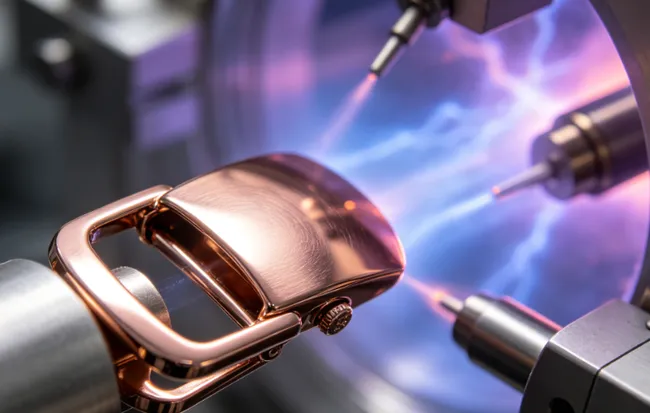
Ar gas and other working gases are introduced into the vacuum chamber. Through plasma generation by arc discharge, the coating materials such as metals and alloys are ionized into positively charged ions. The workpiece is connected to a negative bias voltage to form a high-voltage electric field, which attracts the ions to rush towards the substrate surface at high speed. At the same time, throughout the process, ion bombardment is carried out to clean the surface, ultimately forming a dense film layer.
Main Types
Ion plating technology has developed various types. The common ones are:
- Multi-arc ion plating: High ionization rate, fast deposition, suitable for mass production.
- Magnetron sputtering ion plating: High film quality, wide range of applicable materials.
- Hollow cathode ion plating: High ionization rate, good film quality.
- Reactive ion plating: Reacting gases (such as nitrogen) are introduced to form compound film layers (such as TiN).
Major Variants
| Variant | Key Feature |
| Cathodic Arc Ion Plating (Multi-Arc) | Uses arc discharge on the target → very high ionization rate, excellent for hard coatings (TiN, CrN, DLC). |
| Magnetron Sputter Ion Plating | Magnetron enhances sputtering → high deposition rate, uniform large-area coatings. |
| Hollow Cathode Discharge Ion Plating | Electrons trapped in a hollow cathode → high plasma density at low pressure. |
| Reactive Ion Plating | Reactive gas (N₂, CH₄, O₂) added → forms compound coatings (TiN, TiC, TiAlN, DLC, etc.). |
| Electron-Beam Ion Plating | E-beam heats the source → no crucible contamination, ideal for high-purity films. |
Common Applications
| Application Area | Specific Uses | Primary Function |
| Tools & Dies | Drill bits, milling cutters, molds | Enhance hardness, wear resistance, extend tool life |
| Automotive | Interior trim, decorative mouldings | Provide decorative coatings with wear and corrosion resistance |
| Aerospace | Turbine blades, structural components | Improve high-temperature and corrosion resistance |
| Electronics | Semiconductors, displays | Apply conductive, insulating, and functional thin films |
| Optics | Lenses, telescopes | Produce anti-reflective coatings, high-reflection films, etc. |
| Consumer Hardware | Watches, bag hardware | Offer durable, corrosion-resistant decorative finishes |
Ion Plating vs. Ordinary Evaporation Coating
| Feature | Ion Plating | Conventional Vacuum Evaporation |
| Surface cleaning during deposition | Yes | No |
| Coating adhesion | Excellent | Moderate |
| Film density | High | Lower |
| Process complexity | Higher | Lower |
| Cost | Higher | Lower |
Comparison to Other Plating Methods
| Method | How It Works | Adhesion | Durability |
| Electroplating | Uses electric current in liquid solution to deposit metal | Moderate | Good; can wear or corrode |
| Vacuum deposition | Evaporates material in vacuum; atoms settle on surface | Fair | Moderate |
| Ion plating (PVD) | Accelerates ionized material with electric fields | Excellent | Superior |
| CVD (Chemical Vapor Deposition) | Chemical reactions deposit coating | Very good | Very good |
Real-World Examples You’re Most Likely to Encounter
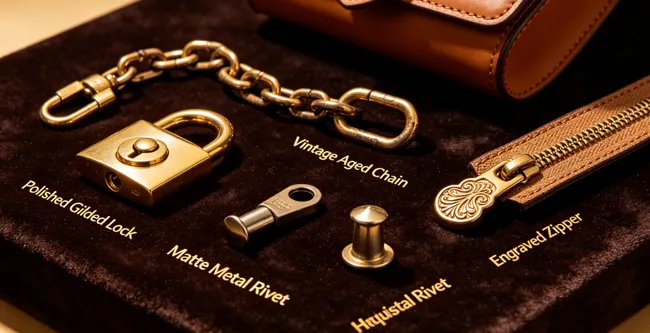
Bag hardware (metal logos, clasps, chains of brands like LV / Celine / Hermès) → Mostly arc ion plating base layer + coloring layer (TiN gold, TiCN black, ZrN gun gray)
- Wristwatch case/strap: High-end models often use ion plating for DLC (diamond-like carbon film) or TiN, with hardness reaching HV 2000+
- Cutting tools: Surface of milling tools/drill bits with TiAlN is of the ion plating type
- Bathroom/automotive decorative items: Piano black, gun color, champagne gold
How Does Ion Plating Work?
Ion plating is a coating technology based on vacuum. It uses electrical energy and plasma to vaporize and ionize the coating material, and then accelerates its deposition onto the substrate to form a thin and highly adhesive film.
Step-by-Step Operation Procedure
1. Vacuum Chamber Setup
This process is carried out in a sealed vacuum chamber where the chamber is evacuated to an extremely low pressure (typically ranging from 10⁻³ to 10⁻⁵ mbar) to remove air molecules, prevent contamination, and allow the vaporized particles to move freely.
2. Introduction of Inert Gas
A small amount of inert gas (usually argon, Ar) is injected into the chamber. High-voltage electrical discharge (spark discharge or arc discharge) is applied to cause argon atoms to lose electrons, thereby forming a plasma – a cloud-like substance composed of positively charged argon ions and free electrons.
3. Vaporization of Coating Materials (i.e., “target material” or “source material”, such as titanium, gold, chromium)
The coating material (i.e., the “target” or “source”) is vaporized using one of the following methods:
- Arc evaporation: A high current and low voltage arc strikes the target, directly vaporizing it into a dense plasma.
- Sputtering: High-energy argon ions bombard the target material, causing the atoms on its surface to be physically knocked off.
- Thermal evaporation: The target is heated to the point of evaporation.
4. Ionization of Vapor
The vaporized metal atoms pass through the plasma region. They collide with high-energy electrons and argon ions, causing many neutral metal atoms to lose electrons and transform into positively charged metal ions.
5. Acceleration Towards the Substrate
The substrate (i.e., the object to be coated, such as a bag body hardware) is connected to a negative bias voltage (typically -50V to -500V), thereby generating a strong electric field that attracts the positively charged metal ions to the substrate at high speed.
6. High-Energy Bombardment and Deposition
The accelerated ions impact the substrate with considerable kinetic energy. This bombardment has the following three key functions:
- Cleaning the substrate surface by removing contaminants (sputtering cleaning).
- Heating the surface to facilitate better diffusion and adhesion.
- Embedding the ions into the surface to form molecular-level bonding (extremely strong adhesion).
- Subsequently, the ions condense and grow into a dense, uniform film.
7. Reactive Ion Deposition (Optional)
If reactive gases such as nitrogen (N₂) or oxygen (O₂) are introduced during the deposition process, the metal ions will react with them, forming hard compound coatings, such as titanium nitride (TiN, golden in color) or titanium dioxide (TiO₂).
Key Technical Parameters of Ion Plating
The performance of Ion Plating is influenced by multiple technical parameters. Here are some key parameters:
- Vacuum degree: The vacuum degree directly affects the activity of the plasma and the deposition efficiency. A higher vacuum degree can enhance the activity of ions and the deposition efficiency, but it also increases the equipment cost and operational difficulty.
- Target current: The target current determines the evaporation rate and ionization degree of the target material. Increasing the target current appropriately can increase the deposition rate, but it will also cause the target material to ablate and be contaminated.
- Bias voltage: Bias voltage refers to the negative voltage applied to the workpiece. It can accelerate the speed at which ions rush towards the workpiece surface, increasing the energy and activity of the ions. Increasing the bias voltage appropriately can improve the adhesion and wear resistance of the coating, but it will also cause the workpiece temperature to rise and deformation.
- Gas flow rate: Gas flow rate refers to the flow rate of the reactive gas introduced into the vacuum chamber. The reactive gas can react with ions to form compound films. Proper control of the gas flow rate can regulate the composition and performance of the film.
Key Parameters
| Parameter | Typical Value | Why It Matters |
| Chamber pressure | 10⁻³ – 10⁻⁵ mbar | Ensures long mean free path for ions |
| Bias voltage | -50V to -500V | Determines ion energy and adhesion |
| Substrate temperature | 100°C – 500°C | Affects film density and diffusion |
| Deposition rate | 0.1 – 10 µm/min | Balances production speed vs. quality |
Why This Makes It So Good
| Problem in Normal Evaporation | How Ion Plating Solves It |
| Coating just sits on top → peels easily | Ions implant into the surface → atomic-level bonding |
| Line-of-sight only → can’t coat holes/edges | Charged ions follow electric field lines → wrap around corners, coat inside holes |
| Porous, columnar film structure | Ion bombardment compacts the film → dense, pinhole-free |
| Poor adhesion on plastics/ceramics | Ion cleaning + implantation works on almost any material |
Comparison to Simpler Methods
| Method | Bond Type | Durability |
| Electroplating | Surface adhesion | Moderate; can peel or corrode |
| Basic vacuum deposition | Weak physical settling | Fair; easily scratched |
| Ion plating (PVD) | Embedded, diffused bond | Superior; highly wear-resistant |
Is Ion Plating the Same as PVD?
No, they are not exactly the same, but they are closely related. Ion Plating is a type of PVD (Physical Vapor Deposition) technology.
You can think of PVD as a “family”, and ion plating is one of the “excellent branches” within this family.
PVD (Physical Vapor Deposition) – A broader category
PVD is the general term for all technologies that deposit thin films on the surface of a substrate in a vacuum environment through physical methods. Its main components include:
- Vacuum evaporation (Thermal Evaporation): The material is heated to vaporize and then condense on the substrate (with relatively weak adhesion).
- Sputtering coating: High-energy ions bombard the target material to dislodge atoms and deposit them (such as magnetron sputtering).
- Ion Plating: Deposition is carried out using plasma and high-energy ions.
Ion Plating – The “Special Elite” in PVD
Ion plating is singled out because it has two core characteristics that distinguish it from ordinary PVD (such as simple evaporation or sputtering):
- High Ionization: During the deposition process, the plating material atoms are highly ionized into charged ions rather than neutral atoms.
- Bias Voltage: The substrate (the workpiece being plated) is connected to a negative voltage, attracting positively charged ions like a magnet, causing them to impact the substrate surface with extremely high energy.
Why Are These Terms Often Confused in the Bag Hardware Field?
In the luggage hardware, watch, and jewelry industries, people often confuse “PVD” and “ion plating”, and even simply say “PVD ion plating”. This is because:
- Arc Ion Plating is currently the most commonly used technology in high-end hardware. It combines the environmental friendliness and clean properties of PVD with the extremely strong adhesion of ion plating, and has become the synonym for “high-quality PVD”.
- Businesses, in order to avoid explaining the complex classification, are accustomed to using “PVD” to summarize this advanced technology.
The Relationship between Ion Plating and PVD
This can be understood as follows: All ion plating is PVD, but not all PVD is ion plating.
| PVD (General) | Ion Plating (Specific) | |
| Vacuum required | Yes | Yes |
| Material vaporized | Yes | Yes |
| Material ionized | Not always | Yes (required) |
| Electric field acceleration | Not always | Yes (required) |
| Adhesion strength | Good to very good | Superior |
The PVD Family Tree
All PVD processes share the same skeleton: solid target → vaporize in vacuum → transport → condense on substrate. But how you vaporize and what the vapor looks like in transit creates three main siblings:
| Process | Vaporization | Key Character | Adhesion | Cost |
| Thermal Evaporation | Heat (resistive/e-beam) | Mostly neutralatoms drifting | Fair | $ |
| Sputtering (magnetron) | Ar⁺ bombards target | ~5–10% ionized, uniform | Good | $$ |
| Ion Plating (arc/cathodic) | Arc or e-beam + plasma + bias | ~70–90% ionized, substrate bombarded | Excellent | $$$ |
What Makes Ion Plating Different from the Other Two?
| Feature | Evaporation | Sputtering | Ion Plating ⭐ |
| Ionization of coating material | ~0% | ~10–30% | 30–90% |
| Substrate bias voltage | None / low | Low–medium | High (−3,000 to −5,000 V) |
| Ion cleaning of surface | No | Partial | Yes — continuous |
| Ion implantation into substrate | No | Minimal | Yes — 4–5 µm deep |
| Coating of holes/inner surfaces | ❌ No | ⚠️ Limited | ✅ Excellent |
| Film density | Columnar, porous | Dense | Ultra-dense, pinhole-free |
| Adhesion | Weak | Good | Best (10× better than evaporation) |
How Long Does Ion Plating Last?
The lifespan of ion plating (IP) is not a fixed period. Instead, it varies depending on the type of process, the usage environment, and regular maintenance, ranging from several years to several decades.
A common consensus is that a high-quality ion plating coating can last for more than 5 years under normal use.
Reference Lifetimes for Different Processes
The most direct factor affecting the lifespan is the material and structure of the coating. Here are the reference lifetimes for several common ion plating processes:
- Ion Plating Gold (IPG): This process typically starts with a layer of approximately 0.8-1.0 micrometers of titanium nitride (TiN) as the base layer, followed by a layer of 0.1-0.2 micrometers of pure gold. The normal wearing and usage time can last for more than two years. Another study shows that the IPG coating with a thickness only 1/50 of the traditional water-plated gold layer has a lifespan that is 3 to 4 times that of traditional gold plating.
- Ion Plating Rose Gold (IPRG): Similar to IPG in structure, its base layer is TiCN, and the rose gold layer thickness is also 0.1-0.2 micrometers. Its normal wearing and usage time is usually more than one year.
- Other ion platings (such as IPS/IPBlack): These coatings usually have higher hardness and stability. For example, hard coatings like diamond-like carbon (DLC) can have a membrane layer lifespan of more than 5 years under normal use.
The Determinants of the Lifespan
The lifespan of the coating is determined by its comprehensive performance, which mainly includes the following points:
- Coating hardness: Hardness is the foundation of wear resistance. High-quality PVD/ion-coated layers can have a hardness of HV1200–1800, far exceeding that of traditional electrolytic plating (HV200–300). The extremely high hardness enables it to withstand more than 5000 RCA wear tests, thereby significantly extending the lifespan.
- Coating adhesion: During the ion plating process, high-energy ions bombard the substrate surface, causing the coating to form an atomic-level firm bond with the substrate. This bond is extremely strong, ensuring that the coating does not fall off during tests such as bending.
- Coating density: Dense ceramic coatings can effectively seal the micro-pores of the substrate and block the penetration of corrosive media. This enables the ion-coated layer to pass the neutral salt spray test for 500 to 1000 hours, demonstrating excellent corrosion resistance.
The Three Fundamental Variables Determining the Lifespan
(1) Whether the Substrate Pre-Treatment Is Adequate
Ion plating adhesion relies on “Ar⁺ pre-blasting + bias activation + near-metallurgical bonding” – if the substrate (brass/steel) pre-treatment is sloppy (insufficient polishing, incomplete degreasing, insufficient vacuum), the film-substrate interface will be weak, and the film will peel off within a few months. This is why the same term “IP” used for hardware can last 5 years for luxury items, while Taobao models fall apart within half a year – it’s not just the film’s problem, it’s the substrate + pre-treatment.
(2) Film Thickness and Layers
Common for luggage hardware is 0.3–1.0 µm (thin, for color uniformity + cost)
For tools/toiletries it can reach 2–5 µm, with multiple gradient layers (base layer Ti / middle layer TiN / top layer AlTiN)
The thicker the film + the design of gradient layers, the lifespan increases exponentially – but luggage hardware cannot be too thick (the edges will show a “plastic shell effect” + the cost will soar), so luggage hardware adopts the “good enough” approach.
(3) Micro-Damage Wear (The Achilles Heel of Luggage Hardware)
Latch tongues, chain pivot points, flap turning points – these areas undergo daily small reciprocating friction. Ion plating is hard (HV 2000+), but hardness does not mean continuous hardness – micro-damage will wear through the film to a point, and then the copper of the brass substrate oxidizes and turns black, visually collapsing. Therefore, the “lifespan endpoint” of luggage hardware is usually not the complete film peeling off, but the hinge position revealing copper oxidation + oxidation.
Comparison of Lifespan with “Ordinary Electroplating (Water Plating)” (In the Context of Luggage)
- Electroplated brass: Thin gold layer (0.5–3 µm or even thinner), 6 months to 2 years of exposed copper at the hinge position, blackening triggered by sweat
- Sputtering PVD: More durable than water plating, but with lower adhesion than ion plating
- Ion plating: 3–8 times more wear-resistant/corrosion-resistant than water plating, and does not flake off (it is not peeling off, but rather wearing through)
Therefore, luxury bags (Hermès Kelly lock, Celine chain, LV hardware) dare to use IP because water plating cannot withstand the daily hinge movement.
How to Make the Ion Plating More Durable?
Apart from the quality of the coating itself, correct usage and maintenance are also crucial for extending its lifespan:
- Daily maintenance: Regularly wipe the hardware with a soft dry cloth to remove sweat and dust.
- Avoid wear and tear: Avoid direct contact and friction between the hardware and hard objects such as keys.
- Stay away from chemicals: Avoid the hardware coming into contact with chemical substances like perfume, alcohol, and cosmetics.
- Pay attention to storage: When not in use, put the bag in a dust bag to prevent friction between the hardware.
Comparison to Alternatives
| Finish | Relative Durability |
| Standard electroplating | 1–3 years |
| Ion plating (PVD) | 5–10+ years |
| Solid precious metal | Lifetime (wears evenly, never “wears through”) |
Is Ion Plating Waterproof?
Yes, the Ion Plating (PVD) layer itself has excellent waterproof and corrosion-resistant properties. However, it is necessary to distinguish between the two concepts: “the coating itself is waterproof” and “the protected substrate never rusts”.
A high-quality ion plating layer can be regarded as a dense physical barrier that can effectively isolate moisture and oxygen, preventing the underlying metal (such as brass) from being corroded. This is why the hardware components of high-end bags, after being processed with the ion plating process, can maintain their luster for a long time and are not prone to oxidization and discoloration.
Why Can Ion Plating Waterproof?
- The film layer is extremely dense: Ion plating is formed by high-energy ion bombardment in a vacuum environment. This makes the film layer structure extremely dense, without any pores or micro-cracks, equivalent to covering the metal surface with a “seamless ceramic armor”. Compared with traditional electroplating (where the coating often has pores), water is difficult to penetrate the substrate.
- High chemical inertness: The commonly used film layer materials in PVD (such as TiN, CrN, DLC) have very stable chemical properties and do not react with water or oxygen in the air or sweat. Therefore, it is not as prone to oxidation and color change as ordinary electroplated coatings.
- Salt spray resistance test: Under laboratory conditions, high-quality ion plating can pass a 48 to 500-hour neutral salt spray test, far exceeding the few dozen hours standard of traditional electroplating. This means it can easily withstand daily sweat, humid air and rain.
Why Ion Plating Is So Waterproof
| Property | Why It Blocks Water |
| Ultra-dense, pinhole-free film | No gaps for water molecules to seep through |
| Ion implantation (4–5 µm deep) | Coating is fused into the surface, not sitting on top |
| Continuous ion bombardment during growth | Film gets “hammered” into maximum density as it builds |
| Chemical inertness (e.g., TiN, CrN, DLC, AlCrN) | Water, acids, salts can’t easily react with the coating |
Real-World Waterproof Performance by Application
| Application | Waterproof Level | Details |
| Phones / Electronics‌ (PVD + plasma nano-coating) | IPX7 equivalent submersible 1m for 30 min | Coats buttons, speakers, charging ports; blocks water/oil from entering |
| Car paint (ion-plated PVD / nano-coating) | Super hydrophobic water beads up like mercury on a lotus leaf | Rain rolls off instantly; no water spots, no acid rain damage |
| Cutting tools / Molds‌ (TiAlN, AlCrN, DLC) | Fully waterproof + corrosion-proof | Salt spray life 10×+ vs uncoated; no rust, no pitting |
| Watches / Jewelry (TiN, ZrN, DLC) | Splash-proof / sweat-proof | Daily wear, showering, swimming — no fading for 3-5 years |
| Aerospace parts (TiN, CrN) | Extreme survives 10,000+ hours in harsh environments | Resists moisture, salt, jet fuel, de-icing fluid |
| Medical implants (TiN, DLC, hydroxyapatite) | Fully biocompatible & waterproof | Body fluids can’t corrode the coating |
How It Compares
| Method | Waterproof? | Durability |
| Wax | ❌ No — washes off in weeks | 1–3 months |
| Ceramic coating (spray) | ⚠️ Somewhat — degrades over time | 1–2 years |
| Chrome plating | ✅ Yes — but can pit/peel | 2–5 years |
| Ion Plating (PVD) | ✅✅ Excellent — no pinholes, no peeling | 3–10 years+ |
Where “Waterproof” Has Limits
| Scenario | IP Behavior |
| Rain / splashes / humidity | ✅ Fine |
| Hand-wash / soapy water (brief) | ✅ Fine, rinse + dry |
| Sweat (long-term) | ⚠️ Okay-ish— sweat = salt + chloride ions + pH; prolonged contact can slowly attack the film–substrate interface, especially at hinge fretting points |
| Saltwater / pool chlorine | ⚠️❌ Not great — chloride aggressively attacks both the film (micro-defects) and the brass substrate if any breach occurs |
| Hot shower steam + soaps | ⚠️ Prolonged hot + alkaline can soften organic residues and accelerate interface creep |
| Scratched / chipped IP | ❌ Once the film is breached (hinge edge, impact), water + sweat reach the brass → oxidizes black → “IP failed” visually |
“Waterproof” Does Not Mean “Damage-Proof”
Although the ion plating itself is waterproof, its durability has an absolute prerequisite – the coating must remain intact.
- Once it is scratched, the barrier is broken: although the ion plating has extremely high hardness (up to HV1500-3000), it is still a thin film (usually only a few micrometers thick). If the hardware is severely scratched by a sharp object (such as a key), the dense protective layer is damaged, and the underlying metal (such as brass) will be exposed to the air. At this time, if exposed to a humid environment, the exposed substrate will still oxidize and rust.
- Edge coverage: At the sharp corners or edges of the hardware, the coating is relatively thin and the risk of wear is higher. These areas are also places that need special attention during daily use.
Is Ion Plating Hypoallergenic?
Yes, ion plating is generally regarded as having low allergenicity and is also safe for people with metal allergies.
The core principle of this process is to form a dense physical barrier on the metal surface, effectively preventing direct contact between the skin and the metals that may cause allergies (such as nickel, chromium, and cobalt).
The Principle of Low Allergenicity
- Physical isolation: The ion plating acts like a “armor”, separating the allergenic metal from the skin.
- Common materials: The coating often uses materials with good bio-compatibility, such as Titanium, which is inherently unlikely to cause allergies.
- Nickel-free formula: Many ion-plated products clearly state that they do not contain nickel (Nickel Free).
- Clinical verification: A 2008 clinical study had 23 patients with metal allergies (22 of whom were allergic to nickel) wear ion-plated necklaces continuously for one month. As a result, no one developed dermatitis.
Why Ion Plating Is Generally Hypoallergenic
| Reason | Explanation |
| Pinhole-free, ultra-dense film | No gaps for metal ions to leach out → your skin never touches the allergenic metal underneath |
| Ion implantation (4–5 µm deep) | The coating is fused into the surface, not just sitting on top → ions can’t migrate out |
| Chemically inert coatings (TiN, CrN, DLC, ZrN, TiC) | These materials are biologically inert — they don’t react with skin or sweat |
| No Cr⁶⁺, no free nickel release | Unlike traditional chrome plating or cheap electroplating, ion plating doesn’t release toxic/allergenic ions |
What Causes Metal Allergies in the First Place?
| Allergen | Common Source | Ion Plating Solution? |
| Nickel (Ni) ✅ #1 culprit | Cheap jewelry, belt buckles, watch backs, phone frames | ✅ TiN / CrN / DLC coating completely blocks Ni release |
| Cobalt (Co) | Alloys, cement | ✅ Coated surfaces show near-zero ion release |
| Chromium (Cr⁶⁺) | Chrome plating, leather tanning | ✅ CrN coating uses Cr³⁺ (non-toxic), no Cr⁶⁺ |
| Copper (Cu) | Brass, bronze | ✅ DLC or TiN barrier prevents Cu leaching |
Real-World Hypoallergenic Performance
| Application | Hypoallergenic? | Evidence |
| Medical implants (TiN, DLC, TiAlN on Ti-Ni alloys) | ISO 10993 certified biocompatible | Used in orthopedic screws, dental implants, stents — no allergic reactions reported |
| Watches (TiN, ZrN, DLC) | Nickel-free certified | Brands like Citizen, Seiko, Apple use ion plating specifically for sensitive skin |
| Jewelry (PVD gold, rose gold, black) | Dermatologist-recommended | Replaces nickel-containing electroplated gold safe for eczema-prone skin |
| Phone frames (PVD color) | Sweat-proof, no rash | No nickel release even after months of daily wear |
| Surgical tools (TiN coating) | Sterile + biocompatible | No metal ion contamination in surgical environments |
Notes for Attention
- The integrity of the coating is crucial: if the coating is damaged due to wear or scratches, the underlying metal (such as nickel in stainless steel) may still be exposed and cause an allergic reaction.
- Individual differences: A very small number of people may be allergic to the coating material itself, or react to the release of trace metal ions.
- Be cautious of false advertising: When purchasing, choose a reputable brand and pay attention to whether the product clearly labels “low allergenicity” or “nickel-free”.
Common Materials and Allergy Risk
| Material | Allergy Risk |
| Titanium nitride (TiN) | Very low |
| DLC (diamond-like carbon) | Very low |
| Pure titanium | Very low |
| Surgical stainless steel | Usually low, but may contain nickel |
| Nickel-containing alloys | Higher for sensitive individuals |
Comparison: Ion Plating vs Other Methods for Sensitive Skin
| Method | Nickel Release | Hypoallergenic? |
| Electroplating (cheap) | High ❌ | ❌ Causes rashes |
| Chrome plating (Cr⁶⁺) | High ❌ | ❌ Toxic + allergenic |
| Stainless steel (bare) | Medium ⚠️ | ⚠️ 10–15% of people react |
| Anodizing (aluminum) | Low ✅ | ✅ Good but limited colors |
| Ion Plating (TiN/DLC/ZrN) | Near zero ✅✅ | ✅✅ Best option |
Is Ion Plating Good?
Ion plating (PVD) is an extremely outstanding surface treatment technology, especially in scenarios where durability and quality are of high importance. It can be regarded as the “ceiling” of the current field of surface treatment for hardware.
Core Advantages
- Durability increased by several times: The durability of ion plating far exceeds that of traditional electroplating. For example, in bag hardware, the high-quality PVD coating can last for 5-10 years, while ordinary electroplating usually starts to fail after 1-2 years. Additional data shows that its strength can be 5 to 8 times or 10 times that of traditional processes.
- Extremely strong resistance to scratching and corrosion: The PVD coating has extremely high hardness (up to HV2000-4000), far exceeding common surface processing methods, and can effectively resist daily wear and scratches. At the same time, it can form a dense protective layer on the hardware surface, resisting sweat, moisture, and chemical erosion, keeping the hardware pieces looking new for a long time.
- Color lasts long without fading: Ion plating achieves deep color penetration through atomic-level bonding, with high color saturation, and does not oxidize, fade, or become dull. The color stability is excellent.
- Environmentally friendly and skin-friendly: PVD is a vacuum physical process that does not produce toxic wastewater, making it more environmentally friendly. At the same time, the coating does not contain common allergens like nickel, making it more friendly to people with sensitive skin.
- Excellent adhesion: The particles of ion plating bombard the substrate with high energy to form molecular-level bonding force, so the coating is not prone to peeling.
- Strong coverage ability: It can form a uniform and pore-free coating on complex-shaped workpieces.
Why It’s Excellent
| Advantage | What It Means For You |
| Best adhesion of any PVD | Coating is implanted 4–5 µm into the surface — it won’t peel, flake, or chip |
| Ultra-dense, pinhole-free film | No pathways for water, corrosion, or contamination |
| Coats complex shapes | Ions follow electric field lines → covers holes, slots, inner surfaces that other methods can’t reach |
| Extremely hard | TiN: ~2000 HV, TiAlN: ~3300 HV, DLC: ~5000+ HV → 3–10× tool life |
| Low temperature (<550°C) | Won’t warp or damage heat-sensitive parts (plastics, thin steel) |
| Hypoallergenic | Blocks nickel/cobalt release → safe for sensitive skin (medical implants, jewelry) |
| Waterproof | Dense film = zero water penetration |
| Eco-friendly | No toxic chemicals, no Cr⁶⁺, no waste water — unlike electroplating |
| Wide material range | Metals, ceramics, plastics, glass — all can be coated |
| Decorative colors | TiN (gold), ZrN (rose gold), CrN (gunmetal), DLC (black) — lasts years |
Limitations
- Higher cost: Due to the complex technology and expensive equipment, the cost of ion plating is higher than that of traditional electroplating.
- Not indestructible: Although the hardness of ion plating is extremely high, it is still a thin film. It may still be scratched when in contact with substances that are harder or rougher than it.
- Process limitations: In some extreme cases, such as when the substrate temperature is too high, it may affect the quality of the coating.
- Common applications: Ion plating has become the mainstream process for high-end watches, jewelry, and luxury bag hardware.
Where It Falls Short
| Limitation | Details |
| Expensive equipment | Vacuum chambers + high-voltage systems = high capital cost |
| Complex process control | Many variables (voltage, gas flow, bias) → requires skilled operators |
| Micro-droplets (arc ion) | Traditional arc ion plating can produce “macro-particles” → surface defects (newer pure ion plating / PIC solves this with electromagnetic filtering) |
| Not ideal for ultra-thin precision films | Sputtering is better for very thin, ultra-smooth optical coatings |
| Small parts can have uneven bombardment | Ion flux distribution can vary across complex geometries |
How It Stacks Up
| Method | Adhesion | Hardness | Coverage | Eco-Friendly | Cost |
| Electroplating | ⭐⭐ | ⭐⭐ | ⭐⭐ | ❌ Toxic | $ |
| Vacuum Evaporation | ⭐ | ⭐⭐ | ⭐ (line-of-sight only) | ✅ | $$ |
| Sputtering | ⭐⭐⭐ | ⭐⭐⭐ | ⭐⭐⭐ | ✅ | $$$ |
| Ion Plating | ⭐⭐⭐⭐⭐ | ⭐⭐⭐⭐⭐ | ⭐⭐⭐⭐⭐ | ✅ | $$$$ |
Conclusion
Ion plating is a high-quality surface treatment technology that combines both decorative and functional aspects, significantly enhancing the appearance, durability, and protective properties of products.
Ion plating is currently the “top-of-the-line” technology for surface treatment in the hardware industry – it offers several times the durability and quality of traditional electroplating at a higher cost. It is the preferred process for those who seek “lasting beauty”.
During daily use, the ion plating layer has excellent waterproof, sweat-proof, and anti-oxidation properties, and is unlikely to fade or peel off. Its service life is usually much longer than that of ordinary electroplating layers. However, it is still essentially a film coating, and long-term friction, collision, or scratching may still cause wear and tear. For people with sensitive skin, ion plating layers made of materials such as titanium or DLC usually have better bio-compatibility and can reduce the risk of allergies.
If you are considering using some high-end hardware accessories, you might use hardware with ion plating technology. If you want to customize a bulk of bags, please feel free to contact us.
FAQs of Ion Plating
Does Ion Plating Wear Off?
Yes, the ion plating will eventually wear out over time and expose the underlying material, but it does not wear out easily. It is the most wear-resistant among all PVD methods, with a service life that is 3 to 10 times longer than electroplating. Its wear rate is extremely slow, and its durability far exceeds that of traditional electroplating. It can maintain its appearance for several years or even ten years or more under normal daily use.
What Is Gold Ion Plating?
Gold ion plating is a PVD process. Gold is evaporated in a vacuum chamber, and through plasma discharge of argon gas, it is ionized. Then, under the acceleration of a high voltage field (3,000–5,000V), it bombards the workpiece as the cathode. At the same time, gold ions clean the surface by sputtering and implant 4–5 micrometers deep into the substrate, making the coating fuse with the substrate. It has excellent adhesion, which is much better than traditional electroplating processes.
What Is Ion Plating Stainless Steel?
Ion plating of stainless steel refers to a processing method where stainless steel is used as the base material, and a functional film is deposited on its surface through ion plating (PVD) technology. It is not a new type of stainless steel; rather, it is a means of “coating upgrade” for the surface of stainless steel, allowing it to retain the original mechanical strength while achieving superior surface performance.
Is Ion Plating Durable?
Yes, ion plating (PVD) is a highly durable surface treatment process, with its durability far exceeding that of traditional electroplating. In simple terms, under the same usage conditions, the lifespan of the ion plating layer can be 3 to 10 times that of ordinary electroplating. Under normal usage conditions, ion plating can maintain for 5 to 10 years or even longer. It is currently widely used in industries, aerospace, and consumer goods sectors.
Does Ion Plating Tarnish?
No, the ion plating layer will not turn black, or at least it has 10 to 50 times better resistance to discoloration than electroplating or bare metal. The ion plating coating has excellent resistance to discoloration, but whether it will discolor depends on various factors. This technology causes the target material to evaporate and ionize in a vacuum environment, and then deposits on the surface of the work-piece to form a dense film. Its structure is dense and has a low porosity, which can effectively prevent the penetration and contact of external substances, thereby reducing the occurrence of discoloration.