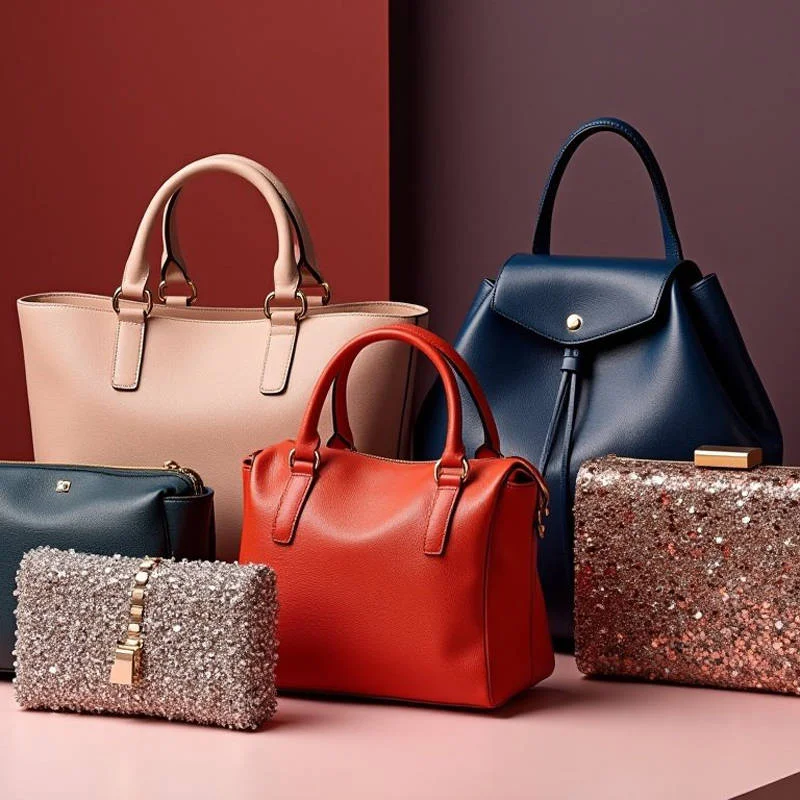
Bag Making Thread (bag sewing thread) is a special sewing thread used for making various types of luggage products such as handbags, backpacks, suitcases, canvas bags, and leather bags. Since luggage needs to withstand significant tension, friction, and long-term use, the sewing thread used must possess characteristics such as high strength, wear resistance, stretch resistance, chemical corrosion resistance, and weather resistance.
Bag-making thread is a component of the structure of bags. In the luggage manufacturing industry, choosing the appropriate sewing thread is an important factor for ensuring product quality and production efficiency, and it is also one of the key factors affecting the lifespan and market competitiveness of bags.
The selection of bag sewing thread essentially involves finding a balance between strength, aesthetics, and processing methods.
What Is Bag Making Thread?
Bag Making Thread is an industrial sewing thread specifically used for making luggage, handbags, tote bags, backpacks, wallets, and leather accessories. The main difference between it and ordinary sewing threads lies in the extremely high requirements for strength, wear resistance, and durability.
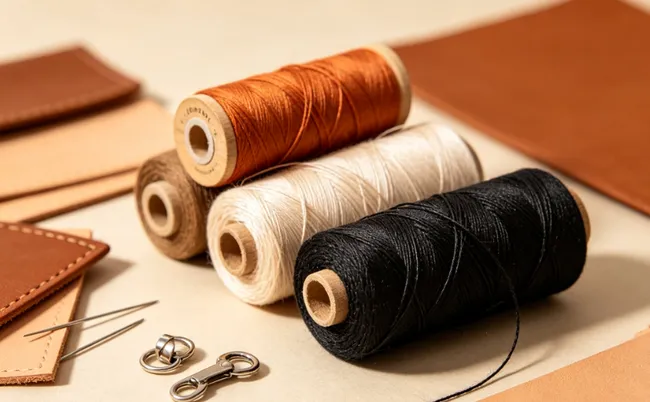
Why Bags Need Specialized Sewing Thread
Bags are subjected to repeated pulling, heavy object compression and friction during daily use. Therefore, the stitching must be strong and durable. Ordinary cotton threads or cheap polyester threads are prone to breaking or wearing out under stress, while high-quality bag-making threads can ensure that the seams remain firm even after years of use, directly affecting the lifespan and quality of the bag.
Core Characteristics of Bag Making Thread
- High tensile strength: The bag-making thread must be able to bear the weight of the bag and its contents without breaking. Its tensile strength ranges from 20 kilograms (for ordinary cotton bags) to 200 kilograms (for heavy industrial bags).
- Wear resistance: The thread used for bag making will continuously come into contact with surfaces such as clothing, furniture, or concrete. High-quality thread is coated or treated to prevent thread breaks and wear, thereby extending the lifespan of the bag.
- Waterproofness: Many bag designs are for outdoor use or travel, so thread materials with waterproof coatings or natural waterproof properties (such as nylon or polyester fibers) are used to prevent water from seeping into the seams.
- Elasticity: Some bags require thread with moderate elasticity to avoid damaging the stitches when accommodating stretchable components (such as expandable handbags or sports bags).
- Color fastness: The thread must retain its original color after exposure to sunlight, washing, or contact with chemicals to ensure the bag remains visually appealing over the long term.
Core Design Features of Standard Bag Making Thread
Reinforced Fiber Structure
Most mainstream bag sewing threads are made of multi-strand twisted silk threads and coated with resin. This structure effectively prevents delamination, fraying or breakage at high-load seams (such as the bottom and shoulder strap joints of the bag), which is a key difference from single-strand fine thread garment thread materials.
Surface Treatment for Leather Safety
The top-grade thread is coated with a smooth layer or wax layer on its surface, which can easily pass through the sewing machine needle holes without scratching the delicate full-grain leather, thin sheepskin or fragile plant-based tomato leather, and prevent the formation of enlarged or torn holes over time during long-term use.
Stable Performance Against Daily Conditions
Qualified bag-making thread has excellent color fastness and can prevent the dye from seeping onto light-colored materials. At the same time, it has been treated for mold resistance, water resistance and shrinkage resistance, making it suitable for use throughout the year in humid or sunny climates.
Graded Thickness Options
The manufacturer produces various thicknesses of thread for different purposes: ultra-fine thread is used for lining and decorative details, medium thickness is suitable for ordinary cross-body bags and vegan leather products, while the ultra-thick type is specifically designed for large-capacity travel tote bags and thick cowhide work bags.
Summary of the Key Properties Bag Making Thread Must Have
| Property | Why It Matters |
| Strength | Bags carry weight; thread must resist breaking under tension |
| Consistency | Even thickness prevents weak points and machine jamming |
| Colorfastness | Thread should not bleed or fade with use |
| Flexibility | Must move with materials without cracking |
| Needle penetration | Smooth passage through leather, canvas, or multiple layers |
Common Types Include:
- Bonded nylon thread: High strength, excellent flexibility, and good wear resistance. Widely used in backpacks, tactical equipment, and leather bags.
- Bonded polyester thread: Similar in strength to nylon, but more resistant to UV rays, moisture, and mold. Ideal choice for outdoor bags.
- Heavy-duty polyester thread: Often used in home sewing machines to make canvas tote bags, handbags, or denim bags.
- Wax thread: Often used for hand sewing leather bags because the wax can protect the thread and make the sewing process easier.
Distinction from Regular Clothing Thread
Ordinary clothing threads only need to support lightweight fabrics and have relatively low tensile strength; while the threads used for making bags must withstand continuous heavy loads, frequent friction, and contact with hard metal hardware. The strength of clothing threads is too weak to be used for the production of leather bags, as they are prone to breaking at the stressed points, and thus cannot replace the dedicated bag-making threads.
What Makes It Different from Regular Thread
| Feature | Bag Making Thread | Standard Sewing Thread |
| Thickness | Thicker (Tex 60–150+) | Thinner (Tex 30–50) |
| Strength | High tensile strength for load-bearing | Lower; for garment seams |
| Abrasion resistance | Designed to resist friction from handling | Minimal requirement |
| Twist | Tighter, more plies for security | Looser, fewer plies |
| Finish | Often waxed, bonded, or glazed | Usually untreated |
How It Is Measured
| System | Explanation |
| Tex | Weight in grams per 1,000 meters; higher = thicker |
| Denier | Weight in grams per 9,000 meters; used for synthetics |
| Ply | Number of strands twisted together; more plies = stronger |
Specification of the Thread: Tex and Denier
The thickness of the fabric-making thread is usually indicated by Tex or Denier.
- Tex system: It refers to the weight (in grams) of the thread per 1000 meters. The higher the value, the thicker the thread and the higher the strength. Tex 45 and Tex 70 are common specifications in fabric production.
- Tex 30-45: Suitable for lightweight items such as small bags, wallets, or decorative stitching.
- Tex 60-80: This is a common specification for making most bags, suitable for medium-thickness leather, canvas, etc.
- Tex 100 and above: Used for heavy-duty bags, thick leather, or areas requiring prominent stitching.
How to Choose the Right Thread?
- Based on the sewing method: For hand sewing, wax thread (such as Ritza 25) or linen thread is preferred; for machine sewing, Bonded thread or core-spun thread is recommended.
- Based on the thickness of the material: For lightweight bags, use Tex 40-50; for medium-sized bags, use Tex 60-80; for heavy-duty bags, use Tex 90 or above.
- Based on the stressed areas: For stressed areas (back straps, handles), use thicker and stronger threads.
Key Considerations When Choosing Thread for Bag Making
- Bag usage: Select thread that matches the purpose of the bag. For example, heavy-duty bags use high-strength nylon, while casual daily bags use cotton thread.
- Material compatibility: Ensure that the thread is compatible with the bag material. Polyester or nylon is suitable for combining with synthetic fabrics, while cotton or waxed cotton is best paired with natural materials such as canvas or leather.
- Stitch pattern: The stitch pattern affects the performance of the thread. Locking stitches or chain stitch methods require stronger thread to ensure a secure seam.
- Color matching: Choose thread colors that match the bag material. Neutral tones such as black, white, or brown are versatile and practical, while bright colors can add decorative effects.
Typical Specifications by Bag Type
| Bag Type | Thread Thickness | Thread Type |
| Delicate fabric clutch | Tex 40–60 | Fine polyester or silk |
| Standard leather handbag | Tex 80–120 | Waxed polyester or bonded nylon |
| Heavy leather tote | Tex 120–150 | Bonded nylon or heavy waxed linen |
| Canvas backpack | Tex 90–135 | Heavy cotton or bonded nylon |
| Luxury artisan bag | 0.5–0.8mm diameter | Waxed linen (hand saddle stitch) |
What Thread Is Used for Bags?
There are many types of sewing threads used in bag manufacturing. For most bags, the best thread material is polyester or bonded polyester, as it is strong, durable, and more resistant to wear than cotton.
In practice, the choice of thread material for making bags depends on the material, purpose, appearance quality, and durability requirements.
Bonded Polyester Thread (Most Widely Used Industrial Thread)
This is the standard thread used for mass production of bags, accounting for over 90% of the factory’s output. Multiple polyester fibers are bonded together through resin coating.
Advantages: High tensile strength, excellent wear resistance, good color fastness, mold-proof, waterproof, no shrinkage, and less likely to shed fibers during high-speed machine sewing. The surface is smooth and will not scratch leather, tomato leather, PU or canvas.
Application scenarios: Daily cross-body bags, tote bags, backpacks, as well as all chrome-tanned cowhide, sheepskin, synthetic leather and plant-based vegan leather bags. It is also suitable for all stressed areas such as the bottom of the bag, the handle connection point and the shoulder strap joint.
Waxed Cotton Thread
The surface of natural cotton thread is coated with beeswax or plant wax, mainly used for handmade leather products and eco-friendly style items.
- Advantages: Soft texture, natural matte finish, neat stitching, the wax layer can lock the stitches to prevent loosening, environmentally friendly and compatible with plant-tanned leather.
- Disadvantages: Lower strength than polyester fibers, prone to absorb water and grow mold in humid environments.
- Applicable scenarios: Hand-sewn wallets, plant-tanned leather handbags, small retro leather products and sustainable handmade accessories.
Nylon Filament Thread
Soft and elastic polyamide thread, with a smooth and shiny surface.
- Advantages: Excellent flexibility, capable of creating tiny and delicate holes without damaging thin and fragile materials.
- Disadvantages: Poor UV resistance (easily fades in sunlight), weak waterproofing.
- Applicable scenarios: Suitable for fine sheepskin/lambskin mini bags, bag linings, inner pocket stitching, lightweight soft bags and decorative fine stitching. Not suitable for outdoor high-intensity use bags.
Fine Polyester Filament Thread
A fine and non-adhesive single-ply polyester thread, which is lightweight and invisible after sewing.
- Advantages: Ultra-fine, small holes, uniform color, low friction.
- Disadvantages: Low load-bearing capacity, prone to breaking under strong pulling.
- Applicable scenarios: Inner lining of bags, sewing brand labels, fine decoration of the edges of mini handbags, not tearing the soft biological materials when sewing thin tomato leather panels.
Heavy-Duty Thick Bonded Polyester Thread
Extra-thick multi-strand reinforced high-ply polyester thread.
- Advantages: Extremely strong load-bearing capacity, resistant to tearing, capable of withstanding long-term heavy pulling and friction.
- Disadvantages: The needle and thread are relatively thick, which may leave obvious large holes on the leather, and it is not suitable for thin leather materials.
- Application scenarios: Large-capacity shopping bags, travel backpacks, thick cowhide work backpacks, and reinforcement sewing of the bottom of bags.
Linen Thread
Natural plant fiber thread, a high-end eco-friendly material.
- Advantages: Completely biodegradable, rugged matte texture, in line with the zero synthetic and sustainable concepts.
- Disadvantages: Low tensile strength, rough surface, slow sewing speed, high cost.
- Applicable scenarios: Limited edition eco-friendly luxury handbags, small high-end vegan products paired with tomato skins and plant-tanned leather.
Special Functional Threads for Specialized Bags
- Waterproof treatment thread: Made with polyester as the base material, an additional waterproof coating is added. Suitable for outdoor canvas bags and rainproof leather bags.
- Core yarn anti-tear thread: Prevents the breakage of thread ends on high-speed assembly lines, reducing the defect rate in large-scale production.
- Customized dyeing and coloring thread: A unique custom-made thread specially designed for luxury brands. The luster and color tone are consistent, perfectly matching the leather surface, presenting an elegant appearance.
Comparison of Thread Types for Bag Making
| Thread Type | Tensile Strength | Abrasion Resistance | Water Resistance | Best For | Cost |
| Polyester | High (50-100 kg) | Excellent | Good | Backpacks, luggage, tote bags | Low-Medium |
| Nylon | Very High (80-120 kg) | Excellent | Excellent | Industrial bags, waterproof gear | Medium |
| Cotton | Moderate (20-40 kg) | Poor | Poor | Casual handbags, decorative sewing | Low |
| Waxed Cotton | Moderate (25-45 kg) | Good | Good | Leather bags, vintage accessories | Medium |
| Aramid | Extremely High (150-200 kg) | Excellent | Excellent | Industrial filter bags, fire-resistant gear | High |
| Spandex-Core Polyester | Moderate-High (30-70 kg) | Good | Good | Expandable bags, sports gear | Medium |
For Leather Bags
| Thread | Use |
| Waxed linen | Hand-stitched luxury bags (Hermès standard); traditional saddle stitch |
| Waxed polyester | Modern hand or machine leatherwork; stronger, more UV-resistant than linen |
| Bonded nylon | Machine-sewn leather; extreme strength, abrasion-resistant |
For Fabric and Canvas Bags
| Thread | Use |
| Heavy cotton | Canvas totes, casual bags; breathable, traditional |
| Polyester | General construction; strong, colorfast, affordable |
| Bonded nylon | Heavy-duty or outdoor bags; maximum durability |
For Specialized Applications
| Thread | Use |
| Silk | Delicate linings, beaded bags, invisible stitching |
| Kevlar | Tactical, industrial, or high-stress bags |
| Metallic | Decorative embellishment on evening bags |
By Bag Type / Material
| Bag / Material | Thread | Needle | Note |
| Full-grain / Pebble tote (1.2–1.6mm) | Matte poly Tex 70, 3-ply | 90/14 | Mass-production standard |
| Heavy tote / saddlery (1.8–2.2mm+) | Tex 135 (V138) | 110/18 | Higher tensile |
| Thin leather / SLG / Nubuck / lamb (0.8–1.0mm) | Tex 40 (V46) | 70/10–80/12 | Avoid over-thick = “ribbing” |
| Nubuck | Tex 70 matte poly orfine linen, tone-on-tone | 90/14 | No shiny nylon (kills mist) |
| Plant-based (apple/grape/tomato) | Poly-core or poly Tex 70, micro-wax / unwaxed | 80/12–90/14 | No heavy wax (waxes on topcoat → white streaks) |
| Canvas / nylon sport | Nylon or poly Tex 40–70 | 80/12–90/14 | Nylon slicker, good for lightweight |
| Heritage / hand-saddle (Hermès-level) | Linen or cotton-waxed + hand saddle stitch | — (hand) | Ages with patina; linen fears moisture |
Key Considerations When Choosing Thread
- Bag Usage: Select the appropriate thread based on the bag’s purpose. For example, heavy-duty and durable bags can use high-strength nylon thread, while casual daily bags are suitable for cotton thread.
- Material Compatibility: Ensure that the thread matches the bag’s material. Polyester or nylon threads are suitable for synthetic fabrics, while cotton or waxed cotton threads are best paired with natural materials like canvas and leather.
- Sewing Method: Different sewing methods affect the performance of the thread. Lock-stitch or chain stitch require stronger thread to maintain a firm seam.
- Color Matching: Choose thread colors that coordinate with the bag’s material. Neutral tones such as black, white, or brown are versatile and practical, while bright colors can add decorative effects.
Summary of the Key Factors in Selection
| Factor | Consideration |
| Thickness | Heavier materials need thicker thread (Tex 90–150 for leather) |
| Strength | Load-bearing bags require bonded or waxed threads |
| Flexibility | Some stretch (nylon) helps with machine tension; none (linen) for hand stitch security |
| Weather resistance | Outdoor bags need UV and moisture-resistant synthetics |
| Aesthetic | Thread color and finish (matte vs. glossy) define visual style |
What Is Bag Closing Thread?
Bag Closing Thread is a type of industrial sewing thread specifically designed for sealing and securing various packaging bags and sacks.
Although it belongs to the same category of “sewing thread” as the ones used for making bags (such as handbags and backpacks), it has significant differences in application scenarios and performance requirements. Bag Closing Thread is mainly used in industrial packaging processes to ensure that packaging bags for products like grains, fertilizers, and cement remain securely sealed during transportation and storage, and that the contents remain intact.
Core Definition
Bag Closing Thread is a high-strength sewing thread specially designed for sealing industrial packaging bags. It is used to mechanically sew the openings of woven bags, canvas bags, FIBC ton bags, etc. through automatic or manual sewing machines, ensuring that the contents do not leak or get damaged during transportation and storage.
- Non-decorative Use: Different from handbag sewing threads, it is not used for aesthetic stitching edges but instead performs the functions of structural load-bearing and sealing.
- Industry Terminology: In the fields of chemical engineering, agriculture, and food packaging, it is a standard term. The full English name is often written as Bag Closing Thread or Bag Stitching Thread.
Core Purpose
The core function of the bag closing thread is “sealing”. It is widely used for sealing woven bags, paper bags and other products made of materials such as jute, cotton, and polypropylene (PP). It is commonly found in agriculture, food processing and manufacturing industries. Additionally, it is also used for fixing product labels and size plates.
Core Characteristics of the Bag Closing Thread
- Extremely high tensile strength: The closing thread must bear the weight of bulk materials (typically 50-100 kilograms per bag) without breaking. Its tensile strength is generally between 150-250 kilograms, much higher than that of ordinary bag-making threads.
- Excellent wear resistance: During transportation, the closing thread will come into contact with conveyor belts, pallets, and other rough surfaces and undergo friction. High-quality closing thread are coated or made of durable materials to prevent wear and tearing.
- Low elasticity: The minimal elasticity ensures that even if the bag is shaken or stacked, the seal remains tight, preventing leakage or displacement of the contents.
- Chemical resistance and water resistance: Many bulk materials are corrosive or prone to moisture damage. The bag closing thread must have the ability to resist chemicals, oil stains, and water to maintain its integrity.
- Compatibility with sealing machines: Most sealing operations are completed using industrial sewing machines (such as Union Special, Newlong series). The line material is wound on large conical shafts or spools to achieve continuous high-speed operation.
Technical Features:
- Thread diameter specification: Commonly 12/4, 20/4, 10/3 (British count), the thread body is thick and hard, with excellent tear resistance
- Surface treatment: Contains 7–8% food-grade silicone oil for lubrication, reducing wear on sewing machine needles
- Packaging form: Large rolls (1–10kg), suitable for continuous operation of automated sewing machines
- Color options: White, black, yellow, blue, facilitating classification and identification (e.g.: yellow = fertilizer, blue = feed)
Typical Application Scenarios
- Fertilizer/Mortar Packaging: PP woven bags are sealed by automatic valve seam machines, with a production rate of 60–120 bags per minute.
- Grain Storage: Tonne bags (FIBC) are reinforced at the four corners and can withstand a load of 1000kg.
- Industrial Chemicals: Acid and alkali-resistant polyester lines are used for sealing pesticide and dye bags to prevent leakage.
- Logistics Transportation: Maintain the integrity of the seal in high-temperature, humid, and bumpy environments.
Main Types and Materials
| Material Type | Key Characteristics | Best For |
| Polyester Thread | The most commonly used and reliable option. High strength, durable, abrasion-resistant, chemical-resistant, and moisture-resistant. Produces minimal lint and does not clog machines easily. | Versatile – suitable for various outdoor or harsh environments. Ideal for PP woven bags, paper bags, and more. |
| Polypropylene Thread | High strength and abrasion-resistant, especially suitable for sealing dry goods. | Commonly used for packaging dry products such as grains. |
| Cotton Thread | Natural, soft, and biodegradable. | Used in agricultural and horticultural applications where environmental considerations matter – for sealing natural fibre bags (e.g., jute and cotton sacks). |
| Nylon Thread | Extremely strong and durable, highly abrasion-resistant, suitable for harsh weather conditions. | Often used in outdoor equipment and heavy machinery packaging, able to withstand high-stress use and pressure. |
Bag Closing Thread vs. Bag Making Thread
| Dimension | Bag Closing Thread | Bag Making Thread |
| Primary Use | Used to sew the top of a filled bag closed (sealing the filled package). | Used to construct the bag itself (joining panels, handles, etc.). |
| Optimisation Goal | Optimised for high-speed bag-closing machines – prioritising sealing efficiency and reliability. | Optimised for durability – prioritising long-lasting strength and aesthetic quality of seams. |
| Common Industries | Packaging industries (agriculture, food, chemicals, cement, etc.). | Luggage, handbags, backpacks, tote bag manufacturing, and leather goods. |
| Material | Mostly polyester or polypropylene (PP) ; small amounts of cotton or nylon (for heavy-duty applications). | Primarily polyester, nylon for stress-bearing areas, silk for decoration, and linen / waxed thread for hand-stitching. |
| Thread Weight (Tex) | Typically Tex 20–120; common sizes include Tex 27 and Tex 40. | Typically Tex 30–100+; general-purpose Tex 60–80 is most common. |
| Thread Construction | Mostly multi-ply twisted structures, focusing on abrasion resistance and tensile strength. | Available in various constructions: bonded, core-spun, braided, waxed, etc. |
| Lubrication Treatment | Must be oil- or silicone-treated to ensure smooth operation in high-speed machines. | Some lubrication (especially for machine-sewing), but hand-sewing threads (e.g., waxed thread) do not require additional lubrication. |
| UV Resistance | Generally moderate – packaging bags are often stored indoors or in short-term outdoor conditions. | Polyester threads offer excellent UV resistance, suitable for outdoor bags. |
| Strength & Elongation | Focuses on adequate tensile strength and low elongation to ensure a tight seal. | Focuses on high toughness; nylon threads may even require moderate elasticity to withstand repeated heavy loads. |
| Thermal Stability | Moderate – sufficient for room-temperature packaging environments. | Higher requirement – must withstand needle heat buildup and prolonged friction during sewing. |
| Seam Type | Mostly single-thread chain stitch or double-thread lockstitch – prioritising sealing speed and security. | Wide variety: plain seam, lockstitch, saddle stitch (hand-sewn), edge stitching, etc. |
| Packaging Form | Mostly large cones – designed for industrial bag-closing machines. | Available in small spools, large cones, and reels – suitable for both home and industrial sewing machines. |
| Cost Positioning | Bulk, low unit cost – an industrial consumable. | Wide cost range: standard machine threads are low-cost; premium brand-specific threads (e.g., Serafil) are expensive. |
| Performance Testing | Focuses on seal strength and knot strength – testing standards align with packaging requirements. | Focuses on colour fastness, abrasion resistance, and stitch appearance – testing standards align with consumer goods. |
What Is the Best Thread for Bag Making?
Generally speaking, bonding polyester threads or bonding nylon threads are considered the best choices for durability.
Of course, strictly speaking, when making bags, there is no “universal” best sewing thread. The choice usually needs to strike a balance among strength, appearance, material, and sewing method. However, depending on different needs, there are indeed some recognized excellent options.
Comparison of Top Bag Making Threads
| Thread Type | Tensile Strength | Abrasion Resistance | Water Resistance | Best For | Cost |
| Bonded Nylon | Very High (80-120 kg) | Excellent | Excellent | Backpacks, leather bags, luggage | Medium |
| Waxed Polyester | High (50-70 kg) | Good | Good | Hand-stitched leather bags | Low-Medium |
| Polyester | High (50-100 kg) | Excellent | Good | Tote bags, outdoor gear, canvas bags | Low |
| Waxed Cotton | Moderate (25-45 kg) | Good | Moderate | Vintage-style leather bags | Medium |
| Aramid | Extremely High (150-200 kg) | Excellent | Excellent | Industrial filter bags, fire-resistant gear | High |
Key Considerations When Choosing Threads
Bag purpose and material: Select appropriate threads based on the purpose of the bag and its material. For example:
Leather bags: Use bonded nylon or waxed polyester thread to enhance durability.
Canvas bags: Polyester thread is the most economical and durable option.
Retro bags: Waxed cotton thread can give a classic handmade texture.
Sewing methods:
- Machine sewing: Bonded nylon or polyester thread is best for high-speed sewing machines.
- Hand sewing: Waxed polyester or cotton thread is easier to operate and can form tight stitches.
Color and appearance: Choose thread colors that match the material of the bag. Neutral colors such as black, white, or brown are versatile and practical, while bright colors can add decorative effects.
Thread thickness: For thick materials (4-6mm), it is recommended to use thicker threads (420D/3 bonded nylon or 1.0mm waxed polyester); for thin fabrics (1-2mm), use thinner threads.
Key Decision Point: Hand Sewing vs. Machine Sewing
First, determine your sewing method, as it determines the appropriate type of thread.
- Hand Sewing: Pursues ultimate strength and aesthetic craftsmanship, best suited for using wax thread.
- Machine Sewing: Focuses on efficiency and durability, the preferred choice is Bonded Thread or high-strength polyester thread.
Best Recommendations for Various Scenarios
Preferred Hand-Sewing Thread: Ritza 25 Tiger Thread
For those who value craftsmanship and ultimate strength in handmade leather goods, Ritza 25 Tiger Thread is a highly recommended choice.
Material: 100% polyester, flat weave structure.
Features: High strength, wear-resistant, UV-resistant and moisture-proof; slightly waxed finish for smooth feel; flat stitching, visually striking and textured.
Common specifications: 0.8mm suitable for wallets, small bags, etc. of medium thickness; 1.0mm – 1.2mm suitable for thicker large bags, belts, etc.
Machine Sewing Recommendations: Bonded Thread and High-Strength Polyester Thread
For machine-sewn bags, the thread needs to remain stable at high speeds and provide strong durability.
- General recommendation: Gutermann Mara: This is a Poly-wrapped poly core, with a smooth surface, balanced performance, wide applicability, and is the “all-purpose” choice for many bag projects. Common specifications are Mara 70 (Tex 40), suitable for most bag projects.
- Heavy-duty/Occupational recommendations: Gutermann Tera: This is a multi-fiber thread (Multifilament), with higher strength, better abrasion resistance, and excellent UV resistance, especially suitable for outdoor bags, backpacks, suitcases, etc., which require high strength. Common specifications are Tera 60 (Tex 60), suitable for heavy-duty bags.
- Leather/Thick material recommendations: Bonded nylon or Bonded polyester thread: These threads have a special coating on the surface, which can prevent fraying and reduce friction, especially suitable for sewing high-density materials such as leather. Main brands include Amann Strongbond (nylon) and WAWAK Optipop (polyester). Recommended specification is Tex 70, suitable for high-strength leather projects.
Decoration and Luxury Brand Choice
Serafil (polyester filament thread): Smooth surface with a subtle luster. High strength and good wear resistance. It is mostly used for decorative stitching and on luxury brand bags, enhancing the elegance of the products.
For Different Bag Types
| Bag Type | Recommended Thread | Why |
| Canvas tote bags | Heavy-duty polyester (Tex 40–70) | Strong, easy to sew, weather resistant |
| Handbags | Bonded polyester or bonded nylon | Durable with a clean finish |
| Backpacks | Bonded nylon (Tex 70–90) | High tensile strength and abrasion resistance |
| Leather bags | Bonded nylon or waxed polyester (hand sewing) | Strong and long-lasting |
| Outdoor or marine bags | Bonded polyester | Excellent UV and moisture resistance |
| Lightweight fabric bags | All-purpose polyester | Suitable for lighter seams |
For Specific Materials
| Material | Recommended Thread | Reason |
| Full-grain / veg-tanned leather | Waxed linen or waxed polyester | Traditional; complements natural leather aging |
| Chrome-tanned / soft leather | Bonded nylon or polyester | Handles machine sewing; resists stretching |
| Exotic skins (crocodile, ostrich) | Fine waxed linen (0.4–0.5mm) | Delicate; avoids scale damage |
| Thick bridle or harness leather | Heavy waxed linen (0.8mm+) | Matches material heft and strength |
| Canvas / fabric | Heavy cotton or polyester | Strength for load-bearing; colorfastness |
Specifications and Matching Suggestions
Refer to the Tex value: Tex 60-80 is a commonly used specification for bag-making.
- Tex 30-45: Lightweight projects or decorative stitching.
- Tex 60-80: The “golden specification” for most bag-making projects.
- Tex 100 and above: Heavy-duty bags, thick leather.
Matching needles: Use a thick thread with a large needle (e.g., #16/18), and a thin thread with a small needle (e.g., #12/14) to ensure the thread can pass smoothly through the needle eye.
Avoiding Pitfalls Guide: Avoid using cotton thread (Cotton) in bag-making as it has insufficient strength and is prone to wear and breakage.
The “Best” Solution by Tier
Heritage / Handmade Leather Bag (Hermès-Level Narrative)
Thread: Linen or cotton wax thread + hand-sewn saddle stitch
Why it’s best: Double-sided stitching, won’t come apart even if one part breaks; Linen/cotton will develop patina with use, making it the top choice for leather bag narratives
Matching thickness: Leather thickness determines the roughness level, usually corresponding to Tex 70–135 roughness grade (hand sewing does not strictly follow the Tex standard as machine sewing does; it depends on the thickness of the leather and wax)
Disadvantages: Linen is prone to moisture and mold; cotton wax has a slightly weaker patina effect but is more stable
Mass-Produced Leather Bag (Coach/TB-grade calf, Pebble/Togo tote, daily commuter)
Thread: Matte polyester (Tex 70 (V69)), 3 strands + machine lock stitch + 90/14 needles
Why it’s best: Tensile strength/UV resistance/mold resistance/cost/ matte finish without fading, making it a “no-brainer” for daily handbags
Heavy-duty tote/saddle position → Tex 135 + 110/18
Thin leather SLG/Sheepskin/Nubuck → Tex 40 + 70/10–80/12
Special Leather Type “Best” Choices
Nubuck / Fogged Leather → Tex 70 matte polyester 3 strands or fine linen, color harmonious (beige ↔ beige, gray ↔ gray); no shiny nylon (fogging effect)
Plant-based (apple/grape/tomato) → Tex 70 polyester core or poly-core, micro wax/ no wax + 80/12–90/14 fine needles; no heavy waxed linen thread (wax coating at the top turns white, closing position splits the back with double needles)
Canvas/Military Lightweight Bag → Nylon or polyester Tex 40–70, smooth and wear-resistant
Two Common Misconceptions
Misconception 1: “Linen = best; all genuine leather bags should use linen”
Hemp thread is prone to moisture and has weaker tensile strength than polyester. When used in mass production machines for sewing, the hinges of the product will start to deteriorate after 2-3 years. For Nubuck/vegetable-based materials, using heavy-waxed hemp = a sense of transparency + top coating. The “best” performance of hemp thread only holds true in heritage hand-sewing + dry conditions + patina aging narrative.
Misconception 2: “Thicker thread = stronger”
On Tex 135, 1.2mm calf → Rib pattern + hinge stress concentration leads to premature cracking. Matching is key: thin Tex 40 / main force Tex 70 / heavy-duty Tex 135.
Professional Thread Brand Recommendations (Globally Available)
| Brand | Recommended Model | Features | Best For |
| Gütermann | Sew-All (100% Polyester) | Colour-stable, smooth, tangle-free; easily available on Chinese e-commerce platforms | General-purpose bags, crystal embellishment |
| Coats | Dual Duty Plus | High-strength polyester, abrasion-resistant, suitable for high-frequency use | Tote bags, backpacks |
| Sulky | 40wt Poly | Designed for heavy-weight fabrics; high sheen | Thimble decoration, rigid bag bodies |
| Mettler | Silk-Finish Poly | Very fine yet strong, ideal for delicate stitching | High-end clutches, linings |
| Waxed Linen | DMC Wax Thread | Natural linen + beeswax; the first choice for vintage style | Handmade leather goods, non-machine stitching |
Conclusion
High-quality sewing thread for bags not only enhances sewing efficiency, reduces thread breaks and skipped stitches, but also makes the finished seams smooth and beautiful, improving the durability and overall quality of the products. Poor-quality thread is the most common failure point for bags, easily causing thread breaks, seams to come apart or fading. Even high-quality leather and hardware cannot compensate for it.
For hand sewing, wax thread is the preferred choice – linen thread gives a retro texture and develops patina over time; woven polyester wax thread is strong, has flat stitches, and is the mainstream for modern hand sewing.
For machine sewing, Bonded thread is the preferred choice – polyester or nylon material with a special coating, resistant to wear and pilling, suitable for high-speed sewing.
If you are running your own bag business or want to create a bag brand and are seeking a reliable bag supplier, please feel free to contact us for cooperation negotiations.